
Home Blog Page 68

ICHRP lauds landmark ICC investigation into Duterte’s “war on drugs”

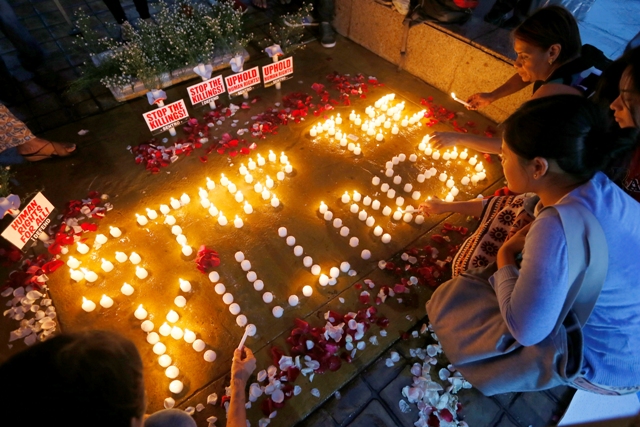
“The International Coalition for Human Rights in the Philippines (ICHRP) praises today’s announcement by the International Criminal Court (ICC) that it will formally seek an investigation into the Philippine government’s deadly ‘war on drugs’”, said ICHRP spokesperson Mr. Peter Murphy.

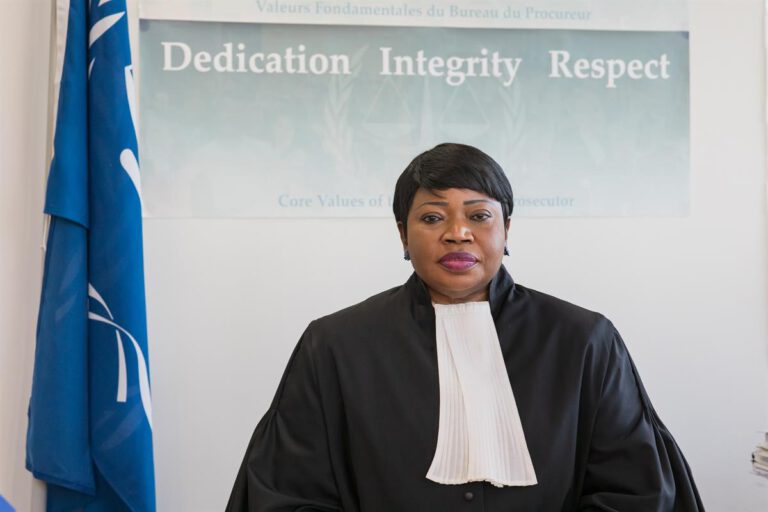
Prosecutor Fatou Bensouda announced that she has concluded her preliminary examination of the Philippines and is seeking authorisation from the Court’s judges for a full investigation into the crime against humanity of murder committed in connection with the country’s ‘war on drugs’ between 1 July 2016 and 16 March 2019, and torture and other inhumane acts, and related events as early as 1 November 2011.

“ICHRP sees this announcement as a positive step that may help bring some measure of justice to the thousands victimized and terrorized by the Duterte Regime’s so-called ‘war on drugs’. Justice may also come to those who are victimized by Duterte government’s war on Islamic communities and war on dissent,” said Mr Murphy.

“The United Nations Human Rights Council must now initiate a long overdue independent investigation into the Philippines to examine crimes under international law and other serious violations of human rights committed over the full duration of the Duterte administration, including its so-called war on drugs. The perpetrators and architects of these crimes must be held to account,” said Mr Murphy.

The ICC announcement follows the recently launched independent civil society commission of investigation (Investigate PH), which has been examining the deteriorating human rights situation in the Philippines including and beyond the so-called war on drugs. The first report of Investigate PH was delivered to the UNHRC by ICHRP in March 2021, which highlighted many of the issues that will be tackled by the International Criminal Court.

Duterte’s state-orchestrated killings amount to crimes against humanity

The case against the Duterte government is already well documented, including by Amnesty International, Human Rights Watch and Investigate PH.  Reports have been published on major investigations detailing ongoing extrajudicial executions and other human rights violations by the police and their superiors.  Despite the continued broad exposure of the human rights situation by domestic and international human rights organizations, however, the killings continue unabated.

Since the beginning of the Duterte administration in July 2016, thousands of people mostly from poor and marginalized communities have been killed – either by the police or by armed individuals suspected to have links to the police.  These killings have been conducted by state institutions with impunity, and there is a clear lack or absence of effective domestic remedies to stop the killings.

Evidence emerging from Investigate PH’s second round of hearings in May 2021 supports the charge that institutions of the state are being used as instruments of terror to organize and execute extra judicial killings.

“Further action from the international community is urgently needed,” said Mr Murphy.

Instead of taking positive action when informed of these systemic and widespread human rights violations, and recognizing the complicity of the Philippine Government, the UN Human Rights Council voted to provide technical cooperation and capacity-building to the same government that has publicly endorsed the policy of killings, avoided independent investigations, and continued its crackdown on civil society. “ICHRP calls on the UN Human Rights Council to act now, and to send a strong message that it too will no longer allow the Philippine government to continue its campaign of human rights violations with impunity,” concluded Mr. Murphy.
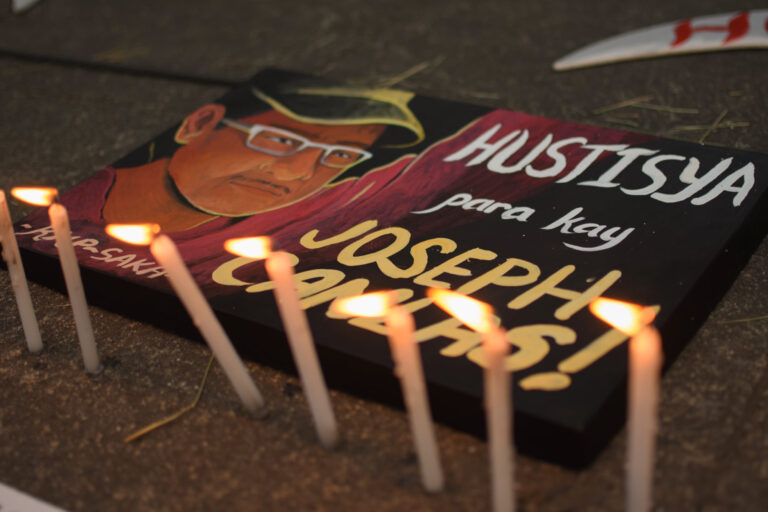
Justice for Filipino political prisoner Joseph Canlas!

The International Coalition for Human Rights in the Philippines (ICHRP) joins the Filipino and international communities in grieving the death of political prisoner Joseph Canlas, 59, who passed away this Tuesday, May 11, in an Intensive Care Unit in San Fernando, Pampanga, the Philippines. He had been admitted to the hospital on May 7 due to difficulty breathing, and had subsequently tested positive for COVID-19.

Canlas was a long-standing peasant leader, and was serving as the Vice Chairperson of Kilusang Magbubukid ng Pilipinas (Peasant Movement of the Philippines) at the time of his death. He was also the Chairperson of Alyansa ng mga Magbubukid sa Gitnang Luson (Peasants’ Alliance of Central Luzon). Canlas was among those arrested pre-dawn on March 30 in a series of coordinated police and military operations against activists. The arrested peasant leader had asserted that the guns, ammunition, explosives, and other so-called evidence seized during the raids had been planted against him. On April 15, Canlas was moved to Angeles City Jail, Pampanga, where he was detained until he ultimately contracted the COVID-19 virus.

The arrest and detention of Joseph Canlas reflect a broader intensification of attacks on people’s organizations and activists under the Duterte administration. With the passing of the Anti-Terror Act in 2020, cases of harassment, illegal arrest, and killings by police and military forces have increased dramatically. So-called “counter-insurgency” operations empower the security forces to use every level of administration to crack down on legal-democratic organizations of peasants, workers, youth, women, and more. Joseph Canlas was among the over 600 political prisoners currently detained in the Philippines, many of whom are at great risk of contracting the COVID-19 virus, among other health concerns.

ICHRP calls for a thorough, independent investigation of the arrest and death of Joseph Canlas, among countless other human rights violations that have occurred under the Duterte administration. We call for accountability of the Duterte administration for its violations of people’s rights and international humanitarian law.

Through Investigate PH, the independent international human rights investigation being carried out by civil society organizations, we hope that the full scope of the human rights situation in the Philippines will be exposed. In the wake of intensified state terror, ICHRP calls on civil society and all freedom-loving peoples of the world to support Investigate PH, and in particular to pay attention to the results of its upcoming Second Report, which will provide a thorough investigation and analysis of the war on dissent in the Philippines, among other topics.

ICHRP calls on all governments and intergovernmental bodies such as the United Nations Human Rights Council to hold the administration accountable for its continued violations of people’s rights and of international humanitarian law.

Justice for Joseph Canlas!

Hold the Duterte administration accountable!

Condemn deadly purge of civilians in CALABARZON Region, Philippines

March 9, 2021 

Hon Michelle Bachelet 
United Nations High Commissioner for Human Rights (OHCHR)  
Palais des Nations  
CH-1211 Geneva 10, Switzerland 
E-mail: registry@ohchr.org

Dear Excellency, 

We are profoundly shocked but not surprised that Philippine National Police and Army units killed  nine unarmed civilian community leaders in the pre-dawn of Sunday March 7, 2021, in the provinces  of Cavite, Laguna, Batangas and Rizal, to the south east of the capital Manila. Along with Quezon  Province, these locations make up the CALABARZON Region, which has been the focus of several  decades of industrial development, and where the labor movement, farmers and fisherfolk are well  organised. 

CALABARZON is within the Southern Luzon Command of the Philippine Army, under the command of  Major General Antonio Parlade Jr, who is also Spokesperson of the National Task Force to End Local  Communist Armed Conflict. NTF-ELCAC was established in December 2018 through Executive Order  70, and has the authority to engage all government departments and agencies in a “whole-of nation” effort to crush the armed opposition. However, its main focus has been on civilian critics of  the government whom it routinely and vigorously tags as communist or terrorist. 

Just prior to this massacre, which has been dubbed “Bloody Sunday”, President Duterte gave a  speech in Cagayan de Oro, Mindanao, where he told his audience from the police and the army, “Kill,  kill them all. Finish them. Don’t mind human rights.” He was referring to communist rebels, but he  has many times asserted that trade unions, peasant organisations, women’s organisations, and  indigenous communities are rebels, terrorists or communists. 

In the pre-dawn hours of March 7, 2021, the police and military served a total of 24 search warrants  in the Calabarzon region, leading to the nine deaths and six arrests. The backdrop is the Duterte  administration’s crack down on groups allegedly associated with the Communist Party of the  Philippines. 

Those killed are: 

1. Emmanuel Asuncion of Bagong Alyansang Makabayan (New Patriotic Alliance – BAYAN) Cavite.  He was shot dead in the office of the Workers Assistance Centre, Dasmariñes, Cavite. There was  no evidence of a “search”. 

2. Fisherfolk defenders, the couple Chai Lemita-Evangelista and Ariel Evangelista of Ugnayan ng  Mamamayan Laban sa Pagwawasak ng Kalikasan at Kalupaan (People’s Organisation Against  Destruction of Environment and Land – UMALPAS-KA) were killed in Nasugbu, Batangas. Their  10-year old son reportedly hid under a bed and witnessed the killing of his parents. The couple  had been sleeping in a hut near the shore in Barangay Calayo when they were raided by the  police. Their neighbors heard screams and pleas. Their bodies were quickly picked up by the  police, according to a report by trade union federation Pamantik-KMU. 

3. Advocate for housing rights in Kasiglahan Village, Rizal, Michael Dasigao, was killed in  Montalban, Rizal. 

4. Mark Lee Bacasno of local group SIKKAD-K3 (San Isidro, Kasiglahan’s Fraternity and Solidarity for  Livelihood, Justice and Peace), was also killed in Montalban. 

5. Siblings Abner Esto and Edward Esto were also members of SIKKAD-K3. As of Monday 7 pm, the  bodies are not found at the time of writing this letter. 

6. Members of the Dumagat tribe Puroy dela Cruz and Randy “Pulong” dela Cruz were killed  between 3am and 4 am. They are both activists with the group Dumagat Sierra Madre, which  advocated for the rights of indigenous peoples. The Dumagats are a major and semi-nomadic  indigenous group in Calabarzon, estimated to number around 30,000. 

Puroy’s wife, Minda dela Cruz, said she was ordered by police to leave their house while Puroy  stayed inside. Outside, she heard 4 gunshots. She saw Puroy dead inside after. 

Pulong’s wife, Violy dela Cruz, said that an “armed group” barged into their home. Violy was  ordered to leave their home too and told to stay away, around “50 meters” from their house. Still, Violy heard consecutive gunshots and found Pulong dead. 

Six other leaders were arrested. Three of them are: 

1. Labor leader Esteban Mendoza, the vice president of Olalia – Kilusang Mayo Uno

2. BAYAN – Laguna spokesperson Elizabeth Camoral 

3. Nimfa Lanzanas, 61, a Karapatan paralegal to political prisoners and member of Kapatid – Timog Katagalugan, Nimfa’s son, Edward, has been in jail since 2014 on similar trumped-up  charges. 

The March 7 killings follow the arrests of Arnedo Lagunias, former officer of Lakas Manggagawang  Nagkakaisa sa Honda and Alyansa ng Manggagawa sa Enklabo, and Ramir Corcolon, secretary  general of Water System Employees Response and a national council member of the Confederation  for the Recognition and Advancement of Government Employees, in Sta. Rosa and San Pablo City,  Laguna, respectively, on Thursday, March 4, 2021. 

The March 7 search warrants had been issued by Executive Judge Lorenzo Dela Rosa of the Manila  Regional Trial Court Branch 4. 

While Justice Secretary Menardo Guevarra was asserting to the United Nations Human Rights  Council on February 24, 2021, that Philippine domestic remedies work to uphold the human rights of  its citizens, security forces in Southern Luzon were organizing these murders. 

We urge your Office to condemn these recent developments, which demonstrate an intensified  state repression in the Philippines, the opposite of a state whose domestic institutions uphold  human rights. 

Sincerely, 

Peter Murphy, Chairperson, Global Council, 
International Coalition for Human Rights in the Philippines

Duterte’s marching order to ‘kill them all’ led to Bloody Sunday massacre of 9 civilians

“Kill, kill them all. Finish them. Don’t mind human rights,” is the marching order from Philippine president Rodrigo Duterte last March 5 which led to a blood bath two days later, killing 9 civilians. The massacre happened Sunday in the provinces of Cavite, Laguna, Batangas, and Rizal, all located southeast of the country’s capital. 

The International Coalition for Human Rights in the Philippines (ICHRP), a global network of human rights organisations, condemns the recent attacks saying that “no amount of lies by the  government can whitewash the accountability of Duterte and state forces in the ‘Bloody Sunday’ raids.”

“We are mourning and in shock from this recent news in the Philippines. These state-sanctioned killings and arrests should be known to the world. The UN bodies should know, the world should know that “Duterte’s words lead directly to murder of Filipinos, he’s out for blood,” says ICHRP chairperson Mr. Peter Murphy. 

The joint police-military raids were synchronised and employed Tokhang-style operations, the ‘barge in and shoot’ method used by police to kill thousands of civilians in the mis-named ‘war on drugs’. This killing of five identified local leaders of grassroots organisations and the arrest of 9 human rights activists is now referred to as ‘Bloody Sunday’. 

Five of the identified victims are: Emmanuel Asuncion of Bagong Alyansang Makabayan (New Patriotic Alliance – BAYAN) Cavite; land rights defender-couple Chai Lemita-Evangelista and Ariel Evangelista of Ugnayan ng Mamamayan Laban sa Pagwawasak ng Kalikasan at Kalupaan (People’s Organisation Against Destruction of Environment and Land – UMALPAS-KA). Their 10-year old son is still missing; Michael Dasigao and Mark Lee Bacasno who are urban poor organisers of local group SIKKAD-K3 (San Isidro, Kasiglahan’s Fraternity and Solidarity for Livelihood, Justice and Peace).

In the latest speech to the UNHRC of Permanent Representative of the Philippines to the United Nations Ambassador Evan Garcia, he threatened and maligned efforts of rights groups and the international community to expose human rights atrocities in the country saying that “use of certain groups in the human rights defenders’ space as a cover for their association with terrorism and other crimes” and adding that it is an “abuse of the good faith of the Human Rights Council and its mechanisms”

“These are prejudicial comments that amount as threats and vilification to victims,  human rights defenders, and even the well-meaning members of the international community,” says ICHRP.

“No amount of grandstanding in the UNHRC by the Philippine government can hide the fact that the president of the country is ordering the killings of activists, human rights defenders and civilians,” says Murphy referring to the speech of Justice Minister Guevarra’s speech and vile claims of Garcia to the the UN Human Rights Council. 

Those arrested were Esteban ‘Steve’ Mendoza, National Executive Vice President of Olalia-Kilusang Mayo Uno (May First Labor Movement – KMU); Nimfa Lanzanas, 61, a volunteer paralegal of rights group Karapatan, and mother of a political prisoner; Elizabeth Camoral, former union president of F-Tech and current spokesperson of Bayan-Laguna; Eugene Eugenio, member of government employees union COURAGE-Rizal; and two local farmers in Rizal initially identified as Moises and Dodong.

The search warrants – which turned out to be death warrants for the simultaneous operations – were issued by Jose Lorenzo de la Rosa, a presiding Judge of the Metro Manila Branch 4. Dela Rosa is the same Judge who issued search warrants against indigenous Tumandok that led to a massacre of 9 tribal leaders and the arrest of 16 residents on December 30, 2020. 

At least 300 farmers, indigenous people, human rights defenders, including 55 lawyers and judges, have been killed since Duterte came to power.

ICHRP stresses that the current reality in the Philippines “is impunity, mass killings and escalating human rights abuses. This is a determined affront to the efforts of the UN Human Rights Council and the entire international community.”#

ICHRP denounces police murder spree of witness, lawyer in Panay, PH

“We condemn the political killing of a community hero and the murder attempt on the life of human rights lawyer on Panay, Western Visayas in the Philippines” said Mr Peter Murphy of the International Coalition for Human Rights in the Philippines (ICHRP). 

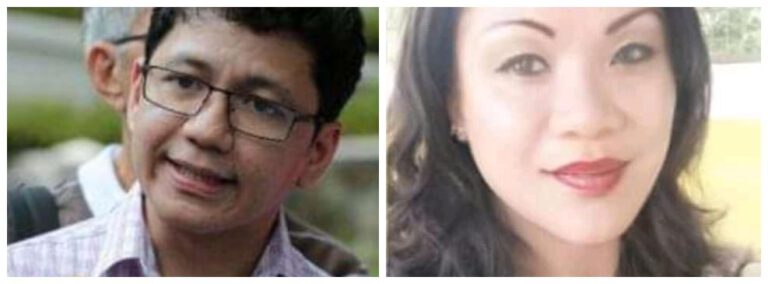
Less than a week after the murder of Julie Catamin who is a star witness in the defence of the falsely charged Tumandok leaders, their legal counsel Atty. Angelo Karlo Guillen was stabbed in the head and shoulder with a screwdriver by masked assailants in Iloilo City on the evening of March 3. 

Guillen represents the arrested Tumandok indigenous people facing false weapons and explosives charges last December 30, 2020.

“The political killing of Julie Catamin and the stabbing of Guillen are all calculated to silence witnesses and lawyers who would dispute police and military claims about the deadly events of December 30,” said Mr Murphy. “It is a shameless act of state terror.

“While Justice Secretary Menardo Guevarra was telling the United Nations Human Rights Council last that ‘the PH strongly emphasizes its legal and judicial system, its domestic accountability mechanisms are functioning as they should’, security forces in Panay were organizing the murder of Catamin and now the attack on Guillen,” said Mr Murphy. “The international community cannot tolerate this brazen duplicity.”

Dedicated human rights lawyer Guillen serves as counsel for farmers, indigenous people and rights defenders. He is also a lawyer in the petition of groups led by the National Union of Peoples’ Lawyers (NUPL) against the anti-terror law. And, he currently serves as NUPL’s assistant vice president for the Visayas (Central Philippines).

In last year’s Labor day, Guillen was arrested by authorities while responding to illegally arrested 42 activists for protesting the political killing of community leader Jory Porquia.

Ms Julie Catamin, aged 49, is LGBTI and the Barangay Captain of Barangay Roosevelt, in Tapaz. While they were riding home on their motorcycle at 8.45am on Sunday February 28, 2021, they were shot by tandem riders of another motorcycle. They died later that day in hospital.

In a December 30 post on their Facebook page, Catamin accused the police who arrested four residents of their village of planting firearms and explosives. “They were arrested and handcuffed. Bullets and firearms were planted and their houses were destroyed. Where is justice? I am appealing for help from any government agency that can help me,” Catamin said in their post. Instead, government agencies killed them.

On February 25, 2021, Catamin was invited by a Lt Estrada to visit the headquarters of the 12th Infantry Battalion of the Philippine Army in Calinog, Iloilo. The military said that they knew about the residents of Brgy. Roosevelt asking Bayan Muna for help, along with lawyers and Church institutions, which they alleged were being used by the New People’s Army. Because of this, Lt. Estrada threatened that events similar to the mass arrests on December 30 could also happen to Catamin’s community.

The sixteen members of Tumandok tribe were arrested by a combined force of 500 police and soldiers in a raid at 4am last December 30. In the same operation, state authorities executed nine Tumandok leaders which is now known as the Tumandok massacre. 

The recent arrests and mass murder of the Tumandok people are included in the long list of human rights cases being heard in the global initiative Investigate PH. The investigation seeks to look into cases of killings of those allegedly involved in drug trade/use and the persecution of human rights defenders, farmers and indigenous people like that of the Tumandok case. 

The Tumandok communities have been opposing the Jalaur River Mega Dam project, funded by the South Korean Exim Bank and to be built by Daewoo S&E, since 2011.#