
Home Blog Page 70

Philippines pushes ahead with draconian anti-terror law in the wake of damning UN human rights report

Statement of ICHRP Canada

June 16, 2020

The first week of June saw two seismic events related to the human rights situation in the Philippines.  On the one hand, the United Nations Commission on Human Rights released a long-awaited and damning report on the state of human rights in the Philippines and the Duterte regime’s murderous war on drugs.  On the other, the Philippine congress was debating a brutal anti-terror law that would give greater power to the police and military in the ongoing war on civil society in the Philippines.

The Anti-Terrorism Bill

ICHRP-Canada is concerned that the new anti-terrorism law currently under debate in the Philippine Congress would allow longer detentions without charge which goes against habeas corpus protections and gives the executive branch more power to suppress dissent. Among the most repressive provisions are: warrantless arrest; 14-day detentions of suspected “terrorists”; and the creation of an anti-terror council that would determine what is terrorism and order arrests without a warrant – a function usually reserved for the courts.

The new bill also proposes 12 years of imprisonment for any person who “joins” designated “terrorist organisations or group(s)” as determined by the anti-terror council. The bill also removes a provision in existing law on payment of damages for wrongful detention, essentially giving impunity to the military and police to detain without fear of accountability.

The National Union of People’s Lawyers (NUPL) has condemned the bill as “sanctioned state terrorism”.  Given the government’s track record on vilification of political dissenters, anyone could be accused of terrorism.

The national human rights group in the Philippines, Karapatan, expressed concerns that the new law “will only embolden to commit more human rights violations with more impunity”.

Defence Secretary Delfin Lorenzana has defended the proposal, saying, “the people need not fear”, because there were civil liberties “safeguards” in place.  The defence ministers claims ring hollow in light of the release of a recent UN Human Rights report, June 4, 2020, documenting a culture of impunity in the police and military.

UN report on widespread human rights violations and persistent Impunity

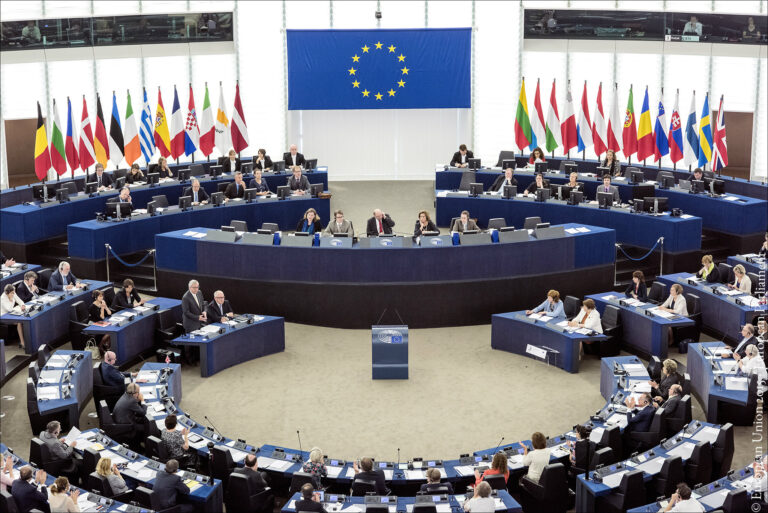
The UN report details a heavy-handed focus on countering alleged national security threats and illegal drugs resulting in serious human rights violations, including killings and arbitrary detentions, as well as the vilification of dissent.  The report’s authors identify persistent impunity and formidable barriers to accessing justice, which urgently need to be addressed.  The report, which was mandated by a July 2019 UN Human Rights Council resolution, noted that many of the human rights concerns it has documented are long-standing, but have become more acute under the Duterte administration. This has been manifested starkly in the widespread and systematic killing of thousands of alleged drug suspects. In addition, numerous human rights defenders have been killed over the past five years.

Given the failure of domestic mechanisms to ensure accountability thus far, the report stressed the need for independent, impartial, and credible investigations into all allegations of serious violations of human rights and international humanitarian law.

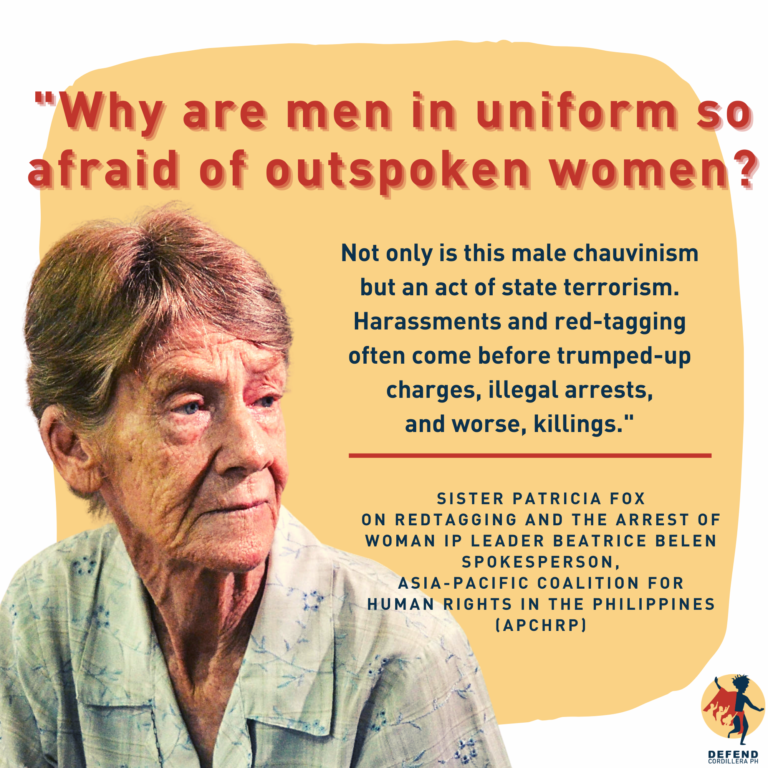
According to the report, despite a long-standing and robust tradition of human rights advocacy and activism in the Philippines, human rights defenders have been subject to verbal and physical attacks, threats and legal harassment for nearly 20 years. The report notes the vilification of dissent and attacks against perceived critics, which are “increasingly institutionalized and normalized in ways that will be very difficult to reverse.” The phenomenon of “red-tagging” or the labelling of individuals or groups (including human rights defenders and NGOs) as communists or terrorists has posed a serious threat to civil society and freedom of expression. Ongoing threats to freedom of expression, with legal charges and prosecutions being brought against journalists and senior politicians critical of the Government, as well as actions to shut down media outlets.

The report examined key national security laws and policies and their impact on human rights, particularly in the southern island of Mindanao and Negros Island, which have seen increased militarization through the imposition of emergency measures. The effect of this militarization – coupled with the long-standing presence of armed groups and the pressure by powerful landed elites and large business projects – is particularly dire on already embattled indigenous and farming communities. 

ICHRP Canada calls on the Canadian government to respond in the strongest and unequivocal terms to the subversion of human rights and democracy by the Duterte government by ending Canadian support for it.  Specifically, we call on the Canadian Government to: 

  • Publicly support the UNHCR process and investigation of human rights crimes in the Philippines under Duterte and actively lobby other governments to support the process.
  • Hold hearings on the human rights situation in the Philippines through the Parliamentary Human Rights Sub-committee during the current session of Parliament.
  • Establish a Philippine Peace secretariat at Global Affairs Canada, including a Senior Peace Liaison officer to conduct liaison work between the Government of the Philippines and the National Democratic Front of the Philippines (NDFP).   The Peace Secretariat would support restarting discussions for some of the tables examining social and economic reforms as part of the peace process and provide logistical and research support to the two sides as well as host meetings in Canada for the discussion of technical issues.
  • Play a facilitating role in the peace process between the Philippine government and the NDFP by removing the Communist Party of the Philippines and Jose Maria Sison from its own so called terrorist and proscribed lists (i.e. FINTRAC) and allow for safe passage of all NDFP negotiators to Canada in support of the Philippine Peace Process. 
  • Challenge the Duterte Regime on its abysmal human rights record with concrete and measurable steps. The Canadian government should make representation to the Duterte government to: reverse the terrorist listing of Indigenous and other civil society leaders; revoke Executive Order #70 institutionalizing the whole-of-nation counterinsurgency approach; and stop the anti-terror legislation.

The Canadian government should end all Canadian support to the Duterte government, including financial, socio-economic programming, tactical, logistical and training support, military sales and defense cooperation.

ICHRP Canada calls on the Canadian government to provide leadership in the international community to call the Philippine government to account for widespread and systemic human rights violations, and give substance to its own commitment to global human rights!

Appeal to accept report and recommendations of the UN High Commissioner for Human Rights

0

LETTER

June 13, 2020

H. E. Mr Rodrigo Duterte

President of the Republic of the Philippines

Malacañang Palace,
JP Laurel St., San Miguel

Manila, Philippines 

Appeal to accept report and recommendations of the UN High Commissioner for Human Rights regarding human rights in the Philippines, turn away from the Anti-Terror Bill

Dear Excellency,

Congratulations to you and to the Filipino People on Independence Day yesterday.

Our Coalition writes to you today to urge you and your government to embrace the formal report of the United Nations High Commissioner for Human Rights issued on June 4, 2020, to accept its recommendations and thus begin to restore the basic rights of the people and repair your nation’s standing in the international community.

The United Nations Human Rights Council at its 44th Session, due to begin on June 29, 2020, will discuss this report, and we hope that your delegation will vote for the report and its important recommendations.

Just at that moment last June 4, the Philippine Congress passed the Anti-Terror Bill which is a green light for even more widespread repression of community efforts to create a democratic, just and peaceful Philippines. We urge you to set aside the Anti-Terror Bill, never to put your signature to it, and not to allow it to come into force, since it would radically strengthen the martial law machinery already in operation in your country.

Instead we call on you and your government for a wholehearted and committed return to the formal peace talks with the National Democratic Front of the Philippines, to rapidly adopt the draft Comprehensive Agreement on Social and Economic Reforms, to implement genuine land reform and national industrialisation, and to pursue the remainder of the agreed agenda for the peace talks.

Yours sincerely,

Peter Murphy, Chairperson, Global Council,

International Coalition for Human Rights in the Philippines

ICHRP dares Duterte to comply with UN Report, abandon “terror bill”

Honour Philippine Independence by releasing political prisoners says global rights groups

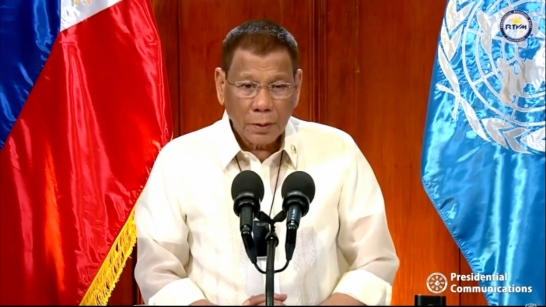
On the occasion of the 122nd Philippine Independence Day, the International Coalition for Human Rights in the Philippines (ICHRP) challenged President Rodrigo Duterte himself to abide by the United Nations High Commissioner for Human Rights Report on the Philippine human rights situation. The statement came after the response of Philippine official Presidential Spokesperson Harry Roque saying that the UN report is premised on “faulty conclusions” while denying the rights violations listed in the report.

“If President Duterte wants to avoid a backlash from the international community, he needs to respond positively to the UN Report. We are reminding him that the world is watching and that it will be in the interests of Philippine democracy that he pulls back his repressive policies,” says ICHRP chairperson Peter Murphy.

The UN report released by High Commissioner for Human Rights Ms. Michelle Bachelet was handed down just as the Philippine Congress passed the Anti-Terrorism Bill. The proposed law authorises a military council, in effect bypassing the judicial system, to order the warrantless arrest of suspected “terrorists.” Anyone the military council arrests can be held for up to 24 days without charge or being presented before a judge. The legislation now awaits the signing of President Duterte and in 30 days will become national law with or without his signature.

ICHRP has already stressed that this new law is in blatant conflict with the Philippine Constitution and will lead to an erosion of freedoms and liberties of Filipinos which are inalienable, guaranteed by the Universal Declaration of Human Rights and other internationally agreed-upon instruments to which the Philippines is a signatory.

“We are challenging the Philippine government to abandon the Anti-Terrorism Bill and instead to prioritize programs that will address the needs of Filipinos in the time of the global pandemic. One important outcome of Ms. Bachelet’s report could be the decision by President Duterte to put this bill aside, never to be enacted,” says Murphy.

The Philippine government revealed that there will be no more emergency cash aid for low-income families starting June 2020. The confirmed COVID-19 cases for June 11 have ballooned to 24,174 with 1,036 documented deaths according to the country’s health ministry bulletin. Leading university experts projected that coronavirus cases could reach 40,000 by June 30.

Honour Independence Day, release prisoners of conscience

In the 122nd commemoration of the declaration of Philippine independence, ICHRP reasserts the plea of the families of political prisoners — ”set them free”. More than 600 political detainees are languishing in jails plagued with coronavirus outbreaks. “By releasing political prisoners on humanitarian grounds, the government and its judicial leaders can still show the world that there is justice in the Philippines,” says Murphy.

According to ICHRP, these are civilians, Filipino farmers, unionists, indigenous peoples and human rights defenders jailed under trumped-up charges. If there are no immediate steps made for their release, the Philippine government will be condemning them to their death sentence in these virus-stricken facilities.

No political prisoner has been released as of this statement. The renewed call came after news of 745 prisoners and 125 personnel in Philippine jails have tested positive for coronavirus. Last month ICHRP raised concerns of underreporting of COVID-19 cases in detention facilities together with prison deaths not fully reported.

A 61-year-old farmer leader Adelaida Macusang died while awaiting trial last May 4 in Tagum City, Southern Philippines. While the immediate cause of Macusang’s death was kidney failure and cardiac arrest, there was no COVID-19 testing conducted on her body. She is one of the sickly and elderly who are most vulnerable to the virus seeking humanitarian release.

Today in the Independence Rally in Manila, a message of solidarity from ICHRP chair Peter Murphy to the Filipino people was conveyed saying: “ICHRP joins with you in your effort to achieve genuine independence based on the will of the people and the unity of the people in their effort for equality, justice and peace.”

The International Coalition for Human Rights in the Philippines is a global network of organizations concerned about the human rights situation in the Philippines and committed to campaign for just and lasting peace in the country. #

ICHRP alerts the international community as PH fast-tracks “terror bill”

Global human rights group condemns murder of Filipino urban poor activist

NEWS RELEASE

June 1, 2020

The International Coalition for Human Rights in the Philippines (ICHRP) alerts the global community to an all-out escalation of rights abuses with the railroading of the latest Anti-Terrorism legislation. A proposed law that claims to supposedly curb terrorism was fast-tracked by lawmakers last May 29 amid the country’s battle against COVID-19 pandemic.

“We are appalled that the Philippine government is giving priority to repressive legislation but remains bungling in addressing the pandemic. We have seen too many deaths both from the virus and the violence President Duterte has unleashed against his people,” says ICHRP chairperson Peter Murphy.

The day the repressive law took the limelight, the nation reported 1,046 new coronavirus cases, a new record high since it started counting in January. As of May 30, the reported COVID-19 cases have ballooned to 17,224 because of localized transmissions, with the total number of confirmed deaths at 950. No mass testing has been carried out and the highly militarised lockdown imposed in the capital and other parts of the country has cost the Philippine economy 5.8 percent of its gross domestic product (GDP), the worst in the Southeast Asia region.

ICHRP reiterated that the proposed Anti-Terrorism Bill is the last piece of the puzzle of the Duterte government’s martial law. President Duterte has repeatedly denied the existence of martial law during the pandemic however, the rising number of activists and civilians being jailed, harassed, and killed says otherwise. ICHRP led a global day of protest last May to denounce the de facto Martial Law in the country.

The Anti-Terrorism Bill, dubbed by critics as the “terror bill”, seeks to bolster the country’s current Human Security Act (HSA), a repressive law that has been repeatedly used to justify arrests and file trumped-up charges against activists and government’s critics. If made into law, the new version would allow violations against the right to security and privacy, curtailment of the freedom of expression, freedom of association, and the right to due process. It legalizes warrantless arrests, detention for up to 30 days of suspected terrorists, and even wiretapping and other surveillance for extended periods of time.

“The terror bill erodes the freedoms and liberties of Filipinos which are inalienable, guaranteed by their Constitution and the Universal Declaration of Human Rights and other internationally agreed-upon instruments to which the Philippines is a signatory,” ICHRP asserts.

ICHRP condemns the recent murder of urban poor leader Carlito Badion whose body was found in the Central Philippines last May 28. Two days before his assassination Badion was red-tagged and received death threats. “We have seen the political killings; heard the accounts of survivors and family members; and felt the growing discontent of Filipinos. It is the activists and citizens like Badion who are the true targets of the terror bill,” says Murphy.

Activists, frontline food producers, and volunteers doing humanitarian work have been killed during the lockdown including a 25-year-old artist Marlon Maldos,  and peasant leaders Nora Apique from Southern Philippines, John Farochilin and Allan “Mano Boy” Aguilando from Central Philippines. On the eve of Labor Day, local community leader Jose Reynaldo Porquia was assassinated – he was also leading relief efforts in poor communities in Iloilo City, Central Philippines. All these individuals were red-tagged by the Philippine government and had received death threats.

ICHRP pointed out that President Duterte and his military government has found a way to institutionalize the war against dissent by railroading the terror bill. “The Philippines has the longest and most militarized response to COVID-19 in the world. This terror bill, if signed into law, is a rubber stamp to an already undeclared military rule and will only legalize the targeting of critics and civilians,” Murphy said.

Last year, Philippine Security Adviser Hermogenes Esperon Jr. described the current HSA as not “user-friendly,” and asserted that they need a better tool for anti-terrorism and anti-insurgency campaign. Saying that martial law experience in Mindanao has a “lot of limitations,” Esperon was hopeful that Congress would approve the proposed amendments to HSA and thus consolidate the Anti-Terrorism Act.

ICHRP supports the Filipino people in their fight to defend their civil and political rights and oppose the weaponization of the law against its citizens. “This law will not in any way protect civilians from acts of terrorism, instead, it will only intensify the already deplorable human rights situation under the Duterte government,” says Mr. Murphy.

ICHRP calls on all freedom-loving peoples around the world to condemn the terror bill and pledges to garner more support for the Filipinos in resisting attacks and in defending their basic human rights.#

Strongest protest at red-tagging of foreign human rights defenders

May 22, 2020,

H. E. Mr Rodrigo Duterte,

President of the Republic of the Philippines

Malcanang Palace

E-mail: pcc@malacanang.gov.ph or http://op-proper.gov.ph/

Strongest protest at red-tagging of foreign human rights defenders

Dear Excellency,

On May 13, 2020, Philippine Defense Secretary Delfin Lorenzana alleged in a media conference that the US Chapter of the International Coalition for Human Rights in the Philippines is engaged in an armed struggle in the Philippines. This is an absurd and yet deadly allegation which we urge you to have withdrawn.

Secretary Lorenzana was responding to the recent ICHRP-US call for the funds for purchase of attack helicopters for the Armed Forces of the Philippines to be spent to support the people suffering through the COVID-19 epidemic.

Secretary Lorenzana said, “On the commentary on why we are going to purchase those helicopters — and that we should just channel the fund in those in need . . . . I agree with what these leftists are saying. But first you should end your armed struggle, so we will stop buying such arms. You’ve been waging your armed struggle for 50 years, and you’re just causing trouble, and you want us to stop importing arms, but you’ won’t stop fighting.

In the Philippines context, this statement puts ICHRP-US in the order of battle of the AFP for elimination and must be roundly condemned. The International Coalition for Human Rights in the Philippines is composed of civilian organisations based outside the Philippines. It is profoundly wrong to allege that these people are waging an armed struggle. In fact, ICHRP members work to enable a just and lasting peace in the Philippines.

We urge you and your government to conform to all the international human rights instruments to which the Philippines is a signatory, and to implment all the agreements already signed in the long process of peace talks with the National Democratic Front of the Philippines since 1992.

Sincerely,

Peter Murphy, Chairperson, Global Council,

International Coalition for Human Rights in the Philippines

Cc: Mr Delfin Lorenzana, Secretary of the Department of Defence; Mr. Jose Luis Martin Gascon, Chairperson of the Commission on Human Rights; Mr Antonio Guterres, United Nations; Ms Michelle Bachelet, UNHRHR; UN Special Rapporteur on EJK; DFAT Desk; Senator Marise Payne, Minister for Foreign Affairs; Senator Penny Wong; Senator Richard Di Natale, Andrew Wilkie MHR; Julia Dean.