Home Blog Page 71

Global rights group condemns state murder of Filipino peace consultant

0

Assassination of land reform activist Randall Echanis designed to destroy peace dialogue

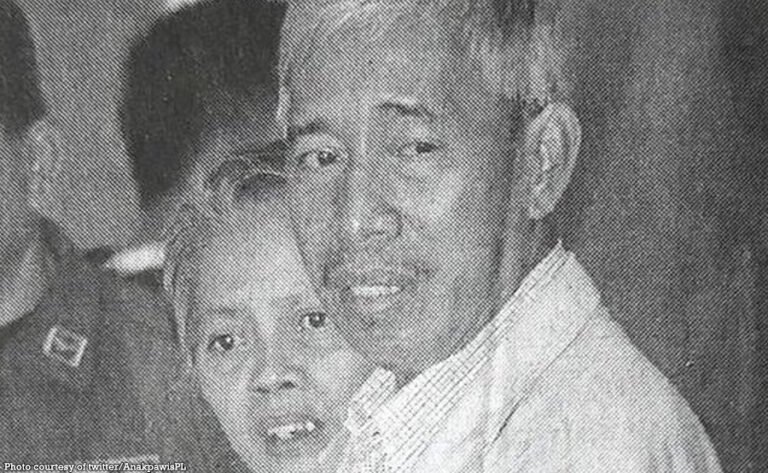
The International Coalition for Human Rights in the Philippines protests in the very strongest terms the murder of Mr Randall Echanis, 71, in the country’s capital region last Monday. In a letter to the United Nations High Commissioner for Human Rights Michelle Bachelet, ICHRP reports the crime of state terrorism in the killing of veteran activist and peace consultant Echanis.

At about 1.20am Manila time, August 10, 2020, five men were seen leaving the rented home of Mr Randall Echanis, in Novaliches, Quezon City, Philippines. Inside the bodies of Mr Echanis and an unnamed neighbour were found, with stab and gunshot wounds. Mr Echanis was at home receiving medical attention.

“This murder is almost certainly a calibrated operation of the Duterte counter-insurgency program, Oplan Kapanatagan. It is designed to destroy any dialogue that may resolve the five-decade long armed conflict in the Philippines, and instead pursue all out political violence against civilians,” says ICHRP Chairperson Mr Peter Murphy in a letter to the UN High Commissioner.

Mr Echanis was a Peace Consultant for the National Democratic Front of the Philippines, a member of the 2016-17 Reciprocal Working Committee on Social and Economic Reforms in the formal peace talks sponsored by the Royal Norwegian Government. He advocated for the mass of poor peasant farmers, for he was the Deputy Secretary-General of the Peasant Movement of the Philippines (KMP) and Chairperson of the Anakpawis Party-List, a political party for peasants, fisherfolk and workers.

On the same day, Ms Erlinda Echanis, wife of the slain peace consultant, reported that police officers forcibly took the body of her husband which is now being guarded by state authorities. “I have positively identified his lifeless body which bore torture marks, multiple stab and gunshot wounds,” says Ms Echanis. 

ICHRP urged the UN High Commissioner’s office and the United Nations Security Council to lead international condemnation of the murder of Mr Echanis, and to urge the Philippines government to bring the perpetrators to justice. In the same letter, it also appeals to the government to abandon its war on all political opposition, and instead to release all political prisoners and resume the stalled peace talks.

“We call on all member states of the UN Human Rights Council to be seized of the seriousness of the human rights situation in the Philippines and to adopt all the recommendations in your June 30 report on the human rights situation in the Philippines,” says ICHRP. 

Lastly, Mr Murphy addresses the international community, calling on it “to unequivocally condemn the state killing of Mr Echanis.” #

The Philippine Government Should Immediately Repeal Anti-Terrorism Act of 2020, which Harms Human rights and Democracy!

We Condemn the Duterte government for Continuous Suppression of Human Rights! 

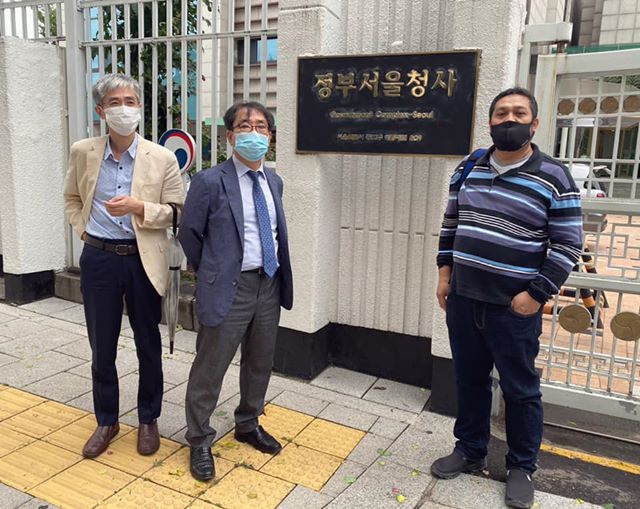
Statement of ICHRP-Korea on the signing of the Anti-Terrorism Act

July 7, 2020.

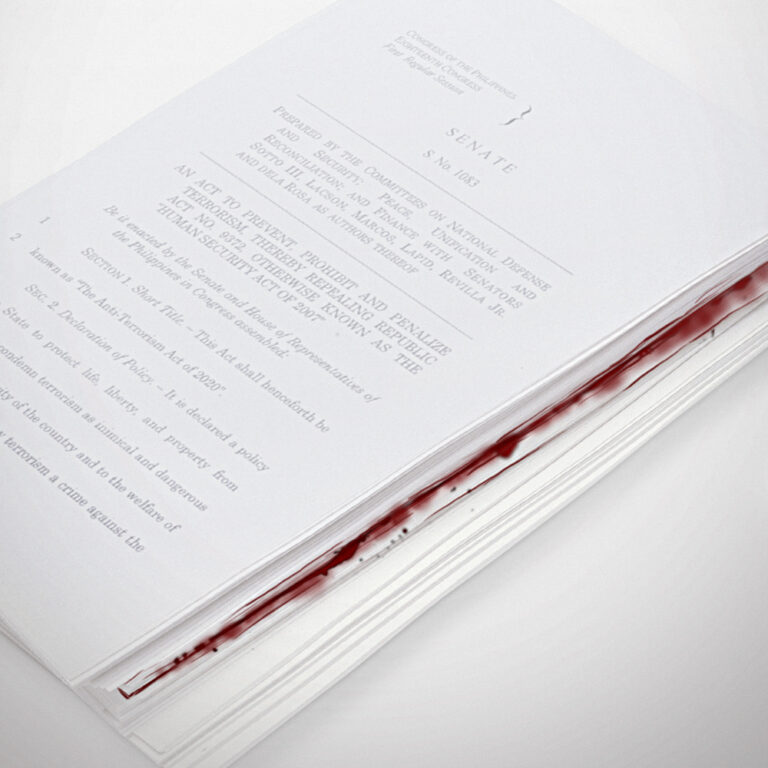
On 3 July 2020, President Rodrigo Duterte signed Anti-Terrorism Act of 2020.

The government enforced the Act that posed a serious threat to human rights and democracy of the Philippines, regardless of concerns from the international community as well as the Philippines. 

Anti-Terrorism Act of 2020, the retrogressive revision of the 2007 Human security Act has absolute power to regard all activities against the Duterte government as ‘terrorism’.  

The Act defines terrorism as acts endangering a person’s life, causing damage or destruction to public or private facility and property, and manufacturing or transporting weapons and explosive.

Also it punishes actors who incite terrorism by means of speeches, proclamations, banners and etc. 

Commission on Human Rights of the Philippines already opines that this regulation on terrorism is ambiguous and could be applied too extensively. That is, if government critics are defined as terrorism, it means that posting a statement on SNS as well as demonstrations could be subject to punishment. 

If a new Anti-Terrorism Council, consisting of members appointed by president, designates people as terrorist suspects, it is able to detain them up to 24 days without a judicial warrant and do surveillance or wiretapping unlimitedly. Also, the ones who violate the Act could be imposed life imprisonment without bail to maximum. Like this, the Act itself is full of elements that seriously threaten human rights. However, the most critical point is that it is obvious that the Act would be abused by the Duterte government. 

Since the inauguration, President Duterte has been undiscriminatingly killing lots of people in the cause of ‘war on drugs’. The fact that those extrajudicial killings have been conducted by the nation is serious challenge in itself on human rights norms that humankind has agreed upon and kept. Besides, the grave state of human rights in the Philippines that human rights activists, indigenous people, union leaders, lawyers and others who oppose the Duterte government have been branded as “Commie” and even murdered has been emerged as a severe human rights problem in the international community for a long time. 

Further, before passing the Act, including UN human right Chief Michelle Bachelet, UN human rights special rapporteurs already clearly expressed opinion that even if there is a reason for national security, suppression of human rights or interruption to acts of human rights activists should not be tolerated. However, Korean civil societies have no choice but agree on concerns of the Philippines civil societies that the purpose of the Duterte government who push ahead the Act even though the Philippines financial circles oppose is reinstating dictatorship during the Marcos administration. 

We call on the South Korean government to express clear position on the Duterte government’s activities that degenerate democracy and human rights. While promoting New Southern Policy, the South Korean government hasn’t expressed position on suppression of human rights by the Duterte government. After all, with the situation that the Act against the humanity has been enforced, serious consideration is necessary whether cooperation under the principle of New Southern policy, “People, Peace, and Prosperity” could be held. We cannot but asking who coexistence is for in the situation that human rights is trampled and peace is destroyed.

Korean civil societies call on as follows: 

  • The Duterte government should immediately abolish the Anti-Terrorism Act of 2020!
  • The Duterte government should follow International Human Rights Standards and stop suppression of human rights! 
  • The South Korean government should express its’ opposition to the Anti-Terrorism Act of 2020 and undertake a thorough review whether that human rights have been violated in cooperative projects with the Philippines.#

PH justice minister makes “empty” promises to UN rights body, says ICHRP

UNHRC member-states raise deep concern over Philippine human rights crisis

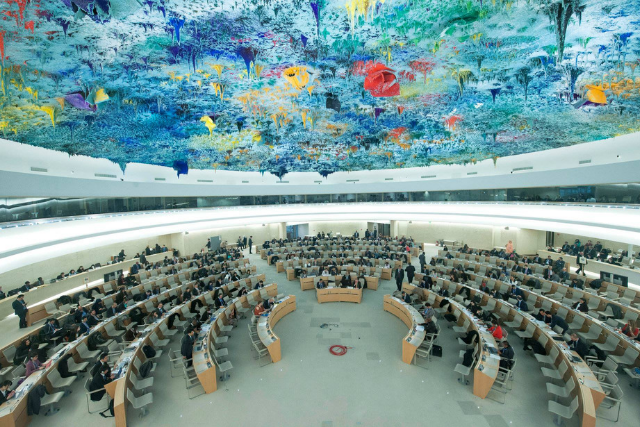
A global human rights group is warning the international community about recent Philippine government rhetoric and claims of promoting human rights despite its relentless attacks against freedom and democracy. The caution was raised by the International Coalition for Human Rights in the Philippines (ICHRP) in response to the statement of Justice Minister Menardo Guevarra to the 44th Regular Session of the UN Human Rights Council in Geneva, last Tuesday.

ICHRP underlined that until the government of President Rodrigo Duterte takes seriously the facts-based findings of the Office of the High Commissioner on Human Rights (OHCHR) Report and cooperates with the UN office for an independent, international probe these promises are nothing but empty.

“The sudden creation of a judicial review panel on the drug-related operations by the Philippine government is but an attempt to save face in front of the UN body and smacks of refusal to get to the bottom of the truth about the findings in the UN report,” says ICHRP chairperson Peter Murphy.

An inter-agency panel is “quietly conducting a judicious review” of some 5,000 anti-illegal drug operations that led to civilian deaths. The panel will release a report by November this year according to Justice Minister Gueverra in his speech addressed to the UN Human Rights Council.

“It is hard to believe that President Rodrigo Duterte’s government is sincere in its claims of promoting and uplifting the dignity of Filipinos as Mr. Guevarra claims. Harassments, arrests, and killings of civilians are still happening on the ground with impunity,” Murphy adds.

The joint statement submitted to the UN dialogue by ICHRP together with the Commission of the Churches on International Affairs of the World Council of Churches, the United Methodist Church – General Board of Church and Society and the National Council of Churches in the Philippine argues that the Philippine government continues to aggravate the already horrible human rights situation.

“Journalist Ms. Frenchiemae Cumpio was arrested in February on fabricated firearms charges. In May, the government shut down the largest TV network, ABS-CBN. This month, the Rappler Executive Editor Ms. Maria Ressa was convicted of cyber libel. All are Government critics.Using official Facebook accounts, military and police are vilifying as terrorist recruiters or supporters the leaders of the long-established Indigenous Cordillera Peoples Alliance, the National Council of Churches, and some of its member-churches,” says the joint statement.

Also mentioned was the brutal killing of Filipino leader Carlito Badion of the national urban poor association, Kadamay, last May 28 at the height of the pandemic.

Concerns over killings, anti-terrorism legislation

Several member-states of the UN Human Rights Council also conveyed their deep concern about the horrible human rights situation in the Philippines. A strong statement was delivered by Finland on behalf of Denmark, Iceland, Norway and Sweden, raising concern over the killings in the drug war, “threats to the freedom of expression and media freedom,” including the case of Maria Ressa, and failures to ensure accountability.

Belgium said that they were “shocked by the credible allegations of extra-judicial killings” in the context of the war on illegal drugs and called on the Philippine government to “uphold its international human rights obligations.” Similarly, Liechtenstein was “appalled by the widespread killings of human rights defenders” and appreciated the call of the 23 UN Special Rapporteurs for an international investigation into the rights abuses in the Philippines.

The European Union also delivered a statement reiterating its “concern at the death toll associated with the campaign against illegal drugs in the country and call for effective, impartial and transparent investigations of all cases of death. We also encourage the Philippine authorities to investigate reports of harassment and killings of human rights defenders and lawyers, journalists and other media workers, and religious leaders and indigenous peoples.”

The ten speakers from civil society and international NGOs who were able to deliver their oral statements concurred with the findings of the High Commissioner’s Office.

In the UNHRC 44th Regular Session, the UN High Commissioner Ms. Michelle Bachelet Bachelet said that the newly proposed anti-terrorism law “could have a further chilling effect on human rights and humanitarian work, hindering support to vulnerable communities.” Ms. Bachelet also urged Duterte to refrain from signing it into law and instead “initiate a broad-based consultation process to draft legislation that can effectively prevent and counter violent extremism but which contains some safeguards to prevent its misuse against people engaged in peaceful criticism and advocacy.”

Earlier this month, ICHRP alerted the global community to an all-out escalation of rights abuses with the railroading of the latest anti-terrorism legislation.#

ICHRP to UN Human Rights Council: vote for “justice” in the Philippines

Global rights group calls for an independent international investigation on PH situation

June 29, 2020

The International Coalition for Human Rights in the Philippines (ICHRP) appeals to all member states of the United Nations Human Rights Council to support the UN High Commissioner for Human Rights report on the Philippines. The appeal was released on the eve of the Council’s 44th Regular Session to be held in Geneva, Switzerland.

“We urge the Council to adopt the Report of the UN High Commissioner for Human Rights on the harrowing violations committed by the Government of President Rodrigo Duterte. A vote to adopt the Report is a vote for justice in the Philippines,” says ICHRP Chairperson Peter Murphy.

The comprehensive UN document released last June 4 is based on official court and police records, interviews with victims, submissions from human rights organisations together with government input. It raised concerns on Duterte’s “harmful rhetoric” and “incendiary” language together with the Philippine government’s “heavy-handed focus” on the war on drugs and counter-insurgency which led to the alarming number of killings, arbitrary detentions and suppression of dissent.

The 44th UNHRC Regular Session will take place from the 30th of June to the 20th of July 2020. The agenda includes discussions on issues of racism, sexual orientation and gender identity, women, poverty, peaceful assembly, and a chanceto address the human rights situations in countries including the Philippines. 

“This is an opportunity to tackle the findings and recommendations of the UN Report and for the international community to address the Duterte government’s human rights abuses and its restrictions on Filipino human rights defenders,” Murphy added.

The global coalition underlined that given the track record of the Duterte administration, its obstruction of the investigation by the OHCHR, and its latest rejection of the Report’s recommendations, the Human Rights Council should take a stronger stance by creating a mechanism for an independent international investigation into thehuman rights crisis in the Philippines.

In a joint statement to be delivered in the Regular Session in Geneva, ICHRP together with the Commission of the Churches on International Affairs of the World Council of Churches, other global and Philippine churches appeal to UNHRC members states to call upon the Philippine Government to put an end to human rights violations, ensure justice to victims, and proper investigation and prosecution of alleged perpetrators. “The counter-insurgency program must stop. Pending investigations by relevant UN Special Procedures must be allowed to proceed,” the joint statement reiterates.

A key component of the request is for the Council to appoint a Special Rapporteur on the human rights situation in the Philippines to oversee the independent international investigation.

The International Coalition for Human Rights in the Philippines or ICHRP is a global network of organizations concerned for the human rights situation in the Philippines and committed to campaign for just and lasting peace in the country. #

Philippines pushes ahead with draconian anti-terror law in the wake of damning UN human rights report

Statement of ICHRP Canada

June 16, 2020

The first week of June saw two seismic events related to the human rights situation in the Philippines.  On the one hand, the United Nations Commission on Human Rights released a long-awaited and damning report on the state of human rights in the Philippines and the Duterte regime’s murderous war on drugs.  On the other, the Philippine congress was debating a brutal anti-terror law that would give greater power to the police and military in the ongoing war on civil society in the Philippines.

The Anti-Terrorism Bill

ICHRP-Canada is concerned that the new anti-terrorism law currently under debate in the Philippine Congress would allow longer detentions without charge which goes against habeas corpus protections and gives the executive branch more power to suppress dissent. Among the most repressive provisions are: warrantless arrest; 14-day detentions of suspected “terrorists”; and the creation of an anti-terror council that would determine what is terrorism and order arrests without a warrant – a function usually reserved for the courts.

The new bill also proposes 12 years of imprisonment for any person who “joins” designated “terrorist organisations or group(s)” as determined by the anti-terror council. The bill also removes a provision in existing law on payment of damages for wrongful detention, essentially giving impunity to the military and police to detain without fear of accountability.

The National Union of People’s Lawyers (NUPL) has condemned the bill as “sanctioned state terrorism”.  Given the government’s track record on vilification of political dissenters, anyone could be accused of terrorism.

The national human rights group in the Philippines, Karapatan, expressed concerns that the new law “will only embolden to commit more human rights violations with more impunity”.

Defence Secretary Delfin Lorenzana has defended the proposal, saying, “the people need not fear”, because there were civil liberties “safeguards” in place.  The defence ministers claims ring hollow in light of the release of a recent UN Human Rights report, June 4, 2020, documenting a culture of impunity in the police and military.

UN report on widespread human rights violations and persistent Impunity

The UN report details a heavy-handed focus on countering alleged national security threats and illegal drugs resulting in serious human rights violations, including killings and arbitrary detentions, as well as the vilification of dissent.  The report’s authors identify persistent impunity and formidable barriers to accessing justice, which urgently need to be addressed.  The report, which was mandated by a July 2019 UN Human Rights Council resolution, noted that many of the human rights concerns it has documented are long-standing, but have become more acute under the Duterte administration. This has been manifested starkly in the widespread and systematic killing of thousands of alleged drug suspects. In addition, numerous human rights defenders have been killed over the past five years.

Given the failure of domestic mechanisms to ensure accountability thus far, the report stressed the need for independent, impartial, and credible investigations into all allegations of serious violations of human rights and international humanitarian law.

According to the report, despite a long-standing and robust tradition of human rights advocacy and activism in the Philippines, human rights defenders have been subject to verbal and physical attacks, threats and legal harassment for nearly 20 years. The report notes the vilification of dissent and attacks against perceived critics, which are “increasingly institutionalized and normalized in ways that will be very difficult to reverse.” The phenomenon of “red-tagging” or the labelling of individuals or groups (including human rights defenders and NGOs) as communists or terrorists has posed a serious threat to civil society and freedom of expression. Ongoing threats to freedom of expression, with legal charges and prosecutions being brought against journalists and senior politicians critical of the Government, as well as actions to shut down media outlets.

The report examined key national security laws and policies and their impact on human rights, particularly in the southern island of Mindanao and Negros Island, which have seen increased militarization through the imposition of emergency measures. The effect of this militarization – coupled with the long-standing presence of armed groups and the pressure by powerful landed elites and large business projects – is particularly dire on already embattled indigenous and farming communities. 

ICHRP Canada calls on the Canadian government to respond in the strongest and unequivocal terms to the subversion of human rights and democracy by the Duterte government by ending Canadian support for it.  Specifically, we call on the Canadian Government to: 

  • Publicly support the UNHCR process and investigation of human rights crimes in the Philippines under Duterte and actively lobby other governments to support the process.
  • Hold hearings on the human rights situation in the Philippines through the Parliamentary Human Rights Sub-committee during the current session of Parliament.
  • Establish a Philippine Peace secretariat at Global Affairs Canada, including a Senior Peace Liaison officer to conduct liaison work between the Government of the Philippines and the National Democratic Front of the Philippines (NDFP).   The Peace Secretariat would support restarting discussions for some of the tables examining social and economic reforms as part of the peace process and provide logistical and research support to the two sides as well as host meetings in Canada for the discussion of technical issues.
  • Play a facilitating role in the peace process between the Philippine government and the NDFP by removing the Communist Party of the Philippines and Jose Maria Sison from its own so called terrorist and proscribed lists (i.e. FINTRAC) and allow for safe passage of all NDFP negotiators to Canada in support of the Philippine Peace Process. 
  • Challenge the Duterte Regime on its abysmal human rights record with concrete and measurable steps. The Canadian government should make representation to the Duterte government to: reverse the terrorist listing of Indigenous and other civil society leaders; revoke Executive Order #70 institutionalizing the whole-of-nation counterinsurgency approach; and stop the anti-terror legislation.

The Canadian government should end all Canadian support to the Duterte government, including financial, socio-economic programming, tactical, logistical and training support, military sales and defense cooperation.

ICHRP Canada calls on the Canadian government to provide leadership in the international community to call the Philippine government to account for widespread and systemic human rights violations, and give substance to its own commitment to global human rights!