Home Blog Page 98

Condemn killing, wounding of Human Rights defenders in Negros Oriental, recommit to Peace Talks with the NDFP

Nov 30, 2017

H.E. Rodrigo Duterte

President of the Republic

Malacañang Palace,

JP Laurel St., San Miguel

Manila Philippines

E-mail: op@president.gov.ph or send message through http://president.gov.ph/contact-us/

Condemn killing, wounding of Human Rights defenders in Negros Oriental, recommit to Peace Talks with the NDFP

Dear Excellency,

Our Coalition calls for your unqualified condemnation of the shooting of three members of a human rights fact-finding mission (FFM) by unnamed men at around 2:40pm, November 28, 2017, at Brgy. San Ramon, Bayawan, Negros Oriental.

Elisa Badayos of Karapatan Central Visayas and Elioterio Moises, a barangay tanod and member of local peasant organization Mantapi Ebwan Farmers Association, were pronounced dead-on-arrival at a hospital in Bayawan. Another 23-year-old Kabataan partylist member remains in a critical condition.

The 30-member FFM team were in the area to investigate and verify reported human rights violations due to intensified military operations there.

This attack on human rights defenders was brutal and brazen. The perpetrators know they will enjoy impunity, as human rights have been officially disparaged under your Presidency. This killing and wounding case proves that those who dare to even ask what happened in a particular incident can be outright killed.

This rapid shrinking of the space for human rights defenders is a direct result of your own public threats against human rights advocates, whereas all government should heed calls for justice and protection of the peoples’ rights. You can easily correct this extreme error by recognizing the great value of human rights defenders on the ground who voice out the real situation experienced by marginalized communities victimized by the military and police.

Yet local regulations are allowed to suppress basic freedoms. Negros Oriental Provincial Ordinance no.5, s.2008, known as “An Ordinance Regulating Outreach Activities Through Medical and Fact-Finding Missions in the Countryside of Negros Oriental and for Other Purposes,” prohibits non-government organizations and other cause-based groups from conducting any humanitarian mission in Negros Oriental without seeking permission from the governor, municipal government and municipal police. Violators face six months of imprisonment and a fine of P5,000.

A 30-member FFM Team arrived in the mission area in San Ramon, Bayawan on 11am on November 28, 2017. They were blocked and harassed by elements of the mayor’s private goons. Armed men inquired as to the purpose of the mission. They were eventually allowed to pass.

At around 2:30pm, Badayos and the two others decided to go to the police station to file a blotter report regarding the harassment incident of 11am. They were accompanied by Moises. While on their way to the police station, they were shot at by unnamed gunmen, suspected to be the same armed men who blocked their entrance to the mission site. The shooting led to the death of Moises and Badayos. The 23-year-old Kabataan Partylist member was taken to a hospital in Dumaguete after sustaining gunshot wounds to her shoulder.

Elisa Badayos is the wife of former labor leader and desaparecidos Jimmy Badayos.

We condemn in the strongest terms this particular attack on human rights workers in Negros Oriental. We also condemn the recent harassment of human rights workers conducting factfinding missions in Batangas and Mindanao by state forces.

We call for:

  1. The immediate investigation of the shooting to death of Elisa Badayos and Elioterio Moises, and the critical wounding by gunshot of the 23-year-old Kabataan partylist member, to be conducted by an independent body.
  2. Prosecution of the perpetrators of these murders and the critical wounding at San Ramon, Bayawan, Negros Oriental.
  3. Immediate repeal of Negros Oriental Provincial Ordinance no.5, s.2008
  4. Urgent re-starting of the Peace Talks with the National Democratic Front of the Philippines on its current agenda item of a Comprehensive Agreement on Social and Economic Reforms to address the roots of the social conflict.
  5. An end to your administration’s counter-insurgency program Oplan Kapayapaan which encourages extra-judicial killings and the filing of trumped-up cases against activists, community leaders and civilians.
  6. The Philippine Government to pursue its commitments under the Comprehensive Agreement on the Respect of Human Rights and International Humanitarian Law (CARHRIHL); and
  7. The Philippine Government to adhere to the Universal Declaration of Human Rights and all major Human Rights instruments to which it is a signatory.

Yours sincerely,

Chairperson

Global Council, ICHRP

peter_murphy1_au@bigpond.com

Cc

Hon. Jesus Dureza, Presidential Adviser on the Peace Process, stqd.papp@opapp.gov.ph, feedback@opapp.net

Ret. Maj. Gen. Delfin Lorenzana, Secretary, Department of National Defense, info@dnd.gov.ph, webmaster@dnd.gov.ph

Vitaliano Aguirre, Secretary, Department of Justice, communications@doj.gov.ph

Jose Luis Martin Gascon, Chairperson, Commission on Human Rights, chairgascon.chr@gmail.com

Australian Minister for Foreign Affairs Hon Ms Julie Bishop MHR foreignminister2013@dfat.gov.au

Shadow Foreign Affairs Spokesperson Senator Penny Wong senator.wong@aph.gov.au

Australian Greens Foreign Affairs Spokesperson senator.dinatale@aph.gov.au

KARAPATAN karapatan@karapatan.org

Pres. Duterte’s crackdown compels us to intensify the struggle for just peace in the Philippines

0

Just Peace PH

27 November 2017

First they came for the communists, and I did not speak out –
because I was not a communist;
Then they came for the socialists, and I did not speak out –
because I was not a socialist;
Then they came for the trade unionists, and I did not speak out –
because I was not a trade unionist;
Then they came for the Jews, and I did not speak out –
because I was not a Jew;
Then they came for me – and there was no one left to speak out for me. 

– Martin Niemoller, under Nazi rule

As global peace advocates, we are extremely alarmed by Philippine Pres. Duterte’s cancellation of peace negotiations with the National Democratic Front of the Philippines (NDFP), tagging of the Communist Party of the Philippines (CPP) and New People’s Army (NPA) as “terrorists” and charging legal progressive organizations such as BAYAN (Bagong Alyansang Makabayan) as “conspirators”.

Mr. Duterte’s cancellation of peace talks through the issuance of Proclamation 360 came just a couple of days after admitting in a speech that he is indeed as his detractors say – an Am(erican) boy! In the same occasion, he further boasted “Ako ay pasista!” [I am a fascist!]

The on-going political killings of activists and leaders, continuing militarization of villages and schools, aerial bombardment of civilian communities, the thousands being killed in Duterte’s drug war and other human rights violations are justly condemned by all peace-loving peoples. This is bound to intensify with Duterte’s militarism and Hitlerite anti-communism.

Mr. Duterte’s plan to use martial law powers in a so-called “revolutionary government” is meant to crackdown on the strongest opposition to his regime, both armed and unarmed, empower the foreign investors and their local partners to plunder the country and allow even freer rein for U.S. intervention and aggression in the Philippines in its pivot to Asia and rivalry with China and Russia.

We will not be cowed into silence. We shall continue to broaden and intensify the support from various countries and movements to support the Filipino people’s struggle against this fascist reign of terror of the U.S.-Duterte regime.

The Filipino people have every right to defend themselves. The JustPeacePH will not be deterred in fighting alongside them. We will continue to support and pursue genuine lasting peace based on justice in the Philippines. We will not allow another Hitler to rule — not anywhere, not in our time, not ever.

Reference:

Peter Murphy, Chairperson of the Global Council of the International Coalition for Human Rights in the Philippines

Email: peter_murphy1_au@bigpond.com
Mobile number: +61 418312301

Highlights of the ICHRP International Solidarity Mission 2017: http://www.humanrightsphilippines.net/2017/11/findingshighlights-of-the-ism-2017/

Findings/Highlights of the ISM 2017


by Peter Murphy

Chairperson, International Coalition for Human Rights in the Philippines

November 24, 2017

The gravity of the human rights situation we came to witness is underlined by the news received last night that the fifth farmers leader in Caraga was murdered yesterday morning. His name is Vivencio Sahay, the Chairperson the 1st Barangay organisation of KMP in Agusan Norte. Unknown gunmen entered his house at 6am and shot him dead.

1. Marawi City evacuees

We visited evacuees from the Marawi City catastrophe at three locations over two days. They want to be allowed to return immediately to their former homes in Marawi City to start to rebuild their lives and their city. They want compensation for lost property and income, but will not wait for this to return. Marawi City citizens should be fully involved in any decisions to rebuild the city, to avoid the obvious danger of a big urban land grab by big developers connected to the government.

2. Bukidnon

Manobo people in Bukidnon are pressing their claims for Ancestral Domain title, through holding a kampuhan on the highway, and by a community cultivating former sugar lands which they succeeded in getting back from the Busco Sugar Mills about 20 years ago. Their organisation is called TINDOGA. These communities are under intense pressure from the landlords. The day after our visit the community was raided by 30 Blue Guards seeking out the Datu, but fortunately they could not find him.

3. ARBs at Tagum City, Davao del Norte

These Agrarian Reform Beneficiaries are asserting long-standing claims to land at a kampuhan outside the Provincial Dept of Agrarian Reform and also outside the DAR office in Manila.

Their claims have been frustrated for 25 years by companies like Lapanday, Tadeco and other powerful landlord interests who continue to defy direct court orders for the ARBs to be installed on their land. The ARBS have been victimized by these landlords throughout these decades for asserting their rights under the Comprehensive Agrarian Reform Program.

4. Political Prisoners

We visited 4 political prisoners held at the Rehabilitation Centre at Davao del Norte, including Amelia Pond, the Administrator of the Lumad Schools program. She continues to be held on ludicrous murder charges after more than one year. It is obvious that she is in detention as part of the outrageous repression of the Lumad Schools. Amelia and the other civilian peasant leaders held on trumped up charges should be released immediately.

5. Lumad Schools

Our Mission also visited two Misfi Lumad school sites at Banga and Kisante, in South Cotobato. Talking to the students, teachers and barangay officials, our delegates could see the great hope embodied in these remote Lumad schools, and also the malicious repression of these schools by the military. This repression is an international scandal.

6. Repression and Plunder

Because the Mission had no time to travel to Soksargends and to Caraga, their community leaders came to Davao City to brief us. A very alarming picture emerged of intense surveillance of Lumad and Peasant leaders, creating data which is then used to organize raids on homes, planting of fake evidence, laying of trumped up charges, and also EJKs.

The repression of these communities is motivated by land-grabbing corporations run by rich landlord families and foreign mining corporations.

These extractive industries now really threaten the Pantaron Range and its great river, and all the ancestral domain cared for properly by the Lumad tribes for thousands of years.

7. Conclusions

I conclude by expressing alarm at the recent Australian government commitment of Special Forces to Mindanao as part of the mis-named war on terror.

In fact there is an ongoing war we have witnessed in Mindanao against the Bangsamoro People, the Lumads and the Peasants.

In Australia, fascism is not popular and we will actively campaign against all military assistance to a President who brags that he is a fascist.

Instead we call for a genuine re-engagement of the Philippines government in the Peace Talks with the National Democratic Front, and for a proper conclusion to the peace process with the Moro Islamic Liberation Front.

This is the best way to address the deep roots of social conflict in the Philippines and the international community should strongly support the Royal Norwegian Government in its long standing facilitation of these peace talks.

For ourselves at the ICHRP, we are already committed to larger solidarity missions in 2018, because of the great urgency of the situation we have witnessed.#

Setting the record straight on the Commission on Human Rights

Contributed by Karapatan Alliance for the Advancement of People’s Rights

Published in Manila Today on November 21, 2017 (www.manilatoday.net/setting-record-straight-commission-human-rights/)


The Commission on Human Rights (CHR) is a constitutionally mandated independent office tasked to investigate violations of the people’s civil and political rights by state parties and actors. It was borne out of fourteen years of the Filipino people’s struggle against the Marcos fascist dictatorship and enshrined in the 1987 Philippine Constitution as a means for effecting “full respect for human rights” and as a mechanism for checks and balance within government on the matter of human rights.

Theoretically therefore, the CHR has the capability and the means, albeit limited, to make accountable state perpetrators of human rights violations such as members of the military or police forces and other persons in authority. Unfortunately, since its creation in May 1986, it has been severely deficient in exacting accountability whether from past and especially from current ruling regimes. In too many instances, it has even been complicit in whitewashing human rights violations by state security forces.

Recently, the House of Representatives (HOR) voted to allocate a meager PhP 1,000 annual budget for the CHR, effectively paralyzing if not abolishing it, in retaliation for its vocal criticism of the Duterte administration’s human rights record vis-a-vis its anti-illegal drugs campaign. The HOR move was widely denounced as part and parcel of the Duterte administration’s schemes to consolidate its fascist and tyrannical rule, in this instance by suppressing institutional checks and balances within government. When juxtaposed with Congressional approval of the staggering PhP 313 billion 2018 “Kill, Kill, Kill” budget allocation for the implementation of the Duterte counterinsurgency program, Oplan Kapayapaan, and the bloody “war on drugs”, it is clear that the aim is to silence the CHR’s criticisms against the rampant drug-related extrajudicial killings and render ineffectual any attempts to remedy such an unacceptable situation.

Having said this, it is necessary to point out that historically the CHR has not been the vanguard nor has it set the bar high in upholding human rights in the country. Under the so-called democratic regimes post-EDSA1, the CHR has been rendered inutile in going after perpetrators of human rights violations (HRVs). For one, not a single human rights violator during the time of the Marcos dictatorship has been punished. Over the years, the CHR has proven to be very laid back and more so ineffective in investigating rights violations and rendering assistance to victims and their families. Instead, the CHR has been the instrument of every incumbent administration in covering up its unsavory human rights record domestically and internationally.

The too cozy relationship between the CHR, especially its regional offices, with the country’s top violators — the military and the police establishments — is a key factor. In fact the CHR has played an active role in giving credence to the military and police establishment’s deceptive guise as champions of human rights through what is euphemistically called “security sector reform”, a counterinsurgency component straight out of the United States Counterinsurgency Guide. This “security sector reform” program has been utilized to conduct so-called human rights training for the police and military. Such training however, rather than improve these security forces’ human rights record, merely provide a cosmetically improved image belied by continuing violations in practice.

It was only during the incumbency of CHR Chairperson Leila De Lima that there was notable improvement. De Lima’s CHR was open to cooperating with human rights lawyers and independent human rights organizations. The De Lima CHR helped expose grievous HRVs under the Arroyo regime, especially the spike in extrajudicial killings of human rights defenders and unarmed social activists as a direct consequence of Oplan Bantay Laya. It conducted independent investigations and public hearings, helped undertake the search for abducted and illegally detained individuals, and provided sanctuary and other support services for victims of rights violations and their kin. The CHR also publicly put to task the Arroyo administration and the military for said violations.

Unfortunately, the CHR reverted to becoming the instrument to whitewash HRVs under the Benigno Aquino III administration. The CHR under the leadership of former Akbayan Congresswoman Loretta Ann “Etta” Rosales shifted its focus to “non-state actors” pertaining mainly to the New People’s Army. This shift in the CHR focus from investigating state-perpetrated HRVs to focusing on so-called violations by “non-state actors” was a convenient distraction that effectively papered over blackened human rights record of the Aquino regime.

In the past months, the current CHR under Jose “Chito” Gascon has finally corrected itself on record and now clarifies to the public that it is indeed the accountability of state security forces that they should primarily be after. This is to refute President Rodrigo Duterte’s accusation, echoed by the HOR, that the Gascon CHR is biased (attributed to his being a former stalwart of the Liberal Party and an Aquino appointee) because it is not investigating the deaths of soldiers and policemen in the course of peace and order operations. Correctly, the Gascon CHR pointed out that alleged drug addicts/pushers who kill security personnel are considered criminals under the law and are already dealt with using the full force of the law. But when ordinary folk are victims of extrajudicial killings by state forces, they have much more limited recourse to seek justice, foremost of which should be the CHR.

But CHR resolutions in cases involving military generals, for example in the case of the complaint filed by 43 health workers illegally arrested and tortured in Morong, Rizal versus Lt. Gen. Jorge Segovia, Col. Aurelio Baladad, then-Brig. Gen. Eduardo Año, among others, have constituted no less than reinforcement of injustice and impunity. Not only was the CHR resolution five years late in what came to be known as the “Morong 43” case, the delay has resulted in the promotion of implicated generals. In several other cases, the Rosales CHR, merely resorted to victim-blaming in investigations involving police brutality during protest actions and demolitions of urban poor shanty dwellings. The Rosales CHR constantly ignored the policy of forcible physical displacement and consequent economic displacement of urban poor communities, made crystal clear when she sided with the Aquino government, the local government, the Ayala Corporation, and the Philippine National Police in driving away the urban poor from their homes in North Triangle, Quezon City to make way for vast property’s commercialization.

The Gascon CHR, while consistent in denouncing HRVs committed by police forces waging Duterte’s “war vs drugs”, has conspicuously kept silent on atrocities by both the Aquino and Duterte regimes in line with their counterinsurgency programs.

CHR resolutions would recognize HRVs by state security forces, but would place equal blame on their victims.

On April 1, 2016, around 4,000 starving farmers from Cotabato province took to the streets of Kidapawan City to demand rice from the authorities amid the ongoing severe drought affecting their farms. The police shot into the crowd, killed two farmers and severely wounded several others. They also illegally detained and filed trumped-up charges against scores of protesters. A CHR report dated May 27, stated that the police used excessive force and fired the first shot to disperse the protesting farmers, but blamed protest organizers as well, even recommending that criminal charges be filed against the farmer leaders.

Likewise, in its resolution on the extrajudicial killings of a school head and a Lumad leader by paramilitary forces in what came to be known as the Lianga massacre on September 1, 2015, the CHR used its powers to shield the Aquino regime from accountability by continuously asserting that perpetrators are both state and non-state actors. Once more, this line conveniently disregards the fact that the military is supposed to be the protector of the people and should therefore uphold human rights. Instead they have been accorded authority and firepower to harass, displace and kill indigenous peoples and peasants, including bombing schools and communities, under US-instigated counterinsurgency programs.

The CHR has been instrumental in parroting the military line that these communities are infiltrated by the NPA and are therefore legitimate targets of counterinsurgency operations, deliberately turning a blind eye on how, for example, the indigenous people of Mindanao or Lumad are under attack because they oppose land grabbing by mining and agribusiness interests of their ancestral land.

The CHR has also been remiss in using its budget and resources to investigate violations in the interior of rural areas. For example, in a dialogue with lumad leaders on September 2015, one of the CHR regional directors said that their officers were not able go to Kitaotao, Bukidnon to look into reports of killings of Lumad and the forced closure of an alternative learning school for Lumad children, citing difficulties such as the distance of the place of incident. Such excuses are pitiful and lends itself to procrastination and outright laziness.

In sum, throughout the various leaderships of the CHR, the list of unresolved state-perpetrated killings continue to grow including the Hacienda Luisita massacre (2004), Capion massacre (2012), Ligiw massacre (2014), Caramoan massacre (2014), the Paquibato massacre (2015), the Lianga massacre (2015), and Pangantucan massacre (2015). The forced mass evacuation of Lumad to Davao City since 2016 to the present and numerous other gross human rights violations in line with counter-insurgency programs are left to gather dust. When the CHR does issue its resolutions on outstanding cases, it resorts to victim-blaming while legitimizing police brutality and military atrocities. It is therefore not just a question of resources, but much more one of decisiveness and political will to truly investigate human rights violations especially when these are inflicted on the poor and powerless, regardless of the ideology, politics or organizational affiliation of the victims.

Current CHR Chair Chito Gascon’s strong stand against drug-related killings may or may not be motivated by his alignment with the Liberal Party. What matters is that, objectively speaking, the Gascon CHR is under attack by President Duterte and his allies in Congress because he has openly denounced the mounting extrajudicial killings in Duetrte’s anti-drug war.

If the Gascon CHR courageously and consistently stands its ground on drug-related EJKs, and furthermore addresses other state-sponsored attacks against the people’s civil and political rights — especially in light of the looming proclamation of nationwide martial law — it can expect support from human rights defenders and from progressives who have themselves become the victims of state repression. If not, this show of defiance from the CHR becomes a mere uneven, inconsistent and biased application of its powers, reserved only for certain kinds of victims, reinforcing accusations that it is allowing itself to be be used for partisan political purposes.

The attempt of Duterte henchmen in Congress to paralyze the CHR by allocating it a ridiculous PhP 1,000 annual budget merely underscores the dangerous de facto control of the legislative branch of government by the executive. Recent developments regarding the railroading of the impeachment of Supreme Court Chief Justice Maria Lourdes Sereno reveals President Duterte’s scheme to also hold the Supreme Court by the neck. Already, the Court’s past decisions manifest how much the majority of the justices are beholden to Malacañang. Should Duterte be successful in impeaching and convicting CJ Sereno, it is not farfetched to say that Duterte can turn the highest court in the land as a rubber stamp to legitimize its fascist policies and turn a blind eye to its corrupt shenanigans. The same may be said about Duterte’s next target for impeachment, Ombudsman Conchita Carpio Morales. This points to a situation where Duterte will have consolidated his hold on all three branches of government and destroyed the system of checks and balances enough to push through with his regime’s agenda to further the intolerable exploitation and oppression of the Filipino people.

Thus, at this juncture in history, the promotion, protection and defense of human rights and people’s rights in the country, especially with the increasing suppression of civil liberties and wanton disregard of democratic rights, ultimately rest on the unity and active participation of the people in the broadest movement against the tyranny of the Duterte regime which forebodes another open fascist dictatorship ala Marcos.

KARAPATAN is an alliance of individuals, groups and organizations working for the promotion and protection of human rights in the Philippines. Its founders and members have been at the forefront of the human rights struggle in the Philippines since the time of Marcos’ martial law regime. The group was established in 1995.
International Mission to help find justice for Marawi victims

Press Release

16 November 2017

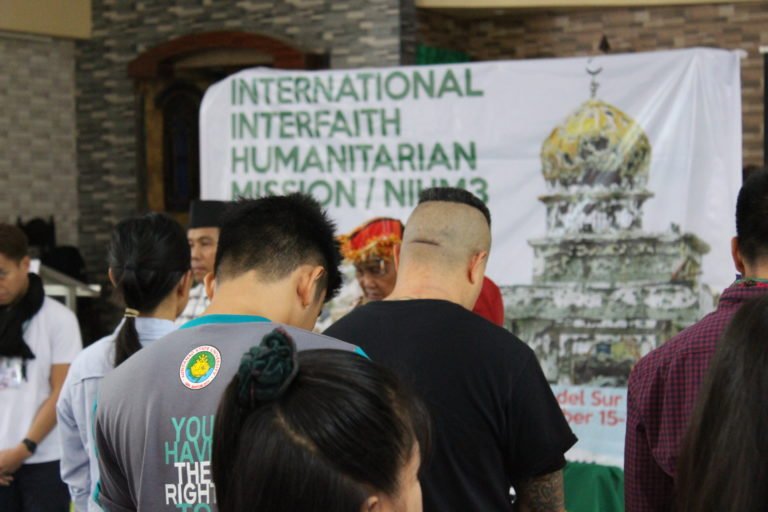
In the third interfaith humanitarian mission to Marawi led by Kalinaw Mindanao, people’s organizations from Canada, the US, Australia and other Asian countries under the International Coalition for Human Rights in the Philippines, responded to the call to bring in relief, medical and to document reports of human rights violations and situation of Meranaw evacuees who have returned to Marawi City.

Nearly five months after President Rodrigo Duterte declared Martial Law in Mindanao and an all-out war in Marawi that displaced almost 400,000 residents and brought heavy damages to lives and properties due to military airstrikes and encounter with the ISIS-inspired groups, he finally declared the “liberation” of Marawi which signalled the return of evacuees and the start of the city’s rehabilitation.

However, not nearly half of evacuees have returned to their homes due to government’s restriction such as not allowing civilians to go back at areas declared as ground zero, requiring an ID system based on voter’s registration, requiring land titles and imposing the Presidential Decree that says Marawi is a military reservation.  For those who did return, they were devastated at how their homes were destroyed by military airstrikes and looted by both the ISIS-inspired groups and the Philippine Military.

The international interfaith humanitarian delegation is concerned at the initial rehabilitation programs presented by the Philippine government that favor foreign and local investors and loaded with foreign loans. With two international lending companies – World Bank and Asian Development Bank  – taking the lead in planning the city’s reconstruction combined with President Duterte’s Build Build Build program, rehabilitation efforts are directed towards gaining profit from the war and devastation rather than to bring back Marawi residents.

At the ASEAN and East Asian Summit, East Asia governments have lauded the President’s response to the Marawi siege and firmed up more strict security measures to confront terrorism.  This raises alarm at how the victims of human rights violations in Marawi and the whole of Mindanao due to the military airstrikes and Martial Law declaration will find justice.

The International Interfaith Humanitarian Mission will take place on November 15-17 in Iligan City and Lanao del Sur with the aim to serve at least 2,000 IDPs, help empower and organize survivors and victims of internal displacements and all-out war in Marawi, document and collate the human rights situation in Marawi, express interfaith solidarity and unity with IDPs and other victims of human rights violations, and formulate recommendations on how to address the rehabilitation of communities impacted by all-out war in Marawi.#

Reference:

Jerome Succor Aba, Kalinaw Mindanao spokesperson, +639168448508

Peter Murphy, Chairperson, Global Council, ICHRP