

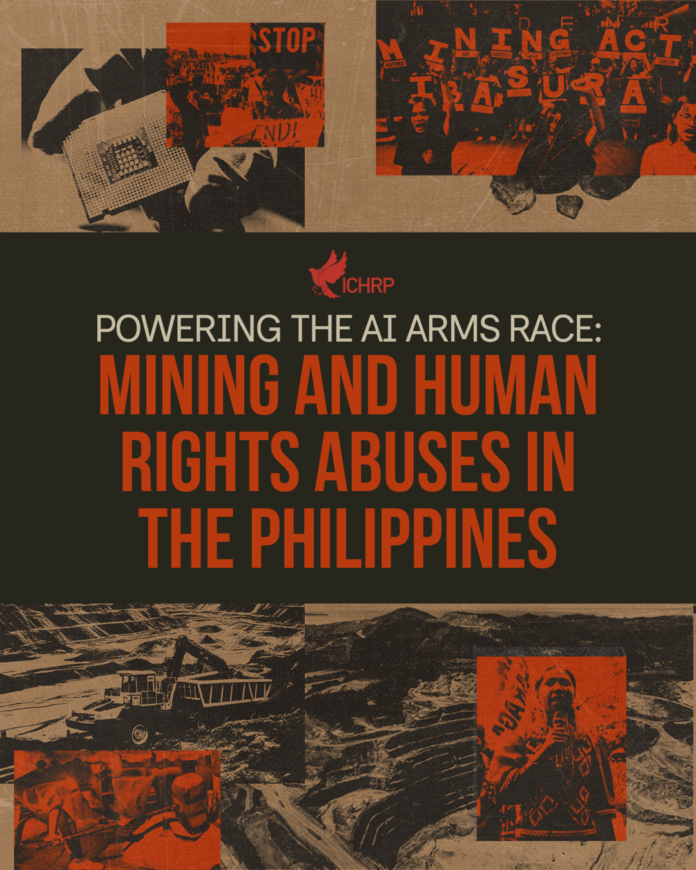
Big Tech is betting billions on AI. In order to fuel the rush for more and more data centers, there is a huge demand for the critical minerals necessary for computer chips. Cobalt, nickel, copper, chromite, gold and other minerals are essential for building the high tech necessary to make AI run. Tech companies, mining companies, and US-aligned governments are trying to secure a supply of these minerals through the recently announced Pax Silica deal.
The Philippines is rich in critical minerals. Government and industry peg untapped mineral wealth at over $1 trillion, yet only ~5% has been explored and mining contracts cover ~3%. This includes:
- 286,000 tons of cobalt (~4 percent of global reserves).
- 5.29 million tons of nickel. The Philippines is the world’s #2 nickel producer after Indonesia, ahead of Canada, China, Australia, and Brazil.
- ~4.41 billion tons of copper.
- 66.29 million million tons of chromite.
- 194 million tons of gold.
Who will profit from the extraction of these minerals? Miners make around USD $325/month, or about $2/hour for fulltime work. Pulling from the most recent government statistics (PSA 2023) companies made over PHP 308 billion in 2023, with a recorded total employment at over 38 thousand and almost 17 thousand contractual workers. Assuming that all were given full time of 40 hours a week, they would have earned together a total of more than PHP 13 billion. Meaning, for every peso the worker earned, the company made six! The reality is probably starker as there are widespread issues of workers being underpaid or lacking adequate hours.
Indigenous communities like the Lumad, Igorot, Mangyan, and Aeta live in mountainous areas where these mineral deposits are found. They have long fought to defend their ancestral lands from mining, eco-tourism, energy projects, and other plunder. They have lived on these lands hundreds of years before the US was even founded.
Communities displaced by mining lose their ancestral lands. They lose their livelihoods and connection to their culture, forced to relocate elsewhere in the country. Amidst ever increasing inflation of food and energy prices, the loss of livelihood is doubly felt. The methods of mining deployed in the Philippines pollute the riverways and further endanger rural communities downstream of the mine. Those communities who resist the development aggression become the targets of state repression.
The majority of the Armed Forces of the Philippines are deployed in rural and mountainous areas under the US backed counter-insurgency operations. Under the guise of “counter-insurgency”, they essentially serve as a force to repress resistance to foreign plunder and open up resource-rich areas to the entry of foreign capitalists. They have engaged in widespread violations of international humanitarian law such as aerial bombing and strafing, hamletting, killings of civilians, and displacement of hundreds of thousands of peasant and indigenous families.
Join the campaign against plunder, militarization, and human rights violations in the Philippines! Send us a message on social media or at ichrp.net/contact to learn about how to get involved with ICHRP!
