
Home Blog Page 89

Calls of the National Democratic Front of the Philippines

Delivered by:

Coni Ledesma

NDFP Peace Negotiating Panel member


  1. The NDFP calls on all friends and compatriots to support the Filipino people’s struggle for fundamental reforms. Support the movement for social, economic, political and constitutional reforms in order to achieve a just and lasting peace. Social and economic reforms, especially a land reform program of free distribution of land for the landless; a national industrialization program where the natural resources of the country will be used for the benefit of the Filipino people, and the implementation of social programs like health care, education and housing for everyone. This is what a just and lasting peace will mean for the Filipino people.


  1. We call on our friends and compatriots to continue the campaign to stop the US-instigated counterinsurgency Oplan Kapayapaan.

Stop Duterte’s dirty war against the Filipino people and the progressive and revolutionary forces!

Continue the campaign to stop Extra Judicial Killings and continue to demand justice for all the victims of EJK’s.  The anger of the people against the killing of Kian Lloyd should bring about a growing national and international mass movement against EJK’s.


  1. We also call on our friends and compatriots to continue to call for the resumption of peace talks.  The current problems in the Philippines can be discussed on the negotiating table even while the civil war continues.  The important thing is the political will to bring about a just and lasting peace.

NDFP’s Proposal for Comprehensive Agreement on Social and Economic Reforms (CASER)

by Juliet de Lima

Chairperson, Reciprocal Working Committee on Social & Economic Reforms (RWC-SER) & Member National Democratic Front of the Philippines (NDFP) Negotiating Panel


Friends, warm greetings from our overworked, overtasked and determined but not grim GO CASER team as we have named ourselves.


We are the NDFP Reciprocal Working Committee on Social and Economic Reforms and divided into technical working groups (TWG). Under the guidance of the NDFP negotiating panel, we conduct consultations with the masses and the mass organizations, work the result of consultations into the draft, discuss with our Government of the Republic of the Philippines (GRP) counterparts to reconcile the GRP & NDFP drafts and forge a common draft to submit to our respective panels for them to negotiate on what would be the GRP-NDFP Comprehensive Agreement on Social and Economic Reforms to be signed by their respective principals.


Here today, we shall examine the proposed social and economic reforms of the National Democratic Front of the Philippines, its place in the mass movement, in the GRP-NDFP peace negotiations to address the Filipino people´s aspirations for just and lasting peace.


I agree with the organizers that the focus of this forum should be on strengthening the mass movement to achieve the reforms and on how the peace negotiations can be one of the means by which these reforms may be achieved. We expect that our discussions today will not just be an academic exercise but would lead to concrete actions to rally support for the Filipino people in their struggle for reforms.


Conditions in the Philippines are developing fast, making events and campaigns to encourage and strengthen the people´s movement for reforms ever more urgent. The current administration has consistently demonstrated and proven its violations of, and total disregard for the people´s rights and demands on a very broad range of fundamental issues.  It is increasingly taking the path to fascist tyranny.  The extrajudicial killings and other gross human rights violations perpetrated by this regime in its so-called war on drugs as well as its war against progressive and revolutionary forces have far exceeded those by the 20-year regime of the deposed dictator Marcos. These are giving rise to a broad antifascist movement, which urgently needs international support.


Let us proceed to the NDFP draft Comprehensive Agreement on Social and Economic Reforms (CASER) as the most essential or fundamental reform document for addressing the root causes of the armed conflict in the Philippines and the Filipino people’s demands and aspirations for a just and lasting peace.


The prospective CASER would be basically a policy document and thus has to be supplemented by annexes for implementing the policies through executive orders, amendments of existing legislations or new legislations; access to public funding and the pertinent social and economic councils/agencies for harmonizing bilateral cooperation as well as joint and separate responsibilities; and through the mobilization of the people and resources to realize the reforms. This way, the people can immediately avail of and enjoy the social and economic benefits due them and give impetus to their potential for propelling social and economic development in the country and assuring themselves of a prosperous future and a just and lasting peace.


The GRP-NDFP negotiations on an agreement on social and economic reform started with the exchange of preliminary drafts in 1998 at the signing ceremony of the Comprehensive Agreement on Respect for Human Rights and International Humanitarian Law (CARHRIHL) on March 16, 1998.  The draft was subjected to a series of consultations with the public, starting with a 4-day national consultation involving various sectors of Philippine society and followed by sectoral consultations at the regional and provincial levels to ensure that all issues and concerns were covered. The NDFP RWC-SER reworked the draft to incorporate the results of the consultations and we continue to rework the draft according to further consultations under developing circumstances.


The negotiations on CASER must go through several phases: the first one being the bilateral discussions on the exchanged drafts at the level of the RWCs-SER to forge a common draft for submission to the Negotiating Panels; the second being the negotiations to forge and initial the agreement at the level of the two panels; and the third being the submission of the agreement for signing by the principals. The RWC common draft may be submitted to the panel part by part so that negotiations at the level of the negotiating panels can already proceed while the RWCs are still working out the common draft on other parts. The fourth and final phase of the CASER negotiations would be the panel-level post-agreement discussions and further agreement on the setting up of implementing mechanism and bilateral monitoring agencies; as well as on implementation with detailed fulfillment or compliance schedule and finally the constitutionalization of the reforms and the bilateral agencies required by the implementation of the reforms.


This way. we consciously avoid or we reject the DDR (Disarmament, Demobilisation and Reintegration) framework –consistently proven as failure at resolving the roots of armed conflicts all over the world– that the GRP has been trying to impose on the NDFP under various pretexts, such as prolonged ceasefires supposedly as ´enabling environment´ for the peace negotiations, actually pacification through virtual surrender of arms or a silencing of the guns of the people´s army, while the dominant state forces continued with the US-instigated ´counterinsurgency´ plan under such names as Oplan Bantay Laya under Arroyo, Bayanihan under Aquino and now the dirty war called Kapayapaan.  DDR is nothing more than a framework to pacify the oppressed by the oppressors. We can discuss this further in the open forum.


Now let us proceed with a powerpoint presentation of an overview of the NDFP draft CASER:


Content of NDFP draft CASER


Preamble of 11 paragraphs stating necessity and general objectives of reforms; objective and subjective factors, mechanisms for undertaking the reforms


Part i: Declaration of principles of 13 sections on the general principles for entering


Part ii: Bases, scope and applicability of 7 sections why, scope/coverage and means of implementing the reforms


Part iii: Developing the national economy:


Part iii – a: Agrarian reform and rural development with:

5 paragraph Introduction

Article i of 5 sections enumerating governing principles

Article ii:  Definition of terms

Article iii: Scope and coverage –  2 sections

Article iv: Distribution and sale of land – 7 sections

Article v: Compensation and land use – 4 sections

Article vi: Marine & aquatic reforms – 6 sections

Article vii: Protection of rights & welfare – 6 sections

Article viii: Cooperatives, credit and support services – 9 sections

Article ix: Prohibited acts and practices – 8 sections

Article x: Rural industrialization – 9 sections

Article xi: Other provisions – 3 sections

Article xii: Implementation – 8 sections


Part iii – b: National industrialization and economic development

introduction – 6 paragraph

Article i: General provisions for national industrialization -17 sections

Article ii: Definition of terms

Article iii: Break imperialist and comprador domination of the economy – 8 sections

Article iv: Modes of ownership and participation of mass organizations -11 sections

Article v:  Integrated regional and sectoral development – 7 sections

Article vi: Developing filipino industrial science and technology – 9 sections

Article vii: Financing national industrialization – 6 sections

Article viii: Role of the NPA and progressive  and revolutionary mass organizations

Article ix: Role of demobilized grp military personnel

Article x: Related legislative and policy reforms – 2 sections


Part iii – c: Environmental protection, rehabilitation and compensation

Introduction – 7 paragraphs

Article i: Principles of environmental protection and economic development

Article ii: Defintion of terms

Article iii: Measures for managing the environment and ensuring resiliency – 13                sections

Article iv: End environmentally destructive practices – 9 sections

Article v: Regulation of mining and marine wealth extraction – 6 sections

Article vi: Ban on alienation of natural resources and patent control – 3 sections

Article vii: On implementation and policy reforms


Part iv – Upholding people rights

Introduction – 2 paragraphs


part iv – a: Rights of the working people

6 paragraph Introduction

Article i: Definition of terms

Article ii: Rights of peasants, farm workers and fisherfolk  – 3 sections

Article iii: Rights of workers and private and public sector employees  – 7 sections

Article iv: Rights  working people of various professions and occupations, including semiworkers – 2 or 3 sections

Article v: Rights of overseas workers – 7 sections

Article vi: Womenś rights and gender equality – 13 sections

Article vii: Rights of children – 6 sections

Article viii: Rights of the elderly – 3 sections

Article ix: Rights of persons with special needs/disability – 2 sections

Article x: Right to adequate social services and public utilities – 2 sections

Article xi: Right to education – 7 sections

Article xii: Right to health – 7 sections

Article xiii: Right to housing – 3 sections

Article xiv: Right to water – 2 sections

Article xv: Right to adequate, affordable & clean energy   4 sections

Article xvi: Right to adequate, affordable and efficient mass transport system– 5 sections

Article xvii: Right to reliable, efficient and affordable communications services – 3 sections

Article xviii: Right to adequate and ecologically sound waste management services

Article xix: Right to disaster preparedness and response – 5 sections


Part iv – b: Promoting patriotic, progressive and pro-people culture-responsive

Introduction – 6 paragraphs

Article i: Program for advancing cultural development – 7 sections

Article ii  promoting patriotic, scientific, mass-oriented education -7 sections

Article iii  developing progressive and people-oriented media – 5 sections

Article iv promoting patriotic, progressive and pro-people arts and literature – 6 sections

Article v  advancing the rights and welfare of educators, media practitioners, artists and cultural workers – 6 sections

Part iv – c: Recognition of ancestral domain

Introduction – 7 paragraphs

Article i: Recognizing the right to self-determination – 9 sections

Article ii: Participation in economic development – 5 sections

Article iii: Protection from all forms of discrimination and rights violation

Article iv: Implementing & verification mechanism/measures


Part v: Economic sovereignty for national development


Part v – a: Foreign economic and trade relations

Intro – 6 paragraphs

Article i: Definition of terms

Article ii: General provisions for foreign economic relations – 8 sections

Article iii: Upholding sovereignty in policymaking – 5 articles

Article iv: Independent foreign trade and investment policies – 10 sections


Part v – b: Financial, monetary and fiscal policies

Intro – 6 paragraphs

Article i: Definition of terms

Article ii: Financing national development – 11 sections

Article iii: Independent monetary and exchange rate policies  – 4 sections

Article iv: Fiscal policy for socioeconomic development – 20 sections


Part vi: Final provisions – 7 sections


Implementation programs for social and economic development

 March 1, 2016 draft


  1. Program for agrarian reform and agricultural development
  • plans for developing specific crops/sectors


  1. Program for national industrialization
  • plans for developing specific industries/sectors
  • plans for promoting Filipino science and technology


  1. Program for a nationalized energy industry
  2. Program for nationalized water utilities
  3. Program for nationalized mass transport


  1. Program for strengthening the public health system
  2. Program for strengthening the public education system
  3. Program for promoting nationalist and pro-people culture
  4. Program for public housing


  1. Program for ensuring the economic rights of the working people
  • protection of workers
  • protection of Filipino migrant workers
  • protection of children and the elderly


  1. Program for environmental protection and rehabilitation
  2. Program for disaster preparedness and response


  1. Program for a progressive tax system and fiscal responsibility
  2. Program for nationalized banking and finance
  3. Program of independent monetary and exchange rate policies
  4. Program of foreign trade and investment relations for national development


  1. Program for promoting gender equality
  2. Program for the self-determination and autonomy of national minorities


Analysis on Duterte and the Philippine situation

by Prof. Jose Maria Sison

Chief Political Consultant

National Democratic Front of the Philippines (NDFP)


During his electoral campaign and soon after assuming the Government of the Republic of the Philippines (GRP) presidency, Rodrigo R. Duterte described himself as a socialist wishing seriously to become the first Left president of the Philippines and to negotiate a just and lasting peace with the NDFP and the revolutionary forces of the Bangsamoro. One week after his election he promised NDFP through its emissary Fidel Agcaoili on May 16, 2016 that he was going to amnesty and release all the about 400 political prisoners listed by the NDFP. On his own initiative, he also offered to appoint nominees of the NDFP as secretaries to the departments of labor and employment, agrarian reform, social welfare and community development and environment and natural resources. Everything looked rosy for the resumption of the GRP-NDFP peace negotiations on the substantive agenda.  We in the NDFP had high expectations that we could make the comprehensive agreements to lay the basis of a just and lasting peace.


The Ensuing Disappointment with GRP under the Duterte Regime


But soon enough, Duterte exposed himself as a volatile and erratic person, if not a grandstanding demagogue, when in his first State of the Nation Address (SONA) on July 25, 2016, he unilaterally  declared in general terms a ceasefire with the NDFP without any prior information in sufficient detail to the NDFP and demanded that the NDFP reciprocate blindly and issue its own ceasefire declaration. It turned out his ceasefire declaration was nothing more than the Suspension of Military Operations Order (SOMO) and Suspension of Police Operations (SOPO), both of which allowed the reactionary military and police forces and their paramilitary auxiliaries to attack the revolutionary forces and people under the pretext of law enforcement. At the same time as commander-in-chief of the reactionary armed forces, he continued Aquino’s Oplan Bayanihan until the issuance of his own Oplan Kapayapaan.


He angrily withdrew his ceasefire order three hours before the NDFP could issue the Communist Party of the Philippines (CPP) ceasefire order to the New People’s Army (NPA). Cooler heads prevailed after a few days. Subsequently, GRP and the NDFP negotiating panels were to issue their respective unilateral but reciprocal ceasefire declarations in order to promote the formal rounds of talks. Thus, an unprecedented ceasefire of more than five months ran from August 2016 to February 4, 2017 when Duterte terminated the peace negotiations without even consulting his own negotiating panel on February 20 as previously scheduled and despite the success of the third round of formal talks in Rome on January 19-25, 2017. Under pressure from the Defense Secretary Gen. Delfin Lorenzana, the National Security Adviser Hermogenes Esperon and the AFP Chief of Staff Gen. Eduardo Ano, Duterte demanded a bilateral ceasefire from the NDFP and immediately declared an all-out war policy against the armed revolutionary forces, without ever withdrawing such policy even when the fourth round of formal talks was held in Noordwijk, the Netherlands on April 3-6, 2017.


The insincerity or chicanery of Duterte was first exposed during the first and second rounds of formal talks in Oslo when he backtracked on his promise to amnesty and release all political prisoners in compliance with the Comprehensive Agreement on Respect for Human Rights and International Humanitarian Law (CARHRIHL) and Joint Agreement on Safety and Immunity Guarantees (JASIG). He released only 19 political prisoners on bail and subsequently ordered their re-arrest whenever he terminated the peace negotiations or threatened to do so. He has remained adamant that he would not amnesty and release all the political prisoners, unless he first secures the surrender and pacification of the people’s armed revolution under the guise of a protracted and indefinite bilateral ceasefire. He has shown no interest in the acceleration of the peace negotiations to arrive at the Comprehensive Agreement on Social and Economic Reforms (CASER) and the Comprehensive Agreement on Political and Constitutional Reforms (CAPCR) before the Comprehensive Agreement on the End of Hostilities and Disposition of Forces (CAEHDF).


Duterte is surrounded by neoliberal economic advisers and is obsessed with infrastructure building and importing manufactures by auctioning off the natural resources of the country, favoring foreign monopoly capitalism and raising taxes and foreign loans to cover budgetary and trade deficits. He is also surrounded by pro-US military advisers who embolden him to carry out a policy of killing people and bombing communities to suppress the armed revolution and preserve the rotten semicolonial and semifeudal ruling system. The regime has made impossible any substantial allocation of resources for national industrialization and genuine land reform under CASER. The Duterte plan of charter change for federalism ignores the forging of the CAPCR, which is necessary to prevent a pseudo-federal system of regional and provincial warlords under the highly centralized unitary presidential tyranny of Duterte.


Current Circumstances of Impasse Caused by Duterte Regime


Duterte has “terminated” the peace negotiations thrice. The first one was on February 4, 2017 in conjunction with the issuance of his all-out war policy against the revolutionary forces and the people.  It was followed up by a formal termination of the peace negotiations in a letter to the NDFP Negotiating Panel from OPAPP Secretary Dureza. Through the NDFP Chief Political Consultant, the NDFP patiently reminded and prevailed upon the OPAPP secretary that it would be better to talk and that teams of the GRP and the NDFP negotiating panels could meet for back channel talks. Thus, the teams met in Utrecht and agreed on March 11, 2017 that the GRP and NDFP engage in discussions for   reciprocal unilateral ceasefire declarations be held before the fourth round of formal talks.  But the GRP backed out of such a ceasefire agreement and insisted on a prolonged and indefinite bilateral ceasefire agreement ahead of negotiations on the reforms required by The Hague Joint Declaration. Even then, the fourth round of formal talks proceeded and the two sides agreed among others to work out an interim joint ceasefire agreement in conjunction with the signing and approval of CASER and the release of all political prisoners.


The second instance Duterte declared to the press the termination of peace negotiations was without a formal notice of termination. The “termination” was made in connection with the Duterte regime´s cancellation of the 5th round of formal talks and its complaint that the CPP had ordered the NPA to intensify tactical offensives against the May 23 proclamation of martial law Mindanao-wide, which targeted not only the Maute and Abu Sayyaf groups in Marawi but also the revolutionary forces and people outside Bangsamoro areas. The NDFP pointed out that it was in fact the aggrieved party because the Duterte regime never withdrew its all-out war policy under Oplan Bayanihan of the Aquino regime and then Oplan Kapayapaan of the Duterte regime.  And the all-out war policy was aggravated by the Mindanao-wide martial rule and the repeated threats to extend this nationwide. In the absence of any formal notice of termination, the NDFP consultants on bail who were stranded in The Netherlands were able to return home upon the facilitation of the RNG and on the assumption that the peace negotiations were still ongoing.


The third instance Duterte declared again to the press the termination of the peace negotiations was on July 19, 2017 immediately after the Arakan incident in which two vans of the Presidential Security Group ran into an NPA checkpoint.  He also stopped the GRP negotiating panel from meeting with its NDFP counterpart for back channel talks on July 21-23 to prepare the fifth round of formal talks.  He made it appear later that the NPA had tried to ambush him. In fact, he was responsible for failing to avail of a longstanding mechanism by which he could have arranged his safe passage with officials of the people’s revolutionary government in their territory.  Further investigation showed that the most important passenger in one of the vans was not Duterte but a girlfriend of his.


Duterte and his partisans are making it appear that the NDFP is simply against an interim bilateral or joint ceasefire. In fact, the NDFP considers such a ceasefire possible after the GRP complies with CARHRIHL by an amnesty and release of all the political prisoners; and after the CASER is duly signed and approved by the respective principals of the GRP and the NDFP. In this regard, the NDFP has exercised flexibility without violating The Hague Joint Declaration and the Joint Agreement on the Formation, Sequence and Operationalization of the Reciprocal Working Committees. The NDFP has always made clear that short of any agreement to form a single national unity government under the CAPCR the people’s democratic government exercises all its governmental functions among the people in its territory. In the current civil war in the Philippines, the revolutionary government and the reactionary government confront and fight each other as co-belligerents.


Continuing Need for and Prospects of Peace Negotiations


There is continuing need for peace negotiations. The conditions of chronic crisis of the semicolonial and semifeudal system keep on worsening.  There are therefore prospects of peace negotiations to arrive at agreements for the benefit of the Filipino people. The NDFP is ever willing to lay the basis for a government of national unity, peace and development.  It has even offered to co-found the Federal Republic of the Philippines, provided that there will be national and democratic guarantees against a despotic unitary president on top of pseudo-federal states of regional and provincial warlords and dynasties. The reactionary ruling system of big compradors and landlords under US hegemony continues to exist but is confronted by an ever worsening social and political crises and the rise of the revolutionary forces, including the party of the proletariat, the people’s army, the mass organizations, the organs of political power and the alliances.


In any circumstance, whether any reactionary administration of the GRP is willing to engage in peace negotiations with the NDFP or refuses to do so, the NDFP and the revolutionary forces and people that it represents have no choice but to continue further strengthening themselves. Those who oppose the armed revolution of the people assume the perpetuity of the reactionary state and ignore the growing strength and scope of the people’s democratic government of workers and peasants, which is fighting the reactionary government of big compradors and landlords.


Right now, the balance of forces is such that the possible outcome of the negotiations for a just and lasting peace can only consist of social, economic, political and constitutional reforms that are mutually satisfactory to the GRP and NDFP and are agreed upon by them. The agreements can raise the level of national independence, democracy, and economic development through national industrialization and genuine land reform, social justice, expansion of social services, a patriotic, scientific and mass culture and education, national self defense and independent foreign policy. They satisfy the demands of the people now and open the way to a still higher level of development.

Also right now, Duterte regime has brought discredit to himself and his regime by terminating the peace negotiations, failing to set the policies for solving the basic problems of the people, forgetting to fulfill contradictory promises to various classes and sectors, continuing the US-dictated  neoliberal economic and security policies of his predecessors and engaging in extreme brutality in the  counterrevolutionary campaigns against the revolutionary forces of the  Filipino people and Bangsamoro  with the use of aerial bombings, artillery and mortar on communities and in the so-called war on drugs targeting the poor drug addicts and pushers and killing more than 12,000 extrajudically with impunity cum foul-mouthed guarantees by Duterte himself that no one among the murderers in police authority would ever be punished. Thus, there is now a rapid growth of a broad united front to isolate, fight and oust the Duterte regime before it can wreak further havoc as the reign of greed and terror.


Even if the GRP-NDFP peace negotiations cannot succeed at this time, while the Duterte regime is still standing, the revolutionary forces and the people will keep increasing their strength by all means, especially people’s war. There is still the possibility that a better negotiating counterpart less reactionary than the current one can arise or the crisis of the ruling system becomes so aggravated that it produces a government that is more ready to come to agreement with the NDFP and the people’s democratic government. But of course, the best circumstances for the peace negotiations with an adversary are when the revolutionary forces and the people are already in the stage of the strategic offensive, they are about to win power in the urban areas and on a nationwide scale, and the reactionary government is already collapsing and disintegrating. ###


Update on the Government of the Republic of the Philippines (GRP) and the National Democratic Front of the Philippines (NDFP) Peace talks

by Luis Jalandoni, Senior Adviser

NDFP Negotiating Panel


The first and second round of peace talks in August and October 2016 were very promising. The past peace agreements were reaffirmed and both Parties agreed to accelerate the talks on social and economic reforms, political and constitutional reforms, and end of hostilities and disposition of forces, together with releases of political prisoners and forging a bilateral ceasefire.


President Duterte caused the release of 19 NDFP Consultants, who were able to participate in the peace talks.


In August, both the GRP and the NDFP issued indefinite unilateral ceasefires.


However, by January 2017, the Communist Party of the Philippines (CPP) issued a statement that the GRP military, police and paramilitary forces had committed violations of their ceasefire and attacked 500 villages, in 146 towns, in 43 provinces.


The CPP declared that these were rendering the ceasefire increasingly untenable.


The third round of peace talks were held in mid-January. The NDFP registered the numerous violations of the GRP.


But the talks on social and economic reforms progressed to the point that both Parties agreed to the principle of free distribution of land to farmers and farmworkers as the framework for negotiations on social and economic reforms. Discussions on political and constitutional reforms also were held.


On February 1, 2017, the CPP declared the termination of its unilateral ceasefire to take effect after 10 days. This angered President Duterte, who after the death of three policemen on February 3, declared the termination of talks with the NDFP.


On February 4, Defense Secretary Lorenzana declared “all out war” against the CPP, NPA and NDFP.


Prof. Jose Maria Sison, the Chief Political Consultant of the NDFP, reached out to President Duterte, saying he understood that Duterte as Head of the GRP and Commander-in-Chief of the AFP, showed concern for the fallen soldiers.


Sison proposed that Duterte follow the advice of his Panel members to undertake back-channel talks to resolve the current issues.


Thus, on March 11 and 12, back-channel talks were held in Utrecht. These resulted in a joint statement declaring that both Parties would resume peace talks, re-issue unilateral ceasefires before March 31, work for a joint ceasefire, an agreement of social and economic reforms and the release of political prisoners.


The next round of talks were scheduled for April 2-6, this time in Noordwijk in The Netherlands. On April 2, the GRP Panel asked to postpose the opening to April 3. President Duterte had reacted to a series of NPA offensives. The fourth round was concentrated on forging a “Joint Agreement on a Ceasefire”, while talks on CASER were limited to a few hours discussing only the minutes of the past round.


The NDFP insisted that joint bilateral ceasefire could only be approved, after an agreement on CASER had been forged and the release of political prisoners had been realized.


On May 23, when the Marawi incident occurred, and Duterte declared martial law in Mindanao, the CPP condemned the martial law declaration and ordered the NPA to intensify its military operations to defend the people.


Duterte again reacted strongly to this CPP statement. He declared the termination of peace talks. He gave the order “to flatten the hills”.


Intense discussions took place between the two Panels and the Norwegian facilitator. A compromise agreement was reached. The NDFP would issue a statement on June 17, recommending to the CPP to refrain from offensives against the AFP provided the GRP would also issue an order to the AFP to refrain from offensives against the NPA. The NDFP offered its help to the GRP in opposing terrorist groups like the Maute and Abu Sayyaf. The NDFP, as per agreement, issued its statement on June 17.


The GRP, as per agreement, issued its statement on June 18, declaring that it would likewise order the AFP to refrain from offensives against the NPA.


However, the GRP never ordered the AFP to refrain from offensives against the NPA. In fact. The AFP offensives continued without let up.


Moreover, the AFP did not accept the offer of the NDFP to help in the Marawi conflict.


Back-channel talks were scheduled for July 21-23 in Utrecht. But on July 18, a convoy of the Presidential Security Group was stopped at a checkpoint of the NPA in Cotabato. As the convoy sped away, the NPA fired and 1 paramilitary was killed and five members of the PSG group were wounded. President Duterte reacted angrily. He ordered the GRP Panel to cancel the back-channel talks.


The weeks that followed saw the exchange of bitter words between President Duterte and Prof. Jose Maria Sison.


In the meantime, the situation on the ground worsened. In Marawi and neighboring areas, the aerial bombardments and artillery attacks caused the displacement of more than 400,000 residents. The encounters between the NPA and the AFP and PNP increased in areas beyond Mindanao.


Secretary Bello, Chair of the GRP Panel, said that President Duterte no longer wants to have talks, but he has not issued a written notice of termination as required by the Joint Agreement on Safety and Immunity Guarantees. NDFP Panel Chair Fidel Agcaoili points to this as a remaining opening for the peace talks.


On August 8, the NDFP National Executive Committee exposed a reported CIA-sponsored plot to assassinate Sison and subsequently to overthrow Duterte. In the meantime, Duterte is under pressure because of the many thousands of extrajudicial killings in his war on drugs. The recent murder of a 17-year-old by policemen has roused widespread anger.


The Commission on Appointment’s rejection of the very popular Secretary of Social Welfare and Development, Judy Taguiwalo, has also aroused opposition against Duterte.


Very much in the news also is the accusation that Duterte’s son is involved in corruption. #

NO to Martial Law, YES to just and lasting peace in the Philippines

We, the undersigned organizations and individuals, in solidarity with the Filipino people, condemn the government of Philippine President Rodrigo Duterte for extending the declaration of Martial Law and the suspension of writ of habeas corpus in Mindanao until the end of 2017. We also condemn the Duterte government’s push to impose Martial Law on a national scale.

Duterte’s declaration of Martial Law in Mindanao in May 23 has already resulted in an increase in human rights violation in the Philippines’ second biggest island. The decision of the Philippine Congress and Senate in July 22 to extend Martial Law in Mindanao until the end of the year, presaged by the Philippine Supreme Court’s approval of the measure on July 4, will surely result in even more.

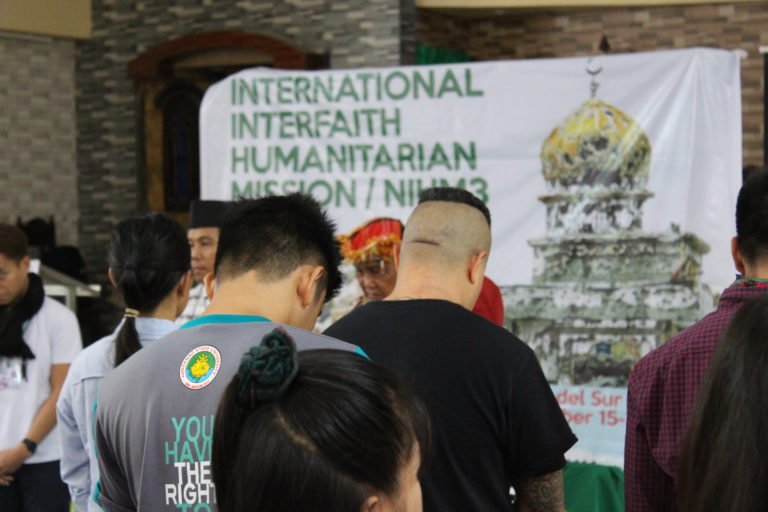
The 400-strong National Interfaith Humanitarian Mission (NIHM) to Marawi City and Iligan City on June 13-16, 2017 established that “barely two weeks since the May 23, 2017 declaration of Martial law there has already been at least 325,294 individuals who were internally displaced from Marawi (65,198 families), Maguindanao (1,248 families), North Cotabato (260 families), and Davao del Sur (187 families).”

In fact, the human rights record of the one-year old Duterte government is deplorable. As of June 30, 2017, human rights group Karapatan documented 68 victims of political killings and 842 victims of illegal arrests. At least 416,005 individuals were displaced and 357,569 were subjected to indiscriminate gunfire and aerial bombardment. These figures include bombings and aerial strikes in Marawi, North Cotabato, Bukidnon, Davao del Sur, Davao del Norte, and several other areas in Mindanao and all over the country. This does not even include the staggering casualties attributed to Duterte’s “War on Drugs” – which is widely believed to have surpassed the 8,000 mark.

Further, Karapatan has reported that in the period May 23-July 16 alone, there have been 10 victims of politically-motivated killings and 335 illegal arrests in Mindanao.

History tells us, Martial Law will only exacerbate the many and complex armed conflicts in Mindanao, which is home to the Communist-led New People’s Army (CPP-NPA-NDFP), separatist groups Moro National Liberation Front (MNLF) and Moro Islamic Liberation Front (MILF), not to mention the terrorist-bandit group Abu Sayyaf, private armies and paramilitaries. The Duterte government’s failure and recent refusal to conduct peace talks with the National Democratic Front of the Philippines (NDFP) to seriously address the social, political and economic root causes of these armed conflicts in favor of iron-fisted approaches will only strengthen armed groups opposing government.

Faced with an armed attack in Marawi City stemming from clan wars in the area, and an apparent failed attempt to capture Isnilon Hapilon in Marawi, the Duterte government swallowed hook, line and sinker the US government’s reading that the attack was caused by international terrorist group ISIS. It also followed the supposed solution dictated by the US government – the imposition of Martial Law.

Martial law does not bring peace. It escalates war. Martial law does not solve the problem of poverty and injustice in Mindanao, it aggravates suffering and injustice in the country. It intensifies exploitation and oppression of its people.

We join the widespread clamor of the Filipino people, that it must, therefore, be lifted at the soonest possible time to avoid more harm and damage to the people.

We stand with our Filipino brothers and sisters in Mindanao and the entire Philippines, today we join their voices in calling:

No to Martial Law extension in Mindanao!

No to Martial Law imposition in the Philippines!

Stand up for human rights in the Philippines!

End human rights violations in the Philippines!

Address the social, political and economic root causes of the armed conflict in the Philippines!
Initial Signatories:


Peter Murphy
Chairperson, Global Council of the International Coalition for Human Rights in the Philippines
Email: peter_murphy1_au@bigpond.com
Mobile number: +61 418312301

JustPeacePH Steering Committee members:

IADL Roundibon-logo-for-about-usCOLAP-1024x483iwa-logo_english1-1024x614ICHRP LogoIMA_logo