

At the opening of the International Conference for Human Rights and Peace in the Philippines on 19 July 2013, Mrs. Edita Burgos speaks of her ordeal as a mother searching for her missing son, Jonas, abducted by the Philippine military — a case akin to other enforced disappearances in the country.
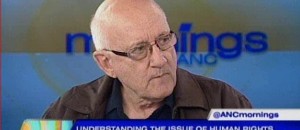
“Paradise” for the wealthy, “purgatory” for those who have less — Prof. Gill Boehringer

Click image to watch video of ANC interview with Prof. Gill Boehringer.
US lawyer calls for peace through respect of people’s economic rights
A prominent American human rights lawyer is calling on Filipinos to use human rights laws and conventions to force the Aquino government into reversing economic policies that adversely affect ordinary citizens, especially the poor.
In her keynote speech before the International Conference on Human Rights and Peace (ICHRPP) at the Great Eastern Hotel in Quezon City, Jeanne Mirer, president of the International Association of Democratic Lawyers and a stalwart of the US National Lawyers’ Guild, said government economic policies should adhere to human rights principles.
Stressing the importance of satisfying the people’s economic rights to achieve peace, Mirer said: “It is time that we use human rights law to challenge policies to ensure that Filipinos can make the Philippine government actually devote maximum available resources to progressively realize basic economic human rights articulated in the International Convention on Economic and Socio-Cultural Rights (ICESCR) and the Universal Declaration on Human Rights (UDHR).”
Calling the current neo-liberal economic order “undemocratic” and dominated by large multinational corporation, Mirer said the people’s unrest resulting from the failure of such policies are dealt with by repression using, among others, anti-terrorist laws that many countries passed or imposed after the 9-11 bombings, and by surveillance and the type of national security state revealed by both Bradley Manning and most recently Edward Snowden.
Mirer said Filipinos should make the Philippine government accept laws that promote “economic democracy” and allow everyone to enjoy “a social and economic order in which the rights and freedoms set in the UDHR are fully realized.”
She said the fight for human rights has allowed its warriors to become “masters of peace”.
Sison warns of more human rights abuses
In his message to the ICHRPP, Jose Ma. Sison, chairperson of the International League of People’s Struggle (ILPS) and NDF chief political consultant, warned that with the Aquino government’s termination of the peace talks with the NDF, “we can anticipate the escalation of counterrevolutionary violence and human rights violations.”
He scored the Aquino government for enabling multinational banks and firms and local ruling elites “to exploit the broad masses of the people and violate their economic, social and cultural rights, and for using the “coercive apparatuses of the state to discourage and suppress even lawful petitions and protests, especially those of the militant legal mass movement.”
Sison said that behind the Aquino regime’s all-out war policy against the revolutionary movement are orders from the US to carry out Oplan Bayanihan within the context of the US pivot or strategic shift to East Asia.
“The US wishes to tighten its control over the Philippines and use it to realize its strategic objective vis a vis China. It is hell-bent on further entrenching itself and making the Philippine reactionary government more than ever dependent on US military power. In connection with Oplan Bayanihan, it is goading the Aquino regime to engage in provocations and counter-provocations vis a vis China over the sea west of the Philippines. In this context, we can understand why the Aquino regime has terminated the peace negotiations,” Sison said.
Sison concluded his speech by calling on the conference participants to join the international network for promoting and supporting the cause of human rights and just peace in the Philippines.
The ICHRPP peace advocates from the US, Canada, Asia-Pacific, Latin America, Europe and the Middle East are committed to strengthen the international solidarity movement in defense of human rights and peace in the Philippines.
Conference participants are expected to join the people’s mass mobilization during the State of the Nation Address on July 22. ###
Advance our struggle for human rights and peace!

Message to the International Conference for Human Rights and Peace in the Philippines
Quezon City, Philippines
19-21 July 2013
By RENANTE M. GAMARA
EDUARDO O. SARMIENTO
EDUARDO R. SERRANO
Political prisoners
at Camp Crame, Quezon City
We, consultants of the National Democratic Front of the Philippines (NDFP) to the peace talks between the Government of the Republic of the Philippines (GPH)) and the NDFP join our fellow political prisoners, human rights defenders and advocates, friends and relatives of victims of human rights violations, and other personalities for the defense of human rights in expressing our militant support to the success of the International Conference for Human Rights and Peace in the Philippines which will be held on July 19-21 at the Great Eastern Hotel.
We extend our congratulations and thanks to the sponsors (International Coordinating Committee for Human Rights in the Philippines, KARAPATAN and the Ecumenical Voice for Human Rights) of this historical gathering that will uphold and defend the human rights of the Filipino people in particular and of mankind in general.
We salute our martyrs who have paid the supreme sacrifice with their lives in the defense of human rights.
We congratulate also the various human rights organizations and other advocates in launching this activity amidst the continuing impunity of the state agents in violating the basic human rights of the Filipino people and the brittle status of peace in this troubled land.
As political prisoners here in Camp Crame, we have witnessed so many human rights violations against political prisoners and other detainees here and other detention centers all over the archipelago. Women detainees are subjected to sexual molestations and other means of harassment in order for them to submit to the caprices of some jail officials.
Muslim detainees also experienced various unjust restrictions and discriminatory policies that are synonymous to penalties or punishments for so-called “terrorists” labeled by US and Philippine Authorities under their “war on terror” campaign. So many Muslim detainees are incarcerated due to mistaken identity fiasco of the government police and military operations. Many more detainees languished in jails and detention centers due to lack of financial resources and right connections that will assist them in defending themselves in courts or in facilitating their early release based on the absence of probable cause or insufficient evidences.
In our particular case as political prisoners, the National Union of Peoples’ Lawyer (NUPL) in its press statement last September 14, 2012 for the 5th year of its founding and on the occasion of the 40th year of Martial Law stated: “In concurrent jail visits across the country, NUPL highlighted the plight of political prisoners. In the conduct of its advocacy, NUPL has discovered that the alleged acts of prisoners are political in nature. Only a slim minority of political prisoners have been changed with rebellion. In most cases suspected political offenders are improperly charged with non-bailable ordinary crimes.” Furthermore, the same NUPL statement stressed that: “The NUPL has assessed that most of these (cases) are actually improper, false or fabricated charges that further persecute these detainees, degrade their stature, and mock the basic rules of evidence. This is a travesty of justice on top of the multifarious violations of their rights including torture and harassment.
On the other hand, the majority of the Filipino people especially those coming from the workers and peasants are suffering various human rights violations especially their socio-economic and cultural rights. They are being denied their right to health, housing and education. As expounded by Ex-Chief Justice Reynato Puno in his speech at the general assembly of the NUPL NCR last July 6, 2013, he said: “Filipinos must be able to demand from their government their right to housing, education and health or these socioeconomic rights would remain mere words on paper.” He further stressed: “We all know that a right that has no remedy is not a right at all.” He even cited the President Aquino’s veto of the Magna Carta of the Poor and the bill of the traditional view of socioeconomic rights not being demandable and because of a lack of funding to support the enforcement of these rights.
Against the backdrop of massive demolitions of urban poor communities especially in the metropolis to give way to the proposed Public-Private Partnership (PPP) projects of the government that will be established along esteros, ex-CJ Puno cited the experience of South Africa wherein a “South African housing activist who had sought relief before the high court and filed a case against the government after it failed to respond for applications for housing assistance and after it demolished the shacks that Irene Grootboom and her neighbors were occupying. In the end, “the Constitutional Court ruled that the issue raised was justifiable or could be entertained. Thus, “poor people could go to court and ask that their socio-economic rights in this case their right to housing be implemented by the appropriate government officials.
In our country, this will be a long shot target considering the political and economic bias of the justices of the Supreme Court and its lower courts. We can only rely on the militant actions and resistance of the people against these attacks on our democratic rights and freedoms. As stated by the CPP: “Oppression is a necessary concomitant of class exploitation. It is thus in the nature of the monopoly bourgeoisie to carry out attacks on the democratic rights and freedoms of the working class and the rest of the people In order to preserve the system of exploitation.”
We call on all human rights defenders and advocates to rise up the banner in upholding the human rights and raise the demand for “reforms to serve the immediate needs of the people for employment, decent income, better working and living conditions, and the availability of basic social services.”
We must collectively fight for the defense and advance of our human rights – civil, political, social, economic and cultural – for the benefit of the exploited and oppressed people. We must be able to act accordingly as the socio-economic crisis results in political crisis, and the forces and agents of monopoly capitalism malign and try to discredit democratic protest as unlawful rebellion or even as terrorism, and thus justify political repression. We must unite and fight for our human rights and strive to attain a just and lasting peace in our land!
Free all political prisoners!
Advance our struggle for human rights and peace!
Camp Crame, Quezon City
10 July 2013
Arrests and abductions precede Aquino’s 4th State of the Nation Address — Karapatan
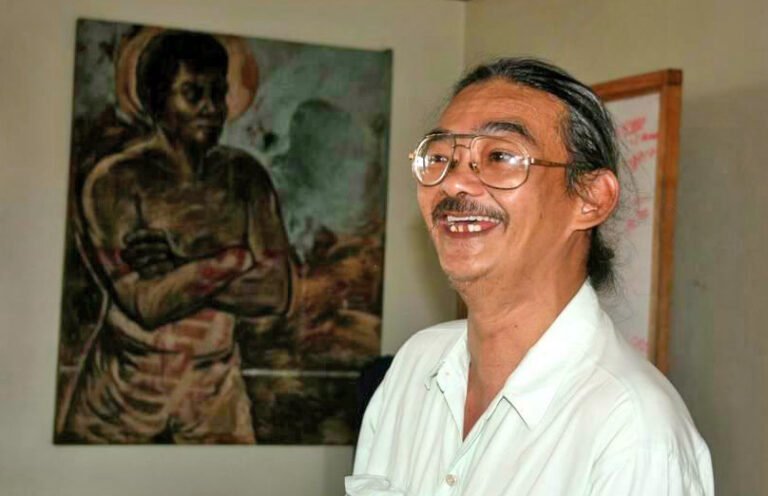
News Release, 18 July 2013 – Karapatan, through its chairperson Marie-Hilao Enriquez, raised alarm on the spate of arrests involving a former political prisoner and a farmer and the abduction and disappearance of another farmer and a tricycle driver in less than a week. “Will Pres. Aquino brag about these rights violations in his 4th State of the Nation Address?” Enriquez, also chairperson of SELDA (Samahan ng Ex-Detainees Laban sa Detensyon at Aresto), said.
Aristedes Sarmiento, a former political detainee who was among the “Tagaytay 5”, was rearrested on July 16 in the house of barangay captain Julianita Abuel Lagaya at 51 Mabini St., Bgy. 7, Lucban, Quezon in a joint operation by elements of the Lucban Municipal Police Station, Regional Intelligence Police Regional Office-CALABARZON, Military Intelligence Group (MIG4), Intelligence Service of the AFP (ISAFP), 1st Special Forces Company, 201st Infantry Brigade, 2nd Infantry Division, Naval Intelligence Security Group (NISG 4) led by Police Chief Inspector Juan Byron Reyes Leogo, Officer-In-Charge.
Sarmiento was arrested for murder through a warrant of arrest signed by Judge Napoleon E. Matienzo of the Regional Trial Court Branch 62 in Gumaca, Quezon, with no bail recommended. Named in the warrant are Felicardo Salamat, Arnold Albarillo, Cecilia Mondia with a certain Ruben Estocado who was primarily charged.
From Lucban, Sarmiento was forcibly brought to Camp Vicente Lim in Calamba, Laguna through a convoy of military vehicles. Barangay captain Lagaya tailed the convoy up to Camp Vicente Lim but was not allowed to enter the camp. The military told Lagaya, Sarmiento’s family and his legal counsel that Sarmiento was not in the camp. Sarmiento was only shown to his family midnight of July 16 and only after the family members asked the camp to issue a certification that Sarmiento is not in their custody.
On July 17, Sarmiento was brought to the Gumaca court and was committed to the BJMP Quezon district Jail, Lucena City. He was again transferred today at Camp Bagong Diwa in Bicutan.
In Bataan, two farmers and a tricycle driver were abducted by elements of the 703rd IB-Philippine Army on July 11 in Bgy. Liyang, Pilar. Josue Ortiz, 23, was brought to the 24th IB-PA headquarters where he was initially kept from his parents and members of the Karapatan quick-reaction team (QRT). After four days in detention, Ortiz was brought to the Bataan provincial court on July 15, and charged with illegal possession of firearms and explosives. As the judge is set to hear all cases for commitment order today, July 18, Ortiz was temporarily committed at the Balanga City Jail. Farmer Manuel Pacaira and the tricycle driver remain missing as of this date.
During the search, members of the QRT saw Pacaira in an army truck on its way out of the 24th IBPA camp and to the direction of Pilar, Bataan. He was again seen at the Bataan provincial court premises in Balanga, Bataan on board an truck during Ortiz’s inquest on Monday, July 15.
The 24th IBPA has been involved in the abduction and disappearance of two missing UP students Sherlyn Cadapan and Karen Empeno and the arrest, detention and torture of Raymond Manalo, a witness in the Sherlyn Cadapan and Karen Empeno case. The 24th IB has been designated in 2011 as a “territorial battalion” that integrates Army Reservists into the unit as “holding forces” in areas considered by the government as communist stronghold.
Earlier, on June 28, Juan Pablo Versoza, a member of the Alay Sining UP Diliman, and his wife Grace were illegally arrested in Marikina City through a defective warrant, with only aliases listed on the warrant. The names of the couple were only inserted in the warrant when they were arrested.
“This government practice of using alias warrants, illegal arrests through fabricated charges to justify its action against ordinary folks shows its desperation. This may be the start of the AFP’s another round escalation of its terror attacks against the people after it has admitted that Oplan Bayanihan is a failure. The human rights violations committed by Noynoy Aquino and his AFP is definitely an act of desperation, indeed a sign of failure and it’s turning its gun against the ordinary people, ” said Hilao-Enriquez. ###
Reference: Marie Hilao-Enriquez, Karapatan chairperson, 0917-5616800
—
The Samahan ng Ex-Detainees Laban sa Detensyon at Aresto (SELDA) is an organization of former political prisoners in the Philippines. Founded on December 4, 1984, SELDA was initiated by newly-released political prisoners of the martial law period. SELDA’s primary task is to work for the release of all political prisoners and to see to it that humane treatment of those who are still in detention are complied with by the Philippine authorities. SELDA advocates justice for current and former political prisoners. It calls for the mobilisation of resources in support of political prisoners, former detainees and their families. It carries out legislative advocacy for the indemnification and rehabilitation of political prisoners. SELDA goes into partnership and builds solidarity with concerned individuals and groups for the freedom and welfare of political prisoners and all victims of tyranny.
SELDA National Office: 2/F, Erythrina Bldg., #1 Maaralin corner Matatag Streets,
Brgy. Central District, Diliman, Quezon City 1101, Philippines
Tel: 632-4342837 Fax: 632-4354146
Email: selda.phils@gmail.com, selda_phil@yahoo.com.ph
Web: www.seldapilipinas.wordpress.com