
Home Blog Page 140

Luisita farmers to Pope Francis: Helping the poor is not a crime, free all political prisoners!

Luisita farmers led by the Alyansa ng mga Manggagawang Bukid sa Asyenda Luisita (AMBALA) and the national federation Unyon ng mga Manggagawa sa Agrikultura (UMA) appeal to Pope Francis to look into the concerns of 491 political prisoners in the country who are now on hunger strike.

“Those of us fighting against landgrabbing and loss of livelihood are also targets of repression, harassment suits, illegal arrests and even extra-judicial killings (EJK),” said Florida Sibayan, AMBALA chairperson.

Sibayan is a survivor of the 2004 Hacienda Luisita Massacre. Under Aquino, Sibayan was repeatedly threatened by state forces, and was arrested and detained thrice for defending their land rights. She is currently out on bail.

Several activists and supporters of Luisita farmers also face harassment suits. Despite a 2012 Supreme Court ruling for total land distribution, farmers claim that Hacienda Luisita is still controlled by President Aquino’s family.

“Helping the poor is not a crime. Those who do are unjustly arrested under this repressive regime. We appeal for Pope Francis’s intercession to free our defenders,” said Sibayan.

UMA Deputy Secretary General Ranmil Echanis said that repression and criminalization of agrarian disputes and political offenses is part of state policy under Aquino’s Oplan Bayanihan (Operation Plan Cooperation).

“The growing number of political prisoners under Aquino is alarming. Majority of political detainees languishing in prisons all over the country are ordinary farmers, peasant leaders, community organizers and even professionals who went out of their way to help uplift the lives of ordinary farmers and calamity victims,” said Echanis.

Agricultural workers under UMA hope that the Pope’s intercession will also lead to the release of imprisoned peace negotiators and the resumption of peace negotiations between the government and the National Democratic Front (NDF).

“Land reform is a major issue in the social and economic reforms (SER) agenda of the talks. Continuing agrarian unrest in the President’s own backyard, Hacienda Luisita, must be of immediate concern to both parties,” said Echanis.

Luisita farmers will join activities organized by the People’s Committee to Welcome the Pope (People’s Welcome), a network composed mostly of sectors from the poor and the oppressed.

Farmers will fast starting January 15 at the Liwasang Bonifacio Kampuhan to echo their appeal: “Pope Francis, Pope of the Poor, stand with us for land, justice and peace!”

Reference:
Gi Estrada
UMA Media Officer
+63916611418
www.peopleswelcome.net

——————————————————————————

Unyon ng mga Manggagawa sa Agrikultura
(Agricultural Workers Union)
Philippines
Follow UMA Pilipinas on Twitter

Political prisoners in Camp Bagong Diwa start hunger strike

Anticipating arrival of Pope Francis: Camp Bagong Diwa political prisoners start hunger strike

Five days before the arrival of Pope Francis, political prisoners at Camp Bagong Diwa started their hunger strike yesterday January 10, which will last up to January 19, the Pope’s departure from the Philippines.

“Aside from these letters and other efforts, we are also putting the whole of ourselves in our plea for return of our freedom, application of justice and respect for human rights that have been and continue to be deprived from us,” thus said the political prisoners in a statement, explaining the reason for their hunger strike. The 32 political prisoners at Camp Bagong Diwa’s male and female dorm signed the declaration of hunger strike. Among them are Andrea Rosal, and consultants to the peace talks of the Philippine government and the National Democratic Front of the Philippines (NDFP) such as Alan Jazmines, Tirso Alcantara, Loida Magpatoc, Emeterio Antalan, and Leopoldo Caloza.

They expressed hope that, “Your Holiness may be able to help in pressing for the return of the lost freedom and other rights of political prisoners, and thus fully correcting such grave social and political ills that have long been pestering in our country…” They added, “We, political prisoners, are among those being made to suffer terribly in this country, in the same way that you actually also saw and have also been deeply concerned about in your own country, Argentina.”

The political prisoners’ called their hunger strike a testament of their “existence and dire plight as political prisoners”. The Aquino government continues to deny that there are political prisoners in the country, much like the administrations it preceded.

Aside from their plight, the political prisoners expect that Pope Francis would see the “widespread sufferings of the greater mass of the oppressed, violated, deprived and impoverished people in our country,” which, they said has also been the Pope’s concern in his own country, Argentina.

The political prisoners at CBD asked the jail authorities to donate in their behalf the at least P10,000 savings from their food rations to the victims of disasters brought about by Supertyphoon Yolanda in 2013 and Typhoon Senyang in 2014. “We ask that the donation of such savings be coursed through the International Committee of the Red Cross,” they said.

Other political prisoners nationwide are expected to join in the hunger strike on January 15, while others will go on fast. Relatives of political prisoners and other victims of human rights violations go on sympathy fast and other sympathy actions while the Pope is in the country. All political prisoners in various jails nationwide will light candles on January 15 to welcome Pope Francis.

The statement is signed by Tirso Alcantara, Emeterio Antalan, Cesar Balmaceda, Leopoldo Caloza, Alan Jazmines, Jesus Abetria Jr., Modesto Araza, Alex Arias, Eddie Cruz, Philip Enteria, Voltaire Guray, Fidel Holanda, Edward Lanzanas, Rolando Laylo, Eliseo Lopez, Alberto Macasinag, Jared Morales, Denis Ortiz, Hermogenes Reyes Jr., Felicardo Salamat, Aristides Sarmiento, and Cirilo Verdan.

Reference:
Cristina “Tinay” Palabay
Secretary General
+63917-3162831

Angge Santos
Media Liaison
+63918-9790580

———————————————————————

PUBLIC INFORMATION DESK
<publicinfo@karapatan.org>

———————————————————————

Alliance for the Advancement of People’s Rights
2nd Floor Erythrina Building
#1 Maaralin corner Matatag Streets
Central District, Diliman
Quezon City, PHILIPPINES 1101
Telefax: (+63 2) 4354146
Web: http://www.karapatan.org

US Congress continues to be concerned about human rights violations by Philippine Army

0

Ecumenical Advocacy Network on the Philippines

In an appropriations bill signed by president Obama on December 15, the US Congress expressed serious concern about the lack of progress on human rights by the Philippine Army. The bill appropriates $50 million in credits for the Armed Forces of the Philppines to buy arms from the US, but bill contains provisions that prevent funding of the Army unless the US Secretary of State certifies the Army meets three human rights restrictions.

In order for the Philippine Army to be given access to the funding the Government of the Philippines must be:

  1. investigating and prosecuting army personnel who are credibly alleged to have committed, or aided or abetted, extra-judicial executions, forced disappearances, and other gross violations of human rights, and strengthening government institutions working to eliminate such crimes;
  2. implementing a policy of promoting army personnel who demonstrate professionalism and respect for human rights; and
  3. taking steps to ensure that the Philippine army and paramilitary groups under its control are not engaging in acts of intimidation or violence against journalists or human rights defenders.

The Ecumenical Advocacy Network on the Philippines (EANP), a US based human rights group that has advocated for the human rights restrictions since its founding in 2007, recently sent a letter to the US Congress and the State Department documenting the lack of progress on human rights. EANP stated that the Army has a very poor record of prosecuting human rights violators. Since President Benigno Aquino was inaugurated, 152 political and environmental activists have been killed and 18 disappeared.

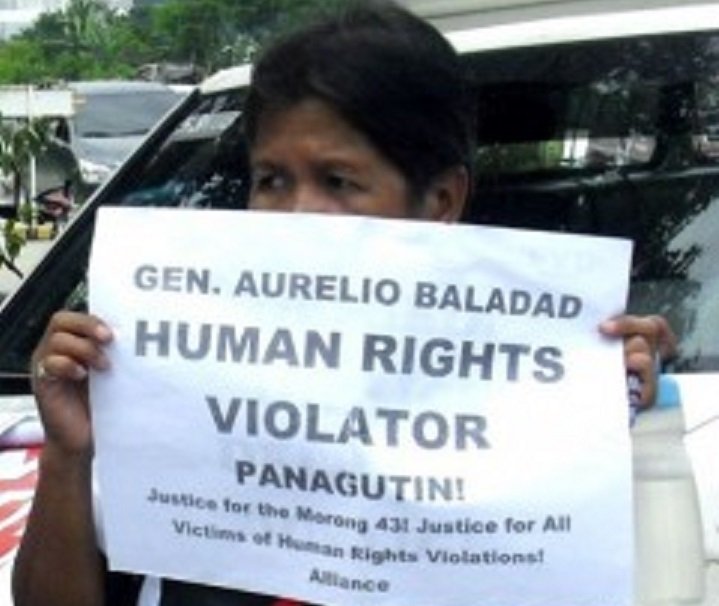
There have been very few arrests, and only a handful of convictions and not one mastermind has been convicted. The Army continues to promote human rights violators. In 2013 the Army promoted Brigadier General Eduardo Año, Brigadier General Aurelio Baladad, Lieutenant General Jorge Segovia, and Brigadier General Ricardo Visaya, all Army officers with credible accusations of involvement in human rights violations. Killings and abductions continue. Human rights groups in the Philippines have documented over 40 killings so far in 2014, a very significant increase compared to the previous year.

In addition to the killings, detentions, torture, disappearances, enforced dislocations of indigenous people, harassment and intimidation of human rights advocates, and suppression of labor rights are on the rise.

Since 2008 the AFP has lost over $13M in funding because the US Secretary of State concluded that the AFP has not sufficiently improved its human rights record.

Ecumenical Advocacy Network on the Philippines
Durham, North Carolina
P.O. Box 51844
Durham, NC 27717
email: eanp2007@email.com
http://www.eanp.org
phone number +1-651-646-1985

Luisita Farmworkers to Pope Francis: “Fight with us!”

0

In a Christmas party held today in Hacienda Luisita, farmworkers said that they are looking forward to Pope Francis’ visit in January next year. Fr. Jess Dumawal, MSC who led the celebration said that the Pope is a champion of the poor and in particular to the Catholic Church’s teaching that “agrarian reform is, moreover, a political necessity, a moral obligation”.

The Pope’s address to Popular Movements made in the Vatican City on October 29, 2014 resonates in Hacienda Luisita.  Violent incidents against farmworkers have been ongoing since since 2013, coinciding with the commencement of government’s “land distribution” activities in Luisita. Victims point to President Aquino’s kin, their goons and minions in the police and the military as the perpetrators. Luisita farmers are not alien to the Pope’s own words, “Cruel are the images of forced displacements, of bulldozers pulling down small houses, images so like those of war.”

The party held in Barangay Balete was organized for the children of farmworkers and members of the Alyansa ng Manggagawang Bukid sa Asyenda Luisita (AMBALA), an affiliate of the national federation, Unyon ng mga Manggagawa sa Agrikultura (UMA).

Church people have been assisting Luisita farmers in providing seeds and teaching non-conventional but scientific farming techniques such as organic farming and production of organic fertilizers and pest control.  They have been witnesses to the effects of the sham land reform in Hacienda Luisita.  Crops in AMBALA’s model farm in Barangay Mapalacsiao were destroyed on orders of officials from the Department of Agrarian Reform (DAR), the local government and police last June. With the continued support from church people, farmers were able to recover from the losses and star over.

The Department of Agrarian Reform Adjudication Board (DARAB) in Tarlac recently sent summons to at least 8 farmers in Mapalacsiao for allegedly unlawfully occupying and possessing the landholdings. The tillers have been cultivating the said farmlots since 2005 but the DAR awarded these to other farmers via a lottery drum (tambiolo) raffle last year, thus causing conflict among the “farmworker-beneficiaries.”

AMBALA Chairperson Florida Sibayan, a survivor of the 2004 Hacienda Luisita massacre,  said that they no longer trust the DAR, the courts or the police in Tarlac  — they no longer expect these authorities to help them seek justice.

Farmworkers has now found strength in Pope Francis’ words: “I accompany you with my heart on this journey. Let us say together from our heart: no family without a dwelling, no rural workers without land, no worker without rights, no person without the dignity that work gives.”

“We have been fighting for land and justice for decades. Fight with us, Pope of the Poor!” Sibayan urged Pope Francis.

Unyon ng mga Manggagawa sa Agrikultura
(Agricultural Workers Union)
Philippines

Call for Support: International Tribunal on US-Aquino Crimes against Filipino people

On the occasion of the International Human Rights Day, the International Coalition for Human Rights in the Philippines (ICHRP) reiterates its solidarity and commitment to accompany the Filipino people in their journey to achieve just and lasting peace in the land.

We take this opportunity to call on all freedom loving peoples of the world to listen and support the victims of various violations of human rights and international humanitarian law in the Philippines as they present their cases to the International People’s Tribunal (IPT) on the Crimes of the US-Aquino Government Against the Filipino People come July 2015.

The ICHRP, in cooperation with other concerned international organizations, has taken the task of organizing the International Peoples Tribunal at the behest of the victims, their kin and supporters — belonging to a wide spectrum of social classes and sectors in Philippine society – as represented by the Ecumenical Voice for Human Rights and Peace in the Philippines (EcuVoice), KARAPATAN (Alliance for the Advancement of the People’s Rights), Hustisya! (Victims United for Justice), DESAPARECIDOS (Families of the Disappeared for Justice), SELDA (Society of Ex-Detainees Against Detention and Arrest), among others.

We enjoin you to stand in solidarity with them.

Reference:
Rev. Canon Barry Naylor
Chairperson, Global Council
International Coalition for Human Rights in the Philippines


Statements & Reports:

  1. Karapatan (Alliance for the Advancement of People’s Rights in the Philippines): People’s verdict on US-Aquino regime’s human rights violations: Panagutin, Palayasin!
  2. Karapatan 2014 Year-End Monitor
  3. Luisita Watch: Hacienda Luisita is the face of every known form of human rights violation in the country
  4. National Union of Peoples’ Lawyers: On Human Rights Day: How many more laws before violations stop?
  5. BAYAN Canada: Economic plunder and human rights violations: US-Aquino’s double-barreled attack against Mindanao
  6. Asia Pacific Coordinating Committee on Human Rights in the Philippines:  Underdevelopment Is A Human Rights Violation

People’s verdict on US-Aquino regime’s human rights violations: Panagutin, Palayasin!

The US-backed Aquino regime stands trial for crimes against the Filipino people as organizations led by Karapatan, Manilakbayan, Bayan, and Defend-Southern Tagalog gather to commemorate the International Human Rights Day.

“The witnesses are the victims of human rights violations or their kin. Their testimonies are their own harrowing experiences under the US-Aquino regime. Today, they will declare the verdict on the US-Aquino regime’s crime against the Filipino people, its violations of human rights and international humanitarian law. For these crimes, we say, the US-Aquino regime is guilty,” said Karapatan Secretary General Cristina Palabay.

Karapatan enumerated a number of these crimes:

  • BS Aquino paid no heed to the demands of the Manilakbayan contingent, mostly peasants and indigenous peoples, to pull out the 55 battalions of AFP combat troops in Mindanao that implement Oplan Bayanihan and protect big foreign mining corporations and plantations, which plunder the country’s resources.
  • The 226 victims of extrajudicial killings—84 of them are from Mindanao; 136 are peasants, and 54 are indigenous peoples. There are also 225 victims of frustrated killings. What is more alarming is the manner by which a number of victims were killed. To date, there are 15 victims of extrajudicial killing who were brutally slain, involving individuals who were tortured to death, beheaded, hogtied and dumped in a shallow grave.
  • There are more than 145,000 victims of the AFP’s use of, and encampment in, schools, medical, religious and other public places for military purpose. Most of the documented cases are in Mindanao.
  • BS Aquino regime used trumped-up criminal charges against activists and community leaders to silence them and quell protests against government policies and projects that attack their communities. There are 491 political prisoners, most of them falsely charged with criminal offenses.
  • Millions of people’s money were used by Voltaire Gazmin’s Department of National Defense and Mar Roxas’s Department of Interior and Local Governments as bounty for “communist leaders” in their Order of Battle (OB). The practice has victimized civilians who are jailed by insisting they are the persons whose names appeared in their OB list. For 2014 alone, Gazmin and Roxas’s departments gave away Php 51.2 million to “informers” as reward money.
  • While mouthing slogans of peace, BS Aquino continues to stand in the way of peace. It refuses to seriously face the National Democratic Front of the Philippines at the negotiating table, disregards previously signed agreements and  reneges on its commitment to release “all, if not most” of political prisoners. It has not ceased to arrest and detain NDFP peace consultants. There are currently 14 NDFP detained consultants who are protected by the Joint Agreement on Safety and Immunity Guarantees (JASIG).
  • The violation of rules of engagement and international humanitarian law against the civilians and the seven members of the New People’s Army in a Northern Luzon Command-led military operation in Lacub, Abra on September 3-6. Recca Noelle Monte was killed without any gunshot, and Arnold Jaramillo’s body was riddled with bullets. The two, with five other NPA members Brandon Magranga, Ricardo Reyes, Pedring Banggao, Robert Beyao and Roberto Perez were tortured, willfully killed and their remains desecrated.
  • The BS Aquino regime is guilty of treason for the US re-occupation of the Philippines and the sell-out of the country’s sovereignty through the signing of the Enhanced Defense Cooperation Agreement.The BS Aquino regime isguilty for the systematic human rights violations perpetrated under the Oplan Bayanihan, and directed by the US through its Counterinsurgency Guide of 2009.

Palabay said, “The victims of typhoons Yolanda and Ruby taught us not to depend on the government that is unreliable and useless; that our safety and well-being rest in our own hands and in our collective power. We can apply this lesson in dealing with our miserable situation under the US-Aquino regime.”

In its more than four years in power, Palabay said, the “BS Aquino regime has done nothing but exaggerate the actions it has taken supposedly to address human rights violations; or ignore as baseless or propaganda the complaints of violations against his regime. He calls the people’s protests against human rights violations as heckling, hooliganism or vandalism.”

These cases will also be brought before the international community through the International People’s Tribunal (IPT) on the Crimes of the US-Aquino Government Against the Filipino People being organized by the International Coalition for Human Rights in the Philippines (ICHRP) and other international groups, in July 2015. “We call on the international community to support the Filipino people’s voices at the IPT,” said Palabay.

“In the end, because the US-Aquino regime does not uphold and protect our individual and collective rights, it is also our right as a people to kick out a president that has only served well the corrupt bureaucracy, his own landlord class and his master, the US imperialism. Thus, we say: US-Aquino regime, papanagutin, palayasin,” ended Palabay.

Reference:
Cristina “Tinay” Palabay
Secretary General
+63917-3162831

Angge Santos
Media Liaison
+63918-9790580


On Human Rights Day: How many more laws before violations stop?

On human rights day, we pause again to ask: how many continue to be killed with impunity by the State though the death penalty has been long repealed? How many still get disappeared & remain missing though we now have an anti-disappearance law? How many are still tortured routinely, viciously, though we now have an anti-torture law?

How many political prisoners remain detained & falsely charged, even as we hypocritically gloat on a tricky and belated human rights victims compensation and recognition law? How many still inordinately languish in jail though we have a plethora of rules on speedy trial?

How many peaceful rallies are violently dispersed, though we have a public assembly law recognizing the right?

How many farmers remain landless and live in penury, though we have a slew of agrarian reform laws? How many workers are laid off perfunctorily before six months, let alone have decent jobs to start with, though we have laws on security of tenure?

How many “informal settlers” are left homeless via inhumane demolitions, though we have an urban development and housing law? How many indigenous peoples are involuntarily displaced by “development” though we have a law on the need for free, informed and prior consent?

Ad infinitum.

One too many victims. Way too many violations. Yet so much elegant and fancy laws that have a disconnect with reality on the ground.

Reference:
Edre U. Olalia
Secretary General
National Union of Peoples’ Lawyers

+639175113373


Economic plunder and human rights violations: US-Aquino’s double-barreled attack against Mindanao

We vehemently demand that the BS Aquino government, notorious in its collusion with the US and its foreign policies on economy and politics in the Philippines, stop its reign of terror in the island of Mindanao. We are in solidarity with the struggle of the people of Mindanao to reclaim their rights to their land and environment. We are in solidarity with their ongoing campaign to protect their lives and their due rights as Filipino citizens to economic, political and personal safety. We,Filipinos who reside and work in Canada and have worked  in other foreign countries for the sake of our families, deplore this violent situation and demand a stop to the shameless, relentless and deliberate attack of the Philippine government against its own people.

The BS Aquino government brazenly lies, as many previous governments have lied throughout these dark years, about the rationality of such an attack. As though there could be any acceptable reason for the plunder, the torture and the killings, it presents a “defender of democracy” face.  It ingloriously grinds its propaganda machine to hide its ulterior motive of profit behind such words as “democratic way of life” as versus “rebellion” and “terrorism”.

The island of Mindanao, a veritable symbol of the whole country, is rich with natural resources and had been previously productive under the stewardship of its residents. Today however, the state powers have violated land and resources, and have allowed their distortion into agribusiness plantations, private energy development or high-scale mining projects run on labour paid at pitiable wages by foreign usurpers. The reward of government must be immeasurably immense, for it to demean itself by taking (on) the double roles of broker and security guard for these usurpers.

Just as we struggle for our rights and welfare abroad, our families and friends in the Philippines have to fight against the injustice, deprivations and dangers that now rule their lives. The irony of their birthright to a wealthy land is glaring and painful, particularly in places like Mindanao. Outrageous, most of all, is the usurpation of indigenous people from ancestral lands and the ruin of their ancient way of life.

After 2012, the year of the first mass protest march from Mindanao to Manila, the government, instead of listening to its people, stepped up its militarization of Mindanao.  According to reports from Food and Peace in Minda Now, a network of organizations composed of spearheading groups Panalipdan Mindanao and KALUMARAN, there are now some 55 combat battalions, approximately over 5,000 Philippine military troops in Mindanao, as well as American troops in a camp in Zamboanga.

The result of militarization and repression, as reported by advocate groups:

  • Thousands of innocent civilians, mostly peasants and the indigenous, have been displaced, and thousands of them killed, by the Armed Forced of the Philippines’ aerial bombings, artillery bombardments and strafing of homes and farms
  • Children and adults are no longer safe in community schools,where parents, teachers and students are vilified and harassed by the military.Military troops have also set up camp In several school grounds.
  • In 2014 alone, there were more than twelve incidents of forcible evacuation of 39 indigenous communities in Mindanao,affecting more than 1,112 families with over 4,735 women, men and children.
  • To this date there are more than 500 mass leaders and members of progressive people’s organizations and community members now facing trumped up criminal charges

We salute the courage and determination of the people of Mindanao to seek justice! We will stand and act with the people of Mindanao in bringing their urgent message to the world.  We are in firm accord with them as they demand that the government stop its massive human rights violations in Mindanao and the wholesale disastrous economic plunder of Mindanao by foreign and local business tycoons.

Reference:
Dr. Chandu Claver
Chairperson, Bagong Alyansang Makabayan – Canada


Underdevelopment is a Human Rights Violation

Landless peasants and indigenous peoples marching for miles to stage protests in the capital; victims of natural calamities trooping to government centers demanding for relief and rehabilitation; hundreds of thousands rallying and signing up for a people’s initiative to fight against pork barrel and widespread corruption; and hundreds of cases of human rights violations against activists, lawyers and media practitioners remaining unresolved in courts.

These are the current events that have come upon everyone commemorating International Human Rights Day in the Philippines this year, and bring to sharp focus the Aquino government’s fundamental violations of the Right to Development enshrined in the UN’s Rio Declaration on Environment and Development in 1992, as well as its Vienna Declaration and Program of Action at the World Conference on Human Rights in 1993. In the Vienna declaration, it was affirmed that “the human person is the central subject of development”, and that “States should cooperate with each other in ensuring development and eliminating obstacles to development.”

And yet the Philippines remains a prime example of underdevelopment in the region, with no genuine land reform for tillers of the soil, no national industrialization program, no gainful employment for most of its workers, and no significant participation of majority of its population in the country’s governance infrastructure. Systemic corruption, patronage politics, grave social inequalities, servility to lopsided foreign agreements are deeply entrenched and historic, and have gone unaddressed for decades in exchange for cosmetic socio-economic policies that include, labor export, promotion of peripheral service industries and poverty alleviation programs that merely line the pockets of multinational corporations and corrupt local officials.

Such formidable problems serve as barriers to the realization of justice and human rights in the Philippines, and are fetters to full human development in the country. There is a need to highlight the economic woes of majority of Filipinos for human rights advocates to acquire a full grasp of what needs to be done. Nothing less than development justice, which approaches the question of collective ownership of resources head on, can make our advocacy for human rights meaningful and substantive.

This Human Rights Day, the Asia Pacific Coordinating Committee on Human Rights in the Philippines (APCCHRP), a regional committee that supports human rights concerns in the Philippines, calls on the Aquino government to decisively address the country’s development issues as a way of promoting genuine peace and justice among the Filipino people.

In relation to this, we also call for the immediate resumption of the stalled peace talks to pave the way for discussion on the draft of the Comprehensive Agreement on Social and Economic Rights (CASER), which provides for a people-oriented approach to development justice in the Philippines.

Uphold the Filipino people’s right to development!
Resume the GRP-NDFP peace talks, NOW!