Our warmest greetings of solidarity to all the working masses and people jointly participating in our 117th International Day of Labor. Celebrating the cause of our yearly commemoration in a moment of a global pandemic, is a prime occasion to advance the cause of our working masses in a period of many militarist lockdowns by many countries doubly damaging both political and economic situations affecting our people — majority of them are the working class.
Our united organizations: Anakbayan Europa, Migrante Europe, Europe Network for Justice and Peace in the Philippines and the International Coalition for Human Rights in the Philippines (ICHRP)-Europe have been conducting thematic weekly ‘noise barrage’ campaigns here in Europe in support and in solidarity of the countries deeply affected by the COVID crisis, and where many of our compatriots are working and living; our activities lead to this May 1st celebration of the International Day of Labor. In solidarity, with our Filipino people and the working masses, our theme for this global celebration is outlined in many of our consistent slogans: Ayuda Hindi Diktadura! Solusyong Medikal Hindi Aksyong Militar! Peace Talks Now! No to Martial Law! — Oust Duterte! These calls are clear reminders to the oppressive Duterte Government to address integrally the COVID-19 crisis affecting the working Filipinos.
Our collective solidarity call for this day of the workers and the toiling masses is End the de facto
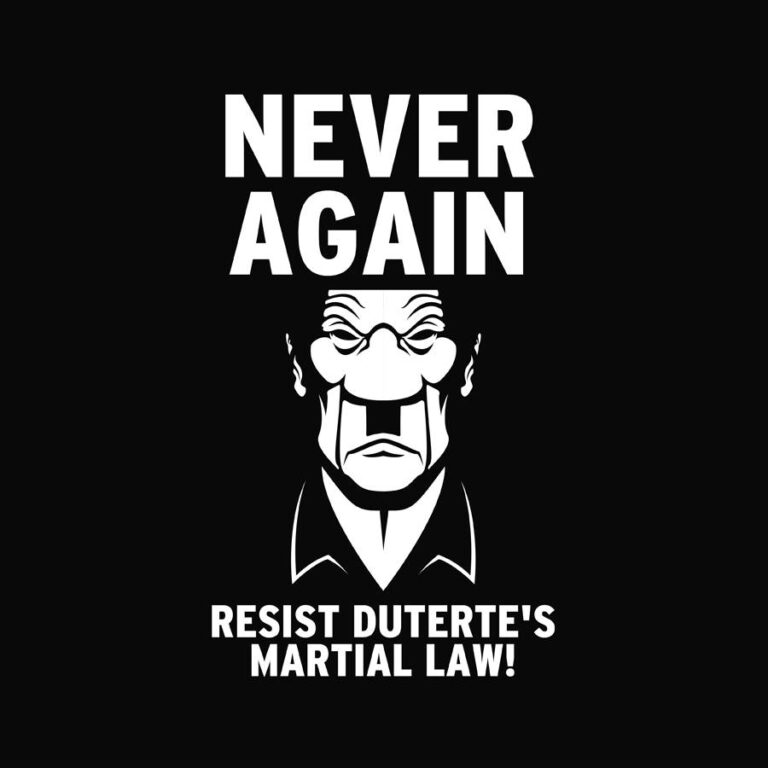
Martial Law in the Philippines! The current repressive regime of Duterte instituted the Executive Order No. 70, meant to violently attack the toiling masses and of continuing the militarist anticommunism violent hysteria; added by a revised Human Security Act suppressing political dissent, enhancing intelligence work like surveillance; harassing, arresting without judicial warrant; illegal detentions by military force — all targeting our leaders from different sectors, activists and even ordinary farm workers. Sadly, many of our leaders, organizers and members of sectoral organizations were murdered by state forces from the dictatorial order of Duterte.
During this COVID-19 crisis, instead of providing adequate solutions affecting the Filipinos, Duterte arrogantly continued to offer the alibi of declaring Martial Law, blaming the New People’s Army (NPA) who are doing relief work for those affected by the crisis in the hinterlands (and had earlier already declared ceasefire) of attacks on the government forces; and clearly ordering the hunt of legal nationalist organizations with this stern warning from Duterte himself: “lahat kayong mga legal fronts magtago na kayo. Magtago na kayo. Huwag ninyo akong bolahin…” (All of you who are members of the legal front organizations can already start hiding. Hide yourselves. Do not play with me… – Speech of Duterte last April 23, 2020) This warning is meant to suppress, and scare us from our collective call, but we are not afraid, we resist this dictatorship! We shout: End the de facto Martial Law in the Philippines! Oust Duterte!
A day before May 1, 2020 the state forces murdered Jory Porquia – an anti-Marcos activist during the Martial Law years, a leader of the League of Filipino Students (LFS) in the 80’s, and Bayan Muna Iloilo coordinator – just a week after the televised warning of the President of the Philippines on activists and organizations critical of his administration. We condemn this bastardly act on our fellow activist and labor organizer, End the Killings! We render our comradely appreciation of Jory Porquia’s dedication to the toiling and working masses in Iloilo, and the whole of Panay. We solicit for a united call of Justice for Jory! as we celebrate the International Day of Labor. ###
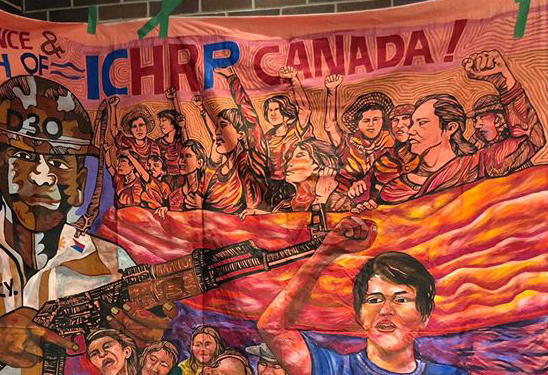
INTERNATIONAL COALITION FOR HUMAN RIGHTS IN THE PHILIPPINES – Canada
On the occasion of International Workers’ Day, ICHRP Canada expresses our solidarity with the workers and the people of the Philippines, and also our profound concern about the growing militarization in communities throughout the country. We know that the majority of workers in the Philippines only have access to insecure and low-paying work, and as COVID-19 continues to spread, we recognize the impact on the livelihoods of workers and their families is tremendous.
It is the role of the Government of the Philippines to ensure the safety and security of all workers in the country and we call on the government to ensure this becomes the genuine priority. The implementation of several new laws, programs and policies have now moved the country to de facto martial law. We deplore the Duterte Regime’s use of COVID-19 as a means of furthering any agenda other than the public health and safety of all citizens.
We have reason to be concerned. Through “Oplan Kapanatagan” and Executive Order 70 (E.O.70), the Duterte regime has continued to systematically label any workers organizations and groups who organize for their rights, or the rights and welfare of others, pejoratively as “leftists” and “communists”. Targeted organizations include, among others, the Alliance of Health Workers, Federation of Agricultural Workers (UMA), Peasant Movement of the Philippines (KMP), National Fisher Folk’s Organization (Pamalakaya) and the National Human Rights Group, Karapatan.
This reflects both his true lack of interest in the public’s welfare amid a global pandemic and a desire to crush political opponents. Instead of waging an “all-out war” against the virus through improved health facilities, increasing testing and access to protective equipment for front line workers, he has opted to increase militarization and violence. These labels have resulted in several extra judicial killings and an increasing number of political prisoners.
We are concerned that despite the call of the UN Human Rights Commissioner and even the advice of a Senate Committee to release the most vulnerable prisoners at risk of infection, including political prisoners, no action has been taken. Instead of showing compassion for the poor who have had to breach the lock down order in order to survive their impoverished circumstances, Duterte has shamefully given the police and the military permission to “shoot to kill”.
The world is watching. The UN indicated that the Philippines “highly militarized response” to contain the pandemic has led to actions against more than a hundred thousand people for violating curfew ordinances. Over 152,000 quarantine violators had been reported nation-wide by mid-March, of this number 38,000 have been arrested. UN High Commissioner for Human Rights, Michelle Bachelet said detention may even be worse for containing the spread of COVID-19 as detainees are kept in a small place with other violators, validating the observations of peoples’ organizations who claim that public health is not this governments’ priority. Bachelet concluded by saying “emergency powers should not be a weapon government’s can wield to quash dissent, control the population and even perpetuate their time in power. They should be used to cope effectively with the pandemic – nothing more, nothing less”.
To further aggravate an already dangerous situation, Duterte has banned organisations other than Government agencies from delivering relief. Years of austerity and corruption have rendered all levels of governments, including local governments, unable to provide for all their citizens, yet representatives of urban poor communities and several peasant organizations have been arrested for demanding food distribution or delivering relief to agricultural workers who were hungry and in need of assistance. These actions exposing Duterte’s intent to crush all civil society organisations and individuals who have independent voices and the courage risk their own lives to deliver relief to those most in need are inexcusable.
We call on the Government of the Philippines to:
Immediately end all repressive measures against the people of the Philippines, including all military repression;
End the suppression and red tagging of legal and democratic organisations;
Respond to the peoples’ needs in the face of the pandemic, including:
Free and immediate mass testing nationwide for COVID-19;
Investment and improvement in health facilities;
Increase protection and access to Personal Protective Equipment (PPE) for all frontline health workers;
Sustained economic relief for the urban poor, workers and other impoverished households;
Enable civil society groups to provide support to the poor and communities in distress;
Respect human rights and drop charges against those who were bringing relief; and
Release all political prisoners, especially those who are the most vulnerable.
We call on the Canadian Government to stop military aid to the Philippines, stop the training of military and police, and to stop sharing intelligence, as the country lurches closer to declaring martial law.
We also call on the Canadian Parliament, specifically the Foreign Affairs sub-committee on Human Rights to investigate the human rights situation in the Philippines.NO TO DUTERTE’S DE FACTO MARTIAL LAW!
INTERNATIONAL COALITION FOR HUMAN RIGHTS IN THE PHILIPPINES – AUSTRALIA
29 April 2020
We have protested the growing militarization of the Philippines and the institution of laws, programs and policies which have all moved the country to de facto martial law for some time now. We deplore that the Duterte Regime has been using Covid-19 as a means of furthering his aims to implement de facto martial law throughout the country. He has already issued a memo to this end. Through “Oplan Kapanatagan” and Executive Order 70 (E.O.70), the Duterte regime has been on a systematic path of labeling any groups who would organize for their rights as “leftists” and “communists”, which has resulted in many extra judicial killings and an increasing number of political prisoners. Even people here in Australia have been targeted through a visit of General Parlade. Recent pronouncements of the President red tagging among others the Alliance of Health Workers, Federation of Agricultural Workers (UMA), Peasant Movement of the Philippines (KMP), National Fisher Folk’s Organization (Pamalakaya) and the National Human Rights Group, Karapatan, reflect his desire to crush any opposition. Instead of waging an “all-out war” against the virus through improved health facilities, and increasing testing and protective equipment for front line workers, he has preferred to increase militarization.
We are concerned that despite the call of the UN Human Rights Commissioner and even the advice of a Senate Committee as to release prisoners most vulnerable to be infected by the virus, including political prisoners, this has been ignored. A Petition to the Supreme Court asking for the release of elderly, pregnant and sick political prisoners has even been blocked by Solicitor General Caleda.
Instead of showing compassion for the poor who have breached lock down orders, people who are hungry or unable to stand the heat in their overcrowded shanties, he has given permission of “shoot to kill”. In fact, an ex-military suffering PTSD was recently killed despite the pleas of family and neighbours that he was not of sound mind. Others are arrested adding to the overcrowding of the jails where cases of Covid-19 have already been detected and there has already been a death. Human rights are totally being denied by many of those enforcing the lock down.
Moreover, he has banned organisations other than Government agencies from delivering relief. Even local Government Agencies are admitting they cannot provide for all their constituents. Yet recently a group organized by various peasant organizations was arrested when they were delivering relief to agricultural workers who were hungry and had received no relief. The group had all the relevant permits and adhered to mask wearing and distance policies. Yet they were detained for 3 days and are now on bail. It seems the group were also carrying a newspaper, Pinoy Weekly, which contained a critique of the government handling of the virus situation.
Together with another journalist who was arrested for a blog critizing Duterte for his militarist approach to a health program, they are just signs of Duterte’s intent to crush all civil society organisations and individuals who have an independent voice or even who are ready to risk their own health and safety by collecting and delivering relief to those most in need.
We therefore call on the Duterte Government to:
· end the suppression and red tagging of legal and democratic organisations,
· improve health facilities and increase the protection of health workers,
· provide sustained economic relief for the poor,
· allow the civil society groups to provide support to the poor and in distress,
· respect human rights and drop charges against those who were bringing relief, and
· release political prisoners, especially those who are the most vulnerable.
We call on the Australian Government to stop military aid to the Philippines, especially as the country moves closer to declaring martial law.
On April 24 President Rodrigo Roa Duterte extended the Enhanced Community Quarantine in some cities, regions, and provinces until May 15, 2020, and the President also threatened to declare Martial Law “if lawlessness continues”. The threat came in the aftermath of claims that communist rebels blocked relief for the people amid the COVID-19 pandemic and took away relief goods intended for Barangay Guinmayohan, Balangiga, Eastern Samar. However, the town’s mayor, along with local officials, deny reports of rebels seizing relief goods.
A narrative of threats by President Duterte pinning the blame to the rebels has been recurring since the pandemic hit the country. As a Philippine Senator aptly pointed out in reaction to the President: “The enemy at the gates today is COVID-19, not insurgency”. Duterte’s words and actions show his deep, underlying desire to crush resistance, the revolutionary movement and its supporters, and thus enforce Martial Law. And the Duterte administration is hell-bent on committing human rights violations with impunity along the way.
A De facto Martial law
Even before the Covid-19 pandemic, President Duterte unleashed the iron fist of Martial Law in Mindanao, the second biggest island of the country, for two years. This led to worse human rights situation–the massive displacement of indigenous people, numerous political killings, military crackdown on unions of agri-workers, and continued illegal arrests. Terror spread to islands in the Central Philippines and turned the province of Negros into a killing field, with massacres and, at one point, targeted extrajudicial killings almost every day.
The Duterte administration has carried out Oplan Kapanatagan and Memorandum No.32, along with local implementing plans, to “suppress lawless violence”. These operations have left behind atrocities to the Filipino people: countless state-perpetrated killings, mostly of civilians, including children; pervasive human rights violations; displacements en masse of the population; and massive destruction of socio-economic resources requiring decades to recover.
President Duterte’s Executive Order No. 70, meant to combat counterinsurgency in the country, created a National Task Force to End Local Communist Armed Conflict with a “whole of nation approach.” It has, according to the government’s Commission on Human Rights, “been consistently used to justify threats and intimidation of individuals and organizations working for the improvement of the human rights and welfare of various marginalized, disadvantaged, and vulnerable sectors of society.” All these speak of a de facto Martial Law in the country.
“Taking advantage of the coronavirus pandemic to erode human rights would be unacceptable.”
– UN Secretary-General Antonio Guterres
The International Coalition for Human Rights in the Philippines (ICHRP) has strongly denounced Duterte’s repressive policies and now, more than ever rejects his Martial Law agenda at the time of Covid-19 pandemic. It will only cause greater hardships for the Filipino people who are already suffering from the slow, inadequate, uncaring, and militarist response of the government to the health crisis. Keeping the people safe from the coronavirus is not a license to disregard basic human rights. As the United Nations Secretary-General Antonio Guterres said, “Taking advantage of the coronavirus pandemic to erode human rights would be unacceptable.”
Last April 1, Duterte ordered the military and police to “shoot-them-dead,” an order to kill violators of the coronavirus quarantine. This death threat was immediately followed by an upsurge of human rights violations by state forces across the archipelago. A farmer Junie Dungog Piñar from Southern Philippines was shot by military men for violating the COVID19 lockdown three days after Duterte’s shoot-them-dead order. Another farmer, Noel Galvez from Barangay Buluan, Cabilga, West Samar was tied like an animal and tortured before he was killed last April 18.
The anti-poor statements continued. The government blamed “hard-headed” poor people for having the most cases of COVID-19 in South-east Asia. Now the narrative of blame has shifted, as Duterte imputes his own failure to the rebels and threatens anew to impose martial rule.
These abuses of the ordinary Filipino’s dignity and basic rights have been called out by human rights organizations of world repute, such as Amnesty International. UN Secretary-General Guterres warned governments of “further erosion of trust in public institutions if people perceive that their authorities had mishandled response or were not transparent.”
Our task: support the people’s fight against Duterte’s tyranny
With the eradication of the dreadful Covid-19 disease not in sight and its spread far from being contained; as the world’s peoples are continually beleaguered by fear of getting infected or re-infected; as the Philippine public health system continues to be fragmented; as the Filipino masses are restlessly anxious about where to get food for the next meal; as the world faces an inevitable post-COVID-19 global economic crash in the years ahead; and as the government remains hell-bent on employing fascist and other repressive measures, there will be unrest and resistance.
ICHRP, compelled by its commitment to campaign for human rights and Filipino people’s rights, denounces the de-facto Martial Law and will resolutely support the people’s legitimate struggle against Duterte’s tyranny. We support the following immediate demands:
1. NO to Duterte’s De facto Martial Law
2. Mass testing and public health facilities nationwide
3. Protection and care for all health workers
4. Food, not bullets nor torture, for farmers
5. Sustained economic relief for the urban poor, workers’ sector, and other impoverished households
6. End suppression and red-tagging of legal and democratic organizations; maximize their capacity to deal with the crisis.
Actions points
1. Mobilize all ICHRP member organizations, individuals, and networks to release statements condemning Duterte’s de facto Martial Law
a. Reach out to other organizations, institutions of influence, members of parliament, to speak up on the issue and support the cause
2. Lobby to foreign ministries, parliaments, international institutions to raise the alarm on the occurring de facto Martial Law amid the Covid-19 pandemic
a. Prompt key officials to give higher forms of response to the cases of human rights abuses and imposition of Martial Law
b. Utilize all persuasive means and explore resourceful ways of communicating with them (phone call barrage, coordinated emails, etc.)
3. Launch online actions building up to the May 1 event and onwards by initiating online gatherings and events that will feature the current situation in the Philippines and the need to fight Duterte’s Martial Law
The International Coalition for Human Rights in the Philippines calls on all its members worldwide and appeals to all other organizations, groups, and individuals in the international community to join the Global Day of Action against Duterte’s Martial Law this coming 1st May.
We urge you not to miss this opportunity to be in solidarity with the struggling communities in the Philippines.
The Asia-Pacific Coalition for Human Rights in the Philippines (APCHRP) strongly condemns the wrongful arrest of seven individuals delivering relief goods to poor households in Norzagay, Bulacan.
On the morning of the 19th of April, a jeepney carrying relief goods was stopped at a police checkpoint in the town of Norzagay. Volunteers from Tulong Anakpawis and Sagip Kanayunan were scheduled to distribute this humanitarian assistance to members of the urban poor and peasant community affected by the COVID-19 enhanced community quarantine (ECQ).
Seven volunteers, including the driver of the jeepney, were brought to the Norzagay Municipal Police Station for questioning. These individuals were never given a reason why they were being questioned, or any explanation as to why they were apprehended in the first place.
At around 12:30 p.m., former Anakpawis Party-list Rep. Ariel Casilao arrived at the police station to negotiate the release of the volunteers. The relief goods were turned over to the Barangay Bigte office and will be turned over by barangay officials instead.
While the apprehended relief volunteers were momentarily released upon the intervention of Rep. Casilao, they were later called back to the police station – again without any offense or violation committed.
Former Rep. Casilao says of the incident: “This is harassment, plain and simple. We have no violations. The police also can’t justify why they are refusing to release our volunteers. We are in a crisis situation. Now is not the time to prosecute activists and cause oriented groups who are engaged in humanitarian and relief efforts.”
APCHRP strongly condemns the unjust detention of seven relief volunteers, whose only aim was to distribute much-needed humanitarian assistance to impoverished residents hit hard by the ECQ restrictions.
At a time when the Duterte government and other local government units are evidently failing the people with uneven distribution of relief goods and delays in in the disbursement of cash assistance, they need to encourage – not harass – private organizations who want to help.
This is also not the first time that state brutality featured during the COVID-19 pandemic under the Duterte regime. It can be remembered that 21 residents of Sitio San Roque, Quezon City were violently dispersed by the Philippine National Police (PNP) after demanding for food assistance from their local government.
President Duterte himself recently told law enforcement officials who encounter protesters to “shoot them dead”. These people are protesting because they have not been given the food and monetary assistance promised to them by the government. Their livelihoods have been affected by the enhanced community quarantine (ECQ) and have no other means to sustain themselves or their families.
Rather than showing compassion and expediting relief assistance, the Duterte regime has instead resorted to grave threats against them. In fact, the administration has threatened to impose “martial law” style lockdown by bringing in the military and elite police forces to crackdown on those who do not abide by the ECQ rules.
APCHRP calls for the immediate release of the seven volunteers and an end to the harassment of relief volunteers and activists. Rather than senselessly cracking down on activists and relief volunteers, the Duterte government should instead turn their attention to expedite the distribution of humanitarian assistance to impoverished families. ###