
Home Blog Page 188

Int’l community press for the resumption of GPH-NDFP peace talks

Hoping that international pressure would bring the GPH-NDFP talks back on track, peace advocates and rights defenders at the International Conference for Human Rights and Peace in the Philippines (ICHRPP) called on the Aquino government to resume peace talks with the National Democratic Front, citing poverty and the re-escalation of human rights abuses as the most compelling reasons to go back to the negotiating table
.
“The landlessness of peasants, the lack of decent wages and job opportunities, decent housing and basic social services are weighing down on the lives of the Filipino people and violate their socio-economic rights. Those who resist and work for change are met with political repression by the State. We want the peace negotiations resumed to help resolve such issues,” the delegates said in a press conference.

The ICHRPP added its  voice to the call by local peace advocates for the resumption of the stalled talks on the basis of previously signed agreements, specifically the 1992 Hague Joint  Declaration, the Comprehensive Agreement on Human Rights and International Humanitarian Law (CAHRIHL) and the Joint Agreement on Safety and Immunity Guarantees (JASIG).

“We lament the fact that the Aquino government has practically terminated the talks by ignoring or violating the 10 or so agreements previously signed by the GPH and NDFP. Aquino’s so-called ‘new approach’ of localized talks combined with counterinsurgency operations disregards and undermines all previous agreements, making the talks impossible,” said ICHRPP Spokesperson Teddy Casino.

“The ICHRPP plans to focus international attention on the talks and compel both sides to go back to the negotiating table. International pressure worked in the past on the issue of human rights. We hope it works this time for the sake of peace,” said Casino.

Earlier this month, eight peace groups – the Sulong CARHRIHL, Pilgrims for Peace, Philippine Ecumenical Peace Platform (PEPP),Waging Peace Philippines, Generation Peace Youth Network, Women Engaged in Action 1325, Initiatives for International Dialogue, and Philippine Peace Center – issued a joint statement demanding a resumption of the talks, saying, “Time is of the essence. End the prolonged impasse. Resume the talks, now.”

The ICHRPP is now on its second day. Conference delegates today are expected to tackle the issue on the struggle for a just and lasting peace. Speakers will share experiences on the search for peace in South Africa, the middle East and the Philippines.

The more than 250 peace and human rights advocates are also expected to join the people’s mobilization during the State of the Nation Address on Monday, July 22. ###

Peaceful development, reunification between the Strait, and US intervention

Presentation at the International Conference for Human Rights and Peace in the Philippines

Quezon City, Philippines
19 July 2013

PANEL 2. US geopolitical and military strategies in the Asia-Pacific and the Aquino government’s Oplan Bayanihan

By KAO, WEI-KAI
Member, Standing Committee of the Labor Party
Councilor of Hsinchu County, Taiwan, China

The Taiwan Strait standoff is a continuation of a Chinese civil war. Since the cold war, Taiwan has become part of a US West Pacific strategy, so it was “natural” for it to side with the US and confront with mainland China. The United States and its military have been playing a certain role in the Chinese civil war, starting from the end of World War II up until now.

The period between 1945 and 1949

In the anti-Japanese warfare, the KMT and the Chinese communists formed a united front to fight against the Japanese, but they also confronted each other and even fought vehemently with each other. They fought for the occupancy of territory, as well as the takeover of arms or land surrendered by Japanese military. They held peace talks; peace talks failed; and war erupted. The civil war at that time was characterized by a conflict between the power of peasants and workers against the power of landlords and tycoons. It was also in that time that the Chinese communists achieved an initial result in land reform, which eliminated the landlord-tenant system, and the KMT, waning gradually, deepened its dependence on imperialist support. The United Stated played the role of a mediator; militarily supported the KMT; and gave up the KMT at last as the KMT was too corrupt to be saved. (What is also worth noticing is that the Japanese military, based on its rich experiences of fighting with the Chinese communist army, also began to shift its support to the KMT at that time). The KMT began to retreat from mainland China to Taiwan (the Hainan Island and several small islets off the southeast coast of mainland China still belonged to mainland China.) Since the conclusion of the World War II, the US strategy of “enhancing Taiwan independence, fostering a weak and pro-US regime” has thus begun.

In the period between 1950 and 1953

The Chinese communist troops occupied the Hainan Island and the Zhoushan Islets – the second largest islands of China, only next to Taiwan. The Korean War ensued, and the US military began to help defend Taiwan. The United States and China plunged themselves into the Korean War. The Chinese civil war consequently “froze.” While the mainland China began to handle issues such as KMT captives, KMT’s remaining troops, and the Korean War, the KMT began to put into force a martial law and unfolded white terror, including the cleansing of the people connecting with, or suspected of connecting with, Chinese communists-related organizations in the Japanese occupancy period. Taiwan began to receive ammunitions, warships, and warplanes from the United States since 1951, in addition to the reception of strategic or living necessities, worth $100 million per year, until the year 1965.

In the period from 1954 to 1971

In the period, the battles between the KMT and the Chinese communists, instead of being a comprehensive warfare, were regional armed conflicts. A maritime warfare happened between 1954 and 1955, which made the KMT retreat from the Dachen Island as well as two Kinmen artillery wars, in 1954 and 1957 respectively, were examples to explain the situation. The KMT began to implement a land reform in 1949, and successfully tackled the landlord-tenant issue. The landlord-tenant issue had been the greatest contradiction in a 2000-year-old Chinese history, as well as in the civil war between the KMT and Chinese communists. It was the major reason for almost all of the rising of peasant rebellions in the Chinese history.

In the year 1955, the KMT regime and the United States signed a common defense pact, but the pact did not include Mazu and Kinmen, islets southeast of China, though the two islets are under the KMT rule. Besides the purpose of containing the Soviet Union and China, the Unites also wielded its military intervention in the Taiwan Strait in an effort to maintain a “peaceful but divided” status heading toward the direction of “two countries.” Reportedly, in order to maintain the “one China” principle, Mao Zedong and Chiang Kai-shek maintained the form of a civil war through launching the 1957 artillery warfare.

Under a US planning, Taiwan began to develop towards an export-oriented economy. It received industrial technology, capital, and market support from the United States, and developed into one of the four Asian Little Dragons at the cost of high energy consumption, high pollution, and low wage level. The KMT regime suppressed dissidents, but the soaring industrialization and service trade, whose pays were relatively high if compared with traditional agricultural income, lowered people’s dissatisfaction. Taiwan has thus become an anti-communist and pro-US area in the absence of a left wing. Moreover, in the Vietnam War, Taiwan served as a US military base as well as a rest and recreational place for US troops. The Chinese communists, supported by many of the third world countries, gained an upper hand over Taiwan diplomatically and replaced the KMT regime’s seat in the UN.

In the period from 1972 to 2000

The United Stated began talks with mainland China, and during 1972 to 1982, expressed the stances of “recognizing, not to challenge, and acknowledging” the “one China” principle. In 1979, the United States shifted diplomatic recognition from Taiwan to mainland China, and ceased the common defense pact. However, in the meantime, the United States also announced a Taiwan Relations Act (TRA). Three years following the announcement of the TRA, the United States promised it would gradually decrease armament supply to Taiwan. The promise was not realized.

Before achieving reunification, the two sides of the Taiwan Strait still have to tackle differences in terms of the economy, culture, or transportation, and world countries have to treat the Taiwan authorities as a valid government. However, the TRA as well as the real US intention mean far beyond that. The TRA is a US law (it is not a pact signed by the US and another country). It allows the United States to recognize one China, and admits Beijing the only regime that represents China. However, in the meantime, the United States sells arms to Taiwan – a civil war-bounded area. The act is certainly not novel for the United States though.

In the last 15 years of the previous century, the families in the two sides of the Taiwan Strait, who had been separated because of a civil war for 30 years, began to be allowed to contact each other, and accompanied by mainland China’s bid of reform and opening up, the economic and tourism exchanges between the two sides of the Taiwan Strait also thrived. Being advantaged with a low-wage condition, mainland China, like many Southeast Asian and Latin American countries, became the best destination for Taiwan and many other multinational companies’ capital immigration. The situation created a certain impact on Taiwan’s economy and Taiwan people’s feelings.

With a widened gap between the two sides of the Taiwan Strait in terms of military and composite national strength, as well as the development of “socialism with Chinese characteristics,” the KMT’s stance in a civil war has shifted from “reclaiming the mainland” to “unifying China with the Three Principles of the People (a political philosophy developed by Sun Yat-sent to make China a free, prosperous, and powerful nation),” and then to “refusing to be unified through military force.” In this century, it has formally being rephrased into “refusing unification.” The KMT-Chinese communist civil war, which had been characterized by a class confrontation, has thus being superficially turned to a contradiction between unification and refusing unification or opposing splittism and maintaining split.

After 2000, and NOW

The Democratic Progressive Party (DPP) had run presidential office for 8 years from 2000 to 2008, and the KMT has taken office since then. The DPP administration, by means of trying PROC’s patience, stirs up people’s emotion for the purpose of winning elections, while The KMT administration tends to take a peaceful and open-to-communication way in cross-strait affairs. The two administrations also take different policies on national defense budget. In order to abate cross-Strait confrontation, the Ma Ying-jeou regime slashed the national defense budget. In the year 2008, the national defense budget accounted for 19.8 percent of the central government’s overall yearly budgeting. After Ma Ying-jeou took office, the defense budget was cut in a planned manner, and in the year 2013, the national defense budget has been slashed to 15.8 percent, a 20-percent cut as compared with the budgeting in the year 2008. In contrast, when the DPP was in power, the defense budget was adjusted upward from 14.9 percent in the year 2001 to 19.8 percent in the year 2008, a 32-percent hike.

Despite their differences, when it comes to politics, both parties agree that Taiwan has no relation to mainland China. Taiwanese administration’s anti-communism propaganda has changed from “against class struggle,” “communist is loss of humanity,” ”Democracy and freedom triumph” to “people from mainland are tasteless,” “Taiwanese capitals are moved to mainland,” “laborers from mainland will steal away our jobs,” and, of course, the so-called Tienanmen Massacre. From the aspect of culture, education and ideology, desinicization and showing approval of Japanese colonization become official and social mainstream.

Despite the fact that the deficit is getting bigger and bigger, it never hinders Taiwanese officials’ will to make large purchase of arms from America. In 2004, the DPP even proposed historic arms budgets, planning to spend 200 hundred million US dollars to buy arms from America (including diesel-powered submarines, maritime patrol aircraft and Patriot PAC-3 anti-missile batteries.) Nevertheless, the Ma Ying-jeou regime, being unable to resist US pressuring, has also said yes to two batches of US arms acquisition plans in its five-year administration, which involved 183 million US dollars. The arms acquisition plans included offensive weapons such as the Apache helicopters and the Patriot III missiles. The DPP’s 200-hundred-million arms procurement budget was strongly opposed by Taiwanese people. Even though the KMT is not against arms procurement, it seized the chance to go against the DPP and block the arms budgets. Due to the budgets was kept being blocked, AIT director Stephen M. Young even warned that “The US is watching closely and judging who takes responsible positions as well as those who play politics on this critical issue.”

By the end of last century, the US initiated two military conflicts against China – the bombing of the Chinese embassy in Belgrade in 1999, and the mid-air collision between US spy plane and Chinese fighter jet in 2001. Besides, under the US-Japan Security Treaty, the US is able to cooperate with Japan to respond “situations in areas surrounding Japan.” In the recent 2 years, The Diayou island dispute between China (Taiwan) and Japan makes the East China Sea area become a flashpoint, which even temporarily distracts world’s attention from Korea peninsula. Without a doubt, the US will also have influence on the sovereignty disputes between China (Taiwan) and the Philippines through PR-US Visiting Forces Agreement.

Because the US broke the Mutual Defense Treaty between the US and ROC in 1979, there has been no US-ROC joint war games since then. However, in 2006, the US, for the first time, acknowledged that US generals will inspect and instruct Taiwan war games as the after-sales service of its arms sales to Taiwan. The Joint Theater Level Simulation (JTLS) is one of the products that the US sold to Taiwan. Just before our conference, Taiwan held a JLTS simulated war games, “Han Kuang 29,” with the assistance of US, targeting the mainland’s aircraft carrier Liaoning as a potential enemy. The JTLS will enable Taiwan’s military to link with the US Pacific Command and Japanese and South Korean forces, and, together with the militaries of Japan, Okinawa, South Korea, the Philippines, and even Oceania, Taiwan will be a part of the US forces. Without a doubt, the most crucial imagery enemies of the joint forces are China and the North Korea ruled by the Communist Party.

Even though the anti-communist propagandas are different from what they were, what makes it sad is that the anti-communist position has remained the same. Therefore, it appears that people in Taiwan “willingly” join the US forces, and “willingly” want to be protected by the Big Brother. In order to legitimate its ambition to strengthen its military powers and joint forces in Asia-Pacific area, the US needs demonized imagery enemies. Consequently, China and the North Korea are regarded as the potential destroyers of the safety in this area. And, the civil war and separation happened in both countries are the consequences of America’s military strategies. On the contrary, if the two separated parties in both countries can promote peaceful communication and mutual development with each other, lower the antagonism to the minimum, and, in the end, achieve reunification, it will be a huge setback for America’s Asia-Pacific strategies.

Oceania and the Philippines

Presentation at the International Conference for Human Rights and Peace in the Philippines

Quezon City, Philippines
19 July 2013

PANEL 2. US geo-political and military strategies in the Asia-Pacific and the Aquino government’s Oplan Bayanihan

By LEN COOPER
Vice chairperson, International Coordinating Committee
of the International League of Peoples’ Struggle (ILPS)

Chairperson, ILPS-Australia Chapter
Divisional President, Communications Electrical and Plumbing Union (CEPU)

Fraternal greetings and thank you for the opportunity to attend such an important conference and to learn from you during my stay.

I come from Australia, which is a country that was invaded by Europeans, beginning about 120 years ago and prior to that it was settled by the aboriginal native people for tens of thousands of years.

Since the European invasion of Australia, the ruling classes have been committed to and dominated by the priorities, policies, requirements and military actions and activities of one or other of the so called great powers. Initially the Australian ruling class was a puppet of British colonialism and neo colonialism and then, as it is now, it became more and more of a puppet of US Imperialism, particularly following the second world war and the decline of Britain as the main imperialist power.

Australia is a very large Island state, rich in minerals, agricultural production, manufacturing and services. It has a relatively small population of about 28 million people, with a workforce of over 10 million.

Australia is a relatively wealthy capitalist country which is suffering from most of the symptoms of the global capitalist crisis. Growing unemployment, over 2 million people living in poverty, a starving of the funding for many peoples needs, super exploitation of and oppression of the aboriginal first nation people, privatisation of the government assets and businesses, inhumane and un- democratic treatment of refugees and asylum seekers, attacks on workers wages, conditions and rights and so on.

To a degree and for a period Australia has been protected from the worst aspects of the capitalist crises by business activity and growth in China. This has enabled Australia to grow and prosper from trade with, and massive exports of minerals to China. But that period is coming to a close as China’s demand drops and the severe conditions of the capitalist global crisis start to bite even further into the Chinese economy.

Australia currently has a so called Labor government in power although a Federal election is imminent. During the term of the so called Labor government the large capitalist enterprises have prospered and Australia has moved even more firmly into the web of US Imperialism.

The Australian authorities, under pressure from US big business are working to deliver the Trans Pacific Partnership Free Trade Agreement (TPPA) which at present involves several countries bordering on the Pacific. The TPPA is an extension of the US / Australia free trade agreement of 2004.

The TPPA is also an extension of the Neo Liberal economic programme put in place by imperialism from the 1970’s. In essence the economic programme wants unrestricted access to the markets in all countries outside the imperialists home countries, an unrestricted flow of goods, services, and capital by imperialism and complete freedom for US big business and others to exploit natural resources, source the cheapest Labour in the world, and remove all restrictions for the big and powerful to exploit the weaker and particularly the working people, the farmers the peasants and small business.

If imperialism achieves its objectives in the TPPA talks there will be far reaching detrimental, effects on jobs, working conditions ,health and safety, the cost of health services, education services, the cost of medicines, the environment, agriculture, manufacturing, protective regulations, and the independence and sovereignty of people and governments in the targeted countries.

Even former World Bank President Joseph Stiglitz has said that “most of these free trade agreements are managed to the advantage of the US which has the bulk of the negotiating power.”

Various governments are resisting various aspects of the US agenda in the TPPA talks however what is needed is more unity and mobilisation of the people across Asia and the Pacific to fight this free trade deal in particular and the neo liberal agenda in general.

Much good work is being done by people in many countries on this score with mobilisation and united action growing. There is a potential to unite unions, small farmers and small business, health workers, education workers, environmentalists and more.

The people in the Philippines and Oceania have this struggle and many more in common.

There is the vexed question of US military domination of the Asia Pacific.

Australia has a formal alliance agreement with the United States. It is known as the Australian New Zealand United States Alliance (ANZUS). This has existed for over 50 years.

As a result there are over 35 to 40 US military and intelligence sites and bases across Australia, covering all states. Some of the US facilities in Australia are a very important part of the US strategy to dominate and militarise space.

The Australian authorities have supported and been involved in, most of the military aggression and slaughter by US imperialism at least since the Second World War. Aggression against Korea, Vietnam, Iraq, Afghanistan and others.

Now of course due to President Obamas ‘ so called pivot towards the Asia Pacific the US is now stationing military assets more permanently on Australian soil and has drawn Australia more firmly into joint military exercises with the US and others and more central to the US military intelligence apparatus.

Just recently former Conservative Prime Minister Malcolm Fraser, writing in the Age newspaper on Feb.6th 2013 said this:

“It is time Australia started to have a mind of its own. We should not follow a superpower into war, merely because it wants us to, or because of ANZUS.” We agree.

We must continue to say we will not be part of US Imperialisms’ plans to dominate our region, we will not be part of US Imperialisms war plans against China and other countries. We must continue to demand that the US and any other Imperialist power get out of our region now.

There have been reports in the Australian media just this week that the” United States is negotiating an agreement to allow it to position military equipment and rotating personnel in the Philippines while avoiding the controversial issue of re-establishing US bases in the country officials from both countries say.” Says the Sunday AGE newspaper in Australia. (July 14th 2013)

Clearly both the Philippines and Australia are being treated like vassal states by US Imperialism. The Filipino people have already pushed US bases out of the country previously and it looks like they will have to do so again.

In Australia, we witnessed the biggest street demonstrations in our history when hundreds of thousands of people demonstrated against the Iraq war. There is today a beginning of a re awakening in Australia of that protest action against foreign military bases and for an independent Australian foreign policy.

The Filipino people have been struggling for independence and Liberation beginning in the 1800’s.They continue that struggle today, more determined, even more effectively and with the absolute certainty that will succeed. They are our inspiration.

The democratic, human, and social rights of people across the globe are under challenge in a way unseen since at least the growth and spread of Fascism before and during the Second World War of last century.

The capitalist crisis and Imperialism pose a grave threat to the globe and the people of the world.

Only the people themselves can solve this crisis and prevent this grave threat. The peoples of Egypt, Greece, Mexico, Philippines, India, Turkey, and many others are showing the way today. They are working towards a solution and we salute them. A solution that involves genuine democracy not a sham. A solution that represents freedom not oppression. A solution that represents social liberation for the people. They are the inspiration. That is our task.

Thank you.

Deputy Sheriff: Australia as imperialist subaltern; A model for the Philippines?

Presentation at the International Conference for Human Rights and Peace in the Philippines

Quezon City, Philippines
19 July 2013

PANEL 2. US geopolitical and military strategies in the Asia-Pacific and the Aquino government’s Oplan Bayanihan

By GILL H. BOEHRINGER
Hon. Associate, Macquarie University Law School Sydney, Australia

Introduction

A few words about imperialism and human rights will suffice to provide a backdrop to my discussion of the imperialist subaltern’s role. In June 1898, a meeting at historic Faneuil Hall, Boston, led to the formation of the Anti-Imperialist League. For members of the League, colonizing the Philippines was immoral, unprincipled, unconstitutional and, in the view of many, “criminal aggression”. They well knew what would be the result of becoming an imperial power with the acquisition of the Philippines. First, the loss of freedom for the Filipinos. They declared their position with clarity in 1899:

“We regret that it has become necessary in the land of Washington and Lincoln to reaffirm that all men, of whatever race or color, are entitled to life, liberty and the pursuit of happiness. We maintain that governments derive their just powers from the consent of the governed. We insist that the subjugation of any people is “criminal aggression” and open disloyalty to the distinctive principle of our Government.”

Second, the loss of their own liberties would follow. In books, pamphlets, articles and speeches they warned their countrymen: you cannot retain your republican rights when you become an imperialist aggressor. Republic or Empire? was the question posed by of many of these writings.* As Senator Benjamin Tillman commented at the Democratic National Convention in 1900, imperialist subjugation of others would have the effect of destroying liberty at home and threatened “ the very existence of the Republic and the destruction of our free institutions.”

The League was, of course, unsuccessful in their campaign to prevent the country from sliding down the slope of imperialist domination abroad, and what was clearly the implication for the future: repression at home. How prescient they were. Today there is only a shell of an American Republic; the liberties and human rights once taken for granted have been hollowed out, severely restricted, and in some cases “disappeared”. Just as the Roman Republic for a long time retained the republican forms, but was hollowed out as the Empire was constructed.

Nations who align themselves with the hegemonic American superpower in imperialist ventures are not immune to this phenomenon. The human rights and liberties of Australians and Filipinos have been greatly diminished by the pro-imperialist and anti-people policies of their neo-liberal governments. It is with that necessary consequence in mind that I want to consider the two countries’ historical experience of imperialism.

The historical background of imperialism in the Philippines and Australia

The parallels between colonial Australia and colonial Philippines are many. Both nations were founded as the result of Western imperialist intrusion into the Asia Pacific region. First, Spain in the Philippines (16th century) which provided the link between Mexico-the administrative capital of their Latin American colonial empire- and China, and then in the late 18th century the English in Australia (putting aside earlier Dutch and Portuguese sea-faring explorations of the continent’s northwest coast). The English were looking for trade and to secure their interests in the region by establishing bases from which to replenish and repair their ships. They also wished to exclude others from dominating the great southern continent and strategic outpost, the French in particular who were exploring the area at that time. (A colleague reminds me that a colony was established on the island now known as Tasmania very quickly after setting up camp on the mainland in 1788, precisely for this reason.)

While the Australian historical narrative has been that the colony was established simply for the purpose of a convict colony as the “Brits” could no longer send their convicts to the newly independent former colonies of North America, that explanation fails to convince. Convicts were certainly sent, but they could have been dealt with in other ways. In Australia they provided cheap labor for the establishment of the new outpost. As well as a relatively non-threatening guise for onlooking rivals, perhaps.

Then, of course, the late-comers: the Americans, replacing the Spanish and the English as the hegemonic power. In the Philippines, the US came in 1898 to add another link in their trading and military chain from California to China, via Hawaii where their ships could be provided with fuel, fresh food and water for the next leg of their journey. (In Hawaii, they had recently used armed forces from a naval squadron to overthrow the independent monarchy, and established a colony at the behest of the Dole family and other business interests). By 1902 the Americans had sufficiently imposed their military order to announce, fittingly on July 4th, “mission accomplished”. The Filipino Republic was gone, and American suzerainty was established.

Filipino resistance was formally criminalized by the Bandelero Act, 1902. Although the resistance remained for many years, and continued to reappear, the country was gradually pacified. To assist in securing the colony as a safe haven, in August 1901, the Americans brought the “Thomasites” (American teachers brought on the USAT Thomas to begin the process of instilling American ideology and generally to “uplift” the natives; American history books were below decks for ballast). These zealous cultural “ambassadors” (an early “peace corps”) and others, as recent books by Al McCoy have demonstrated, began the process of using a combination of repression and “soft power” to inculcate a victor’s history and the “American way”, including what every Yank is taught from primary school: an understanding that America was ‘exceptional”, humanitarian and democratic, not like the bad old imperialist powers of Europe. In the case of its presence in the Philippines, the local population was taught that it was there for their benefit, and would be friend, mentor and protector. At the time of the comprehensive American naval victory over the Spanish fleet in Manila Bay, a German fleet was observing the carnage from nearby; Russian naval squadrons had been lurking in the area for years, and the Japanese were building their naval strength-as demonstrated by their victories over the Russian naval forces at Port Arthur and Tsushima, 1904-05. (On late-comer colonialism, and the mechanisms of American colonial rule, see now K. Fujiwara and Y. Nagano, (eds.) America’s Informal Empires: Philippines and Japan (2011). There are clear signs of “soft power” being used in the early days of American occupation both in this volume, and in the volumes by Al McCoy mentioned above. ( See his Policing America’s Empire: The United States, the Philippines, and the Rise of the Surveillance State (2009); and, with co-editor F. A. Scarano, Colonial Crucible: Empire in the Making of the Modern American State (2009). Of course “soft power” remained a major phenomenon of influence and domination until the present. (See below re “soft power”.)

As for Australia, it was born of imperialism, and proved its allegiance by participating in many imperialist wars fought by its suzerain, the United Kingdom, as is the custom in such relations. The Aussies fought in imperialist wars in distant lands to support British interests, e.g. as British colonials in the Second Maori War (or the Taranaki Wars) in 1860-63; the British expedition (1896) led by Kitchener in the Sudan to re-conquer the Sudan (and to avenge the killing of the popular hero General Gordon at Khartoum in 1885); and again, against the Boers in South Africa, 1899-1902 (dramatized in book and film, Breaker Morant). After constitutional nationhood, they fought the Germans, Turks and others in WW1. Along with the British, American and other Western powers, Australians volunteered for the interventionist war against the Bolshevik revolution (1917-1920). They again took to arms against the Axis powers (Germany, Italy and Japan) in WW2. In Malaya, a Communist revolutionary force began a war in 1948, and Australian troops were sent in 1950 to join a Commonwealth force to put down the revolution. The war ended with the defeat of the revolutionaries in 1960.

It could be said that in the case of WW2 at least, the Australians had to fight the Japanese in their own interests; but as has been recently said, there are a thousand possibilities between passivity and war, and the rather insignificant attacks by Japanese air and naval forces on Australia (Darwin in the north, Sydney harbor, and Broome in Western Australia) have to be seen in the context of Australia’s traditional role as imperialist subaltern. Ifs do not count of course, but what if the Australian government had followed a consistent policy of non-alignment, non-intervention? The Nazis did not attack Sweden, nor Switzerland. Would the Japanese necessarily have invaded a neutral Australia? Would they have bombed Darwin, or sent 2 man subs into Sydney harbor?. Would the Australians have fought for their colonies Papua and New Guinea (gained from Britain and the League of Nations by non-violent methods, essentially by mandate) if an understanding had been reached with the Japanese? I raise these questions as the problems of being a subaltern and the dangers involved are back on the table, not least in the Philippines.

The Australians transferred their primary colonial allegiance to the Americans as a result of the incapacity of the British imperial forces to protect them after the debacle of the British surrender of their fortress at Singapore to the Japanese. Australian governments failed to learn their lesson after the disastrous trap into which they were so tragically led by the British generals-following Churchill’s plan-at Gallipoli, Turkey, in WW1. Instead it became a national holiday in remembrance of the “nation building” event. In formal terms Australia remained under the rule of the Queen, still governed from London, a fact dramatically illustrated by the sacking of the unpredictable (read not trusted by the international financial elite) and “soft on Red China” Labour Party Prime Minister Gough Whitlam by the Queen’s representative in the country, Governor General Sir John Kerr, a traitor to his class (a son of a boilermaker) and an ardent monarchist. (Some commentators suggest the Queen left the decision to the Australian born Kerr, but he would not have failed to get prior approval of his intention); but substantively the country was realigned toward the new Sheriff in the Asia Pacific, the USA. It has long been thought that CIA operatives in Australia played a significant role in the de-stabilizing of the Whitlam government which preceded the action of Kerr who, interestingly, has a footnote in the history of the Marcos era in the Philippines (see below). Recent media revelations of Australian Labor Party informants who secretly gave information to the Americans about political and other matters in Australian governing/elite circles over many decades puts this into perspective. One of those who was thought highly of by the Americans is now Foreign Minister in the Australian government.

Since “signing up” with the Americans, the Australians have been involved in a number of far off wars alongside the Sheriff, e.g. wars in Korea; Viet Nam; twice in Iraq, where in 2003 their Special Forces were apparently the first soldiers to fight inside the boundaries of Iraq, even before the rest of the “coalition of the willing” became involved; and currently still in Afghanistan. That is a strong record for a minor island nation of about 20 million people in the southern Pacific. As they are so proud to do in sport, they seem to be “punching above their weight”.

In the last quarter of the 20th century and into the early 21st century, Australia began to flex its muscles in the South Pacific and indeed South East Asia. It was, of course, not entirely new at the imperialist game in its region. It had long held the reins in Papua New Guinea, and was complicit in the Indonesian takeover of West Papua and East Timor. (A colleague informs me that the Menzies Liberal Party coalition government originally opposed the Indonesian takeover of the former, but was to change its policy under pressure from the USA to do so.)

The Australian government began to throw its weight around in the South Pacific Forum; in criticizing policies of (and some personalities) of the Prime Ministers of countries such as Malaysia, Indonesia and Fiji; and it sent troops-and aid, training missions and even police into a number of countries such as East Timor, the Solomon Islands, Tonga and the island of Bougainville. While Australians were told this was humanitarian intervention to benefit-and bring democracy to-these other countries, those on the receiving end did not always see it nor experience it as such.

Many Indonesians and West Papuans, as well as the East Timorese and those in Aceh will have felt the brutal repression practiced by the Indonesian elite KOPASSUS troops, many of whom were trained by the Australian army and carried out military exercises with them. It was said, at the time, that training in human rights issues was a required part of that program, aimed at mitigating abuses where the troops were deployed.

This is the same justification given when Australian troops were sent to Myanmar to provide human rights education to the troops of the military dictatorship. It is also the same refrain we have heard with regard to human rights programs for the Armed Forces of the Philippines. One wonders, given the appalling human rights record of the AFP and their penchant for glib self-justification, whether the training included handling the media.

Australia has for a very long time had an aid program in the Philippines. (See below for further information re the military component.) It is one of the largest bilateral donors to the Republic. Average government donations through AUSAID has been AUD 130 million in the past three years. Also, special visas are available for skilled Filipino workers to enter Australia, a program which in many instances has found these workers paid low wages, or even not paid, and working in unsafe and/or unhealthy conditions. It should also be mentioned that Australian mining companies are amongst the big players in a country with huge and extremely valuable mineral resources.

As a result of the various regional interventions, initiatives and programs indicated above, many observers in the region and in Washington, saw a “special relationship” between the imperialist master-the Pacific Sheriff- and its subaltern. President Bush 2 apparently at one point spoke of John Howard’s Australia as “the deputy sheriff” in the southern Pacific region. It is said that Howard himself, who was fascinated by the macho Texan it seems, took to using the expression. Even the denials c. 2003/04 by Bush that he had ever used that expression, made clear that in fact the American government considered Australia in that light. Bush stumbled through explanations which suggested both countries had a role akin to that of Sheriff, but they were equal partners. Pull the other leg, George!

What is the role of a deputy sheriff in the period of America’s “pivot to Asia”, and in the future?

I will just sketch briefly how the deputy helps out the Sheriff, and how the Sheriff responds. Filipinos will want to consider the implications for them as they shape up under the pro-American president, Aquino 2, to stand shoulder- to- shoulder with the US, and also with the Australians, in the shadow of the growing presence of China.

First, and most obvious perhaps, long-standing US bases in Australia have been crucial to its rise to global hegemony. In particular, much signal traffic intel comes through the facility at Pine Gap near Alice Springs (and three other Australian defence facilities which are associated with the foreign and domestic Australian surveillance which Edward Snowden has exposed).

Australia; US bases in Australia were key to the roll-back of the Japanese in WW2, and the recent agreement to allow more American troops (Marines initially) to be stationed in the north is a significant boost for the American China- containment project;

Joint military exercises are commonplace and military training, military exchanges, etc. as well;

Naval visits are frequent. Unlike doughty New Zealand, there is no ban on nuclear vessels entering Australian ports. I believe there is a no-ask, no-tell policy;

Australian political and military activity in the southern Pacific and Southeast Asia regions has expanded the reach of the Americans; as Filipinos sometimes say of their CAFGU and other local para-military forces and private armies, they are “force multipliers”. The US is stretched militarily, financially (with the extraordinary amounts spent in Iraq and Afghanistan alone) and in citizen acceptance of military adventures, so what better than to have the Aussies doing the heavy lifting “down under”;

Similarly, the deputy’s claim to be “exceptional” i. e. not imperialist, just humanitarian, has for a while at least, been easier to sell than such claims from the US, thus giving more legitimacy to actions which would be more suspect if done by the Sheriff;

The actions of the deputy could be quicker and more effective due to propinquity of Australia to possible hot spots, and arguably could be more finely tuned to local sensibilities due to familiarity gained over decades of interaction;

The deputy also has the capacity to train military personnel from countries in the region, which gives them and the Sheriff closer links with military and possible future political leaders. The Aussies have taught human rights issues to the military in Myanmar, and as mentioned above to KOPASSUS in Indonesia, and have done the same with the Armed Forces of the Philippines (AFP). They have trained hundreds, if not thousands, of AFP personnel in various programs including counter-insurgency and intel work. We know that currently more than 100 AFP personnel get some kind of special training in Australia each year.

Among the graduates of such programs are the notorious General Jovito S. Palparan, known to Filipinos in regions where he operated as “The Beast”-now a fugitive from justice after evidence was produced, and accepted by a court, indicating his command role in the extra judicial disappearance of two University of the Philippines students, Sherlyn Cadapan and Karen Empeño, who were working as volunteers with impoverished rural communities and were “tagged” as subversives by AFP operatives. Others who benefitted from training/education in Australia include the favourite of Gloria Macapagal Arroyo, General Delfin Bangit, who was her aide de camp during her tenure as Vice President, became Chief of AFP Intelligence, and Commander of the Presidential Security Group; and General Ricardo Visaya who had a most outrageous record of responsibility for human rights abuse-with impunity of course.. According to Karapatan, he was a cohort of Palparan during the latter’s reign of terror in Central Luzon: he was former commanding general of the 69th Infantry Battalion [a unit of Palparan’s 7th Division-GB] responsible for the Hacienda Luisita massacre in November 2004…(he) left a trail of human rights violations wherever he was assigned”. Whether Visaya’s Foreign Officers’ Intelligence Course at the Australian School for Military Intelligence covered such incidents, we do not know. Nor do we know if it covered partisan politicking against progressive party lists and the militarization and intimidation of civilian populations (Metro Manila, 2007). Or whether it dealt with kidnapping and torture (the farmer brothers Manalo in 2006), or harassment of labor leaders and anti-labor campaigning (against Dole Corporation workers trying to form a union affiliated with the progressive KMU labor center, 2011). Again we do not know. What we do know is that he must have been a poor student if he was supposed to learn respect for human rights.

Another task for the deputy is to use “soft power” to develop a pro-American/Australian mentality in target countries. Soft power, as opposed to coercive force, is used to encourage a population-and its leaders of course-to adopt a friendly, positive attitude towards the country using that power. There is an interesting “soft power war” going on presently between the USA, along with its allies and friendly competitors-the UK and EU- and China.

How does the Sheriff respond to the work of its deputies?

One benefit, if it can be called that, for the deouty country is the sharing of “intelligence”, some of which will have been gathered by surveillance of the deputy’s citizens as the heroic Edward Snowden has recently confirmed for us.

By subverting governments and political parties, movements and individuals they do not approve of.

By insisting that the deputy “toes the line” with regard to policies-economic, military- which the Sheriff believes to be in its interest.

By “negotiating” treaties which the Sheriff sees as beneficial to it (and its mega corporations), without great regard for the interests of the deputy country.

Indications of support in case of conflict between the deputy and a third country.

A constant supply of the latest armaments, sometimes at a discount, or even as ‘aid” when second-hand.

The array of “soft power” phenomena mentioned above, including of course financial assistance in the case of a “developing country” or a “Newly Industrializing Country”.

Emergence of soft power- an example: World Peace through Law

Soft power includes financial aid, but also cultural elements, especially popular culture such as music and art, sport (consider basketball in the Philippines!), and education, religion, political ideology, and state institutions, not least the judicial system.

The World Peace Through Law (WPTL) movement was started by Charles Rhyne, President of the American Bar Association and a fervent anti-communist, in order to use American ideology as soft power, e.g. the rule of law in a liberal democracy, to counter- pose the “peace and freedom” offensive by the USSR. For Rhyne the goal was to “capture” May 1st from the Soviet Union and to put a large crimp in the celebrations around the globe on the workers’ day. Rhyne convinced President Eisenhower to proclaim May 1st in America as “Law Day” ( in the US “Labor Day” had long since been assigned to September at the beginning of the school year and part of the final weekend of the summer when thoughts were far from any “class struggle”); subsequently the bombastic LBJ proclaimed it “World Law Day”. How ironic when the first proclamation of Labor Day on May 1st occurred in 1880s “radical” Chicago after the Haymarket bombing incident and the subsequent injustice meted out to four workers hung for being anarchists. (Australians now celebrate a Law Week in the month of May in most states, although it is rather low key.)

Soft power, sometimes called “smart power” was conceptualized by Professor Joseph S. Nye, Jr., former Dean of the JFK School of Government at Harvard University, and longtime foreign affairs and national security analyst. In the early 90s he was Chair of the National Intelligence Council which advised the President; and under Clinton became the Assistant Secretary for Defence-International Security Affairs. Nye, an urbane, liberal “organic intellectual” (in the Gramscian sense) is a graduate of Princeton, Oxford and Harvard universities, and has written extensively on international relations and American power in the age of globalization. His books include Bound to Lead: The Changing Nature of American Power (1990); The Changing Nature of American Power: Why the World’s Only Superpower Can’t Go It Alone (2002); Power in the Global Information Age: From Realism to Globalization (2004); Soft Power: The Means to Success in World Politics (2004); The Powers to Lead (2008); The Future of Power (2011); and Presidential Leadership and the Creation of the American Era (2013).

David Drezner, a reporter for Foreign Affairs, a highly influential American journal of elite thinking, commented in 2011 “All roads to understanding American foreign policy lead through Joe Nye.” Recently Nye was named as the 6th most influential scholar in international relations in the last 20 years (the first 5 must be amazing!).

Nye was recently on a speaking tour of Australian major cities, and spoke at my university, amongst others. Of course his purpose was to emphasize the role of soft power in developing friendly relations between competitors in the new circumstances of “globalization” and “free trade” agreements, not least the American economic weapon, the Trans Pacific Partnership then (and now) being negotiated; the rise of China and a roiling Middle East.

After one of his lectures, under questioning about the “dark side’ of soft power, that is the use of it to dominate other countries ( an aspect which he had not adverted to, as if it was all cozy and above board), he had to admit that the US had made “mistakes” and done “regrettable” things in places such as South East Asia and the Philippines, but on balance he thought there had been a positive impact on the Philippines, and that American use of soft power had been a major positive element in the development of a democratic country with a rule of law. He would wouldn’t he.

Soft Power and the Philippine- Australia Connection, 1977

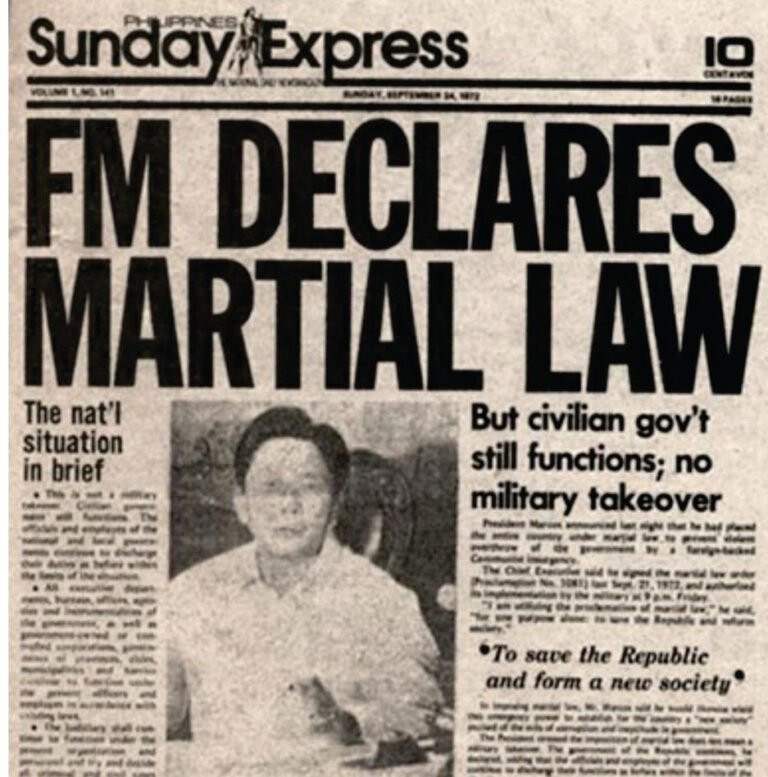
Soft power can, of course, be applied by small countries and colonies or neo-colonies. And it can be used externally as well as internally. The Philippine President, Ferdinand Marcos, perhaps surprisingly given his notorious martial law repression, was adept at using soft power. In an ironic move, and after an indirect request from the would-be guest, he had agreed-with a laugh it is said by the intermediary- to invite Sir John Kerr to a World Peace Through Law Conference in Manila, in 1977, along with a number of leading statesmen and politicians-especially from Third World countries, many of them dictators such as South Korea’s Park-and substantial judicial figures such as the first African-American to sit on the US Supreme Court, Thurgood Marshall (his Hawaii-born Fil-Am wife had never been to Manila so their presence is partly explicable by her longing to see the country).

Between 3 and 6 thousand lawyers and others attended (press estimates varied between the Marcos newspapers and the others which were under looser control I suppose). The American progressive lawyer, social justice activist and former Attorney General, Ramsey Clark, caused a momentary hiccup when he and others held a street rally to protest the holding of the conference in a country under Martial Law. (Interestingly the conference was given to Marcos instead of the Shah of Iran who desperately wanted it.) A crowd of 5-10,000 showed up and received the “water treatment” and police beatings. Several dozen protestors were arrested. Clark then called a press conference and announced that due to the repression under Martial Law, in particular the detention of so many people without trial, torture and human rights abuses generally, he could not accept the invitation to attend what he indicated was a charade, and took a plane back to the USA. I found only one brief account which did not mention Clark, nor that the original plan was to have a meeting in a catholic College which was cancelled-presumably under pressure from the government-so the organizers took it to the street. It should be noted that Clark is currently on the list of those prohibited from entering the Philippines as a result of his support for Joma Sison in his legal battles, and many critical actions and reports over the years about continuing human rights violations and impunity in the country.

Liberal Party Senator Jovito Salonga, members of the PSDP (Social Democratic Party of the Philippines, or “socdems”) and others are said to have tried to organize a parallel conference, but I have been unable to find any information on that. It was not reported in the press at the time.

The conference was the kind of stage Marcos and First Lady Imelda loved. He sought the support of the Filipino people for his modernization project, building the New Society, and legitimacy on the world stage. The First Lady sought the adulation of the Filipino people, and of course the delegates.

The President was rewarded by the Conference delegates with an award for being a “Nation Builder”. No doubt the long Opening Speech by the Chief Justice, Fred Castro, with its fulsome praise for the New Society program and jurisprudential justification of Martial Law would have been important in winning the delegates’ approval of what Marcos had been doing with his dictatorial powers.

The President and Imelda entertained the Kerrs who, although on a private visit were treated as visiting dignitaries of great importance. (No trace of Kerr’s visit to Manila is to be found in the Governor General’s Official Diary at the time, nor in any of his writings) Kerr enjoyed a media blitz as if he were representing the Australian government. The media stressed that he was an important Australian to talk business with, and headlines emphasized his discussions with Marcos about trade, investment and relations between the two countries. Perhaps to emphasize the good relations between the two countries, the press also featured Sir John laying a wreath at the tomb of the unnamed soldiers at Labingan ng mga Bayani, Fort Bonifacio, and a photograph of the entry of an Australian warship into a Philippine port, presumably for ‘R n R”. (See generally my unpublished paper with Stephanie McNamee, “Sir John Kerr and President Marcos: a footnote in Australian legal history”).

By way of contrast, and perhaps for tactical reasons in his relations with the US government, the press was at the same time publicizing what appeared to be supportable allegations by a Filipina cafeteria worker on a US military facility, Clark Airbase, who claimed that she had been raped by the senior officer in her department. Similar allegations against the same officer were filed with the police by another female worker on the base, and were to find their way into the press. Interestingly, after the Conference the rape stories disappeared from the newspapers. The US officials were demanding the right to deal with the matter themselves under the existing treaty between the two countries. Plus ca change. I have been unable to determine whether the officer was dealt with by the Americans or the Filipinos. However, I suspect he was protected by the US authorities, which would have been embarrassing for Marcos, thus the silence of the press may be understood as a tactic to avoid being seen as weak in dealing with the Americans.

The week-long WPTL Conference was an amazing extravaganza. In addition to supplying Mercedes automobiles for principle guests to be driven around the city, Marcos had Dame Margot Fonteyn, Rudolph Nureyev and the Moscow Beethoven Piano Competition prize winner Van Cliburn-and his mother-flown in for a performance at the recently constructed Philippine Cultural Center (Imelda’s pet project). As the genial but commanding host of the Conference, Marcos ensured that Kerr, an Australian lawyer was given the “Lawyer of the Year” award by the Conference attendees. Few of them would have known that by then he was disgraced in his own country.

What future for the Philippines-will it garner a deputy sheriff badge?

At this time, it appears that the Philippine government will have a chance to become a deputy sheriff. The Aquino administration has a very positive and supportive attitude toward the Sheriff, and a past tradition of the Philippine elite working loyally with the USA is greatly appreciated there. Of course some Filipino critics would say that the relationship has been marred by obsequiousness, the latest example being the Solicitor General trying to protect the US naval officers who are responsible for running the USS Guardian (!) aground on a reef within Philippine territorial waters, causing grave damage to the environment, and to the livelihood of Filipino fisherfolk. (Obsequiousness is actually a trait emperors-and Sheriffs-not only like but often demand.)

As we have outlined above, the Republic has also shown a friendly face to its close-in mentor, deputy sheriff Australia, suggesting a good working relationship between the potential future partners, as well as a division of labor and territorial responsibilities.

Nevertheless, there are certain problems remaining which will have to be resolved before the Sheriff is likely to consider an application for promotion. A “performance evaluation” would point to areas where significant improvement is required.

The first barrier, denial of bases for the past 20 years, seems now to have been overcome, all credit to an imaginative interpretation of the Philippine Constitution. US forces (and Japanese) will be given even more access to the country, since rotation of troops means they are not here permanently and therefore, being only temps, can come and go (literally as they please- as in the Nicole incident, with the spiriting away of the alleged rapist US Navy Seaman Smith from Philippine custody and jurisdiction) without violating the Constitutional ban on foreign bases. No wonder Jack Cade said- “First, we kill all the lawyers” (apologies to our hosts in the NUPL! And also to playwright Shakespeare).

Other problems, however, cannot be whisked away by verbal gymnastics. Consider:

  1. A lack of political stability, due to:
    1. Continuing widespread hunger, poverty and inequality;
    2. Shambolic political competition, with transitory and vacuous policies, as well as illegitimacy of elections because of vote manipulation and vote buying, and other forms of cheating;

    3. The power of the political and economic dynasties which form a conservative, self-interested dominant elite;

    4. Personality/celebrity politics and a correlative lack of a convincing plan for national economic development which is likely to provide a strong base for continued re-distributive growth.

  2. Lack of guaranteed territorial integrity
    The “deal” with the MILF in Mindanao appears unlikely to bring peace, but if it does, then the national government will lose effective control of a significant political and economic entity. Why should that be the end product? Is it likely that secession will not remain on the agenda? The Sheriff could be put into the position (or help bring it about) where it is going to have to decide who is going to be the most valuable deputy in the region.

  3. Lack of internal territorial control.

    1. The continuing struggle for social justice and against repression and exploitation waged by the CPP and the NPA (supported by the civil society elements of the NDF and others) also suggests that the Philippines is insufficiently united to become a reliable and effective deputy;

    2. The apparent inability of the GPH to effectively deal with the murderous and apparently sectarian BIFF, and the gangsters of the Abu Sayyaf raises further doubts as to the capacity of the country’s leadership to fulfill the deputy role.

  4. Corruption is pervasive

The fact that the former President was willing to enter into deals with foreign corporations for infrastructure projects at huge costs to the nation while filling her own pockets with kickbacks (and those of her First Gentleman aka “Mr. Fifty Percent”) illustrates the extent of the problem. While the incumbent President has pledged to end corruption (and naively believes-or says he believes-that that will put an end to poverty) it can be said that just as his neo-liberal “trickle- down economics” has made things no better, and in some ways worse, there is no evidence that “trickle-down honesty” is bringing obvious benefits to the masa. (See the report of Transparency International, released recently, which indicates there has been little change in the Filipino perception of the problem and the lack of effective action by the present administration. See also the lead story by Catherine S. Valente in the Manila Times, July 11, 2013 “Corruption remains rampant- Palace”).

For the time being, on the basis of our evaluation, it would seem likely that the Philippines will not get a promotion. It will continue to serve the Sheriff loyally, and receive promises of support and protection. It may continue to get surplus navy ships and other military materiel. Even humanitarian aid. Always military training of course, human rights abuses to one side. (The situation in Egypt is enlightening. Huge amounts of US military aid has gone to that country’s armed forces, and in the last decade over 11,000 officers have been trained in the US, including the top echelon who were educated at the US Army War College in Carlisle, Pennsylvania. One wonders if the curriculum recommended firing at the backs of praying worshippers as was recently done in Cairo).

Of course when push comes to shove, there could be such pressure on the Sheriff and his Aussie deputy that the Republic will get the nod to operate as a temporary deputy, full promotion dependent on performance on-the –job. (“Temp” is the “new normal” under globalized neo-liberalism, so the GPH cannot cavil.) There are good reasons why such a limited promotion could be on the cards sooner than we think.

The Republic will function as an early warning system, much as my former US Navy ship- a “destroyer- radar”- did back in the ‘50s. We had the latest radar technology and were posted 60 miles away from an aircraft carrier squadron for the purpose of warning the carrier of enemy planes coming in for attack. Quite a vulnerable position to be in if ever there was an attack. One thinks of the similarity to the current ruckus in the “West Philippine Sea”. By acting as a target for imagined enemies, the country will demonstrate that it is a “locked-in” ally.

It will earn additional “brownie points” for the following reasons:

  1. It has troops to spare as its performance has demonstrated in Mindanao and Basilan and elsewhere;
  2. It has plenty of interesting topography for training and exercises with base-less foreign troops;
  3. It has experience in providing aircraft facilities, ship repair and “R n R”;
  4. It has been a supportive voice in international fora, and one of the first to be “willing” to invade Iraq;
  5. It has been a welcoming site for profit-making by US and other foreign corporations;
  6. It has provided a reserve army of labor by encouraging millions of Filipinos to leave for the US to find employment not available in their home country;
  7. It has also suffered, in silence, a brain drain of innovative and entreprenurial university graduates in favour of the USA;
  8. It has been a source of “inside” information about the region through its location and participation in ASEAN and other associations;
  9. It is a source of ideological support for American “exceptionalism” (“they gave us our independence”), liberal democracy, and neo-liberal policies;
  10. It provides a Christian barrier to potential Islamicization of the region, or a regional Islamic state.

That is a very strong resume. With the passage of time, and the cleaning up of its internal problems indicated above, the Republic could easily garner a permanent deputyship.

Down the road a way

In the longer term, a country of well over 100 million and great natural wealth can be expected to grow in stature and capacity, and therefore a move up the hierarchal formation to become a deputy.

Assuming that the Republic maintains its subordinate role in the American neo-empire, it is certain to be seen as an important link in the chain of “containment” or encirclement of the superpower China will become. A look at the map will show that China’s northern sea flank is faced by another American subaltern, Japan, while Alaska is back-up. The southern flank is covered by the Philippines (and other countries such as Viet Nam which have warmed to the embrace of the Yanks) and Australia as back-up. (I leave out Taiwan as it is especially difficult to predict its future, but it is unlikely to be part of the containment strategy in any strong sense, unless forced to by active Chinese assertion of its jurisdiction over the island).

A strong, economically developed Philippines could, of course, choose an independent, nationalist path, gradually moving out of the US field of power. This could be a choice the other deputy, Australia, might also have to make if its links with China strengthen and the Americans lose their hegemonic position, perhaps because American “exceptionalism” no longer sells in large parts of the world. (Again, a colleague suggests that joint naval exercises with China were seen in US elite circles as a “betrayal” by Australia, requiring explanation and reassurances of the fidelity of the Aussies to their seigneur.)

A Philippines newly developed could easily find that their economic interests viz a viz China trump their historical link with the US. Already Filipino tycoons, such as the massively rich Sy family (shopping mall kings) are moving into China looking for “new opportunities”-profits- in the opening up of a huge consumer market. That much of Filipino economic resources are under the control of Chinoys (Chinese Filipinos) it is not difficult to see the likely growth of interdependency between close neighbours who have strong historical ties. (Those ties, commercial in particular, are examined in some depth in R.T. Chua, Chinese and Chinese Mestizos of Manila: Family, Identity, and Culture, 1860s-1930s (2010).

Stranger things have happened in world politics. One hundred years ago it would have been difficult to predict the present client role into which Japan has settled in its relations with the USA.

*See for example:

Perry Belmont, Republic or Empire? (1900)

George Sewall Boutwell, In the Name of Liberty: Imperialism and Anti-Imperialism (1899)

William Jennings Bryant (ed.) Republic or Empire? The Philippine Question (1899)

James Wells Sewall, A Protest Against the President’s War of “Criminal Aggression” (1899)

James Wells Sewall, Republic or Empire? an Argument in Opposition to the Establishment of an American Colonial System (1900)

Note-three of these authors were, amongst other things, lawyers. Bryant was the unsuccessful candidate of the Democratic Party for president in 1896, 1900 and 1904 ; he made anti-imperialism a major issue in the 1900 election, which he lost to McKinley by about 600,000 votes out of about 13, 500,000. McKinleys attitude toward colonization is summed up in the following: while he was unsure about annexation of the Philippines at first, after a night on his knees praying, he concluded that God had “dropped them into our lap” and therefore “Nothing is left for us to do but to take them all, and to educate the Filipinos, and uplift and civilize and Christianize them.”

Aquino’s “Oplan Bayanihan”: Replicating a failed US Counterinsurgency Guide

Presentation at the International Conference for Human Rights and Peace in the Philippines

Quezon City, Philippines
19 July 2013

PANEL 2. US geopolitical and military strategies in the Asia-Pacific and the Aquino government’s Oplan Bayanihan

By SATUR C. OCAMPO
President, Makabayan People’s Coalition
President, Bayan Muna

It was quaint how Benigno S. Aquino III — 18 days before he was elected President of the Philippines on May 10, 2010 – defined the “four key elements” of what he envisioned as his administration’s national security policy. The four elements he cited now constitute the “national strategic guideline” of the Armed Forces of the Philippines’ counterinsurgency plan, “Oplan Bayanihan”.

He put forward the four key elements in his speech at a Peace and Security Forum held at the Mandarin Oriental Manila on April 22. Aquino, then a senator aspiring for the presidency, laid the ground for his proposition by chastising the outgoing administration of President Gloria Macapagal-Arroyo for its failures, in these words:

“For nine long years the Arroyo administration has failed to put in place a coherent National Security Policy that addresses the root causes of strife and conflict… The absence of a clear national policy and a coherent strategy for peace negotiations led to confusion and false expectations across the table.” (The second sentence pertains to the bungled peace negotiations between the Arroyo government and the Moro Islamic Liberation Front: an agreement on ancestral domain set to be signed by the two sides in August 2008 was declared unconstitutional by the Supreme Court.)

The next administration, Aquino segued, “will have to pick up the pieces and resume the quest forpeacewith vigor and clarity of purpose.” Sounding like a man of action he had not been known for, Aquino set these following steps for the next government:

  1. Complete the drafting, “within the first three months of the next administration,” of a comprehensive National Security Policy that “will guide our national defense and internal security policies that, in turn, will shape our respective national military and law enforcement strategies”;
  2. The document should be a product of consultations among “various stakeholders, including representatives from the different components of the security sector and other agencies”; and
  3. The work should be completed by the end of 2010.

Then he identified the four key elements on which the national security policy must focus:

  1. Governance (the government must be present and accountable to its citizens);
  2. Delivery of basic services (health and education especially to depressed and vulnerable villages in conflict areas with the help of international partners, the private sector and non-profit organizations);
  3. Economic reconstruction andsustainable development (economic reconstruction of the Autonomous Region of Muslim Mindanao should be fully integrated in all Mindanao-wide and national development plans); and
  4. Security sectorreform (begin with restoring the pride and honor of the uniformed services) .

The full text of Aquino’s speech was posted in the Internet. It contained a footnote to the afore-cited four elements, which states: “These elements are derived from a universally accepted template for post-conflict stability, reconstruction and rehabilitation efforts used in such war-torn places as Iraq, Afghanistan and Sudan.”

Why, one may ask: Rather than deeply analyze the “root causes of the armed conflicts” in the context of prevailing conditions in his country (in order to identify the appropriate solutions that he must pursue), Mr. Aquino opted to apply the template used by the United States in Iraq, Afghanistan and Sudan? These are the three countries where the US had launched wars of intervention in the past decade, wherein it has been mired in trying to resolve a multiplicity of problems, and from which the Obama administration now desperately seeks to disengage.

Or did Aquino believe that because the template was denoted by the US as “universally accepted” it could very well apply to the Philippines?

The answer to both questions is this: In crafting their internal security policies and counterinsurgency operational plans — specifically against the Left revolutionary armed movement, led by the Communist Party of the Philippines-New People’s Army for 44 years now — all the six governments starting from the Marcos martial-law dictatorship (1972-86), without exception, have relied heavily on US military advice or guidance. They all adopted the US template as it evolved through the numerous American wars of intervention (that began with the Philippine-American war at the turn of the 20th century).

A review of the Aquino government’s performance in the past three years reveals that it has not – or it has evaded – seriously analyzing and addressing the root causes of the armed conflict. It has relied on superficial “peace and development” programs undertaken in conflict-affected areas. Yet it continues to use as mantra the clause “address the root causes” for resolving the armed conflict with the CPP-NPA.

Oplan Bayanihan vis-a-vis US COIN Guide

On January 1, 2011 – when Aquino had been President for six months — the AFP made public (in booklet form) its Internal Peace and Security Plan (IPSP), the counterinsurgency plan called “Oplan Bayanihan”. In his message Aquino says the plan “opens up space for the involvement of the Filipino people in defining, shaping, and ensuring our peace and security as a nation.” He called on the entire citizenry to “join the AFP in translating this national aspiration to reality.”

And there, listed down as the IPSP “National Strategic Guidance”, are the four key elements Aquino had lined up in his April 22 speech.

By adopting the four elements as strategic guidance, the IPSP establishes a direct correlation or kinship with the 2009 U.S. Counterinsurgency Guide. This document was issued two years earlier (January 11, 2009) jointly by US Secretary of State Condoleezza Rice, Secretary of Defense Robert Gates, and USAID Administrator Henrietta Fore.

The preface to the COIN Guide adverts to America’s “prolonged counterinsurgency campaigns in Afghanistan and Iraq” from which experiences the document “distills the best of contemporary thought, historical knowledge, and hard-won practice.” We can safely assume that the four key elements adopted by the IPSP are deemed as part of those “distillations”.

US counterinsurgency practice, the preface elaborates, rests on a number of assumptions: 1) “that the decisive effort is rarely military, although security is the essential prerequisite of success; 2) “that our efforts must be directed to the creation of local and national government structures that will serve their populations, and over time, replace the efforts of foreign partners (read: American forces)”; 3) “that superior knowledge, and in particular, understanding of the ‘human terrain’ is essential”; and 4) “that we must have the patience to persevere in what will necessarily prove long struggles.”

These assumptions, or COIN Guide premises, surface in several sections of the IPSP document (albeit in slightly modified terms), as we shall see in the following examples:

  1. On counterinsurgency – COIN Guide: Counterinsurgency “is the blend of comprehensive civilian and military efforts designed to simultaneously contain insurgency and address its root causes… non-military means are often the most effective elements, with military forces playing an enabling role.”= The IPSP “gives equal emphasis (to) combat and non-combat dimensions of military operations… it departs from the old parameters and explores non-combat parameters of success in addressing the country’s peace and security problem.” (Executive Summary)IPSP applies the “whole of nation approach”. This “presupposes that ordinary citizens and the entire Filipino people are active contributors to internal peace and security. In this context, the role of the AFP is to catalyze the involvement of the stakeholders and facilitate the synergy of all these efforts.” (Strategy for Internal Peace and Security)
    1. “COIN approaches must be adaptable and agile. Strategies will usually be focusedprimarilyon the population rather than the enemy and will seek to reinforce the legitimacy of the affectedgovernment while reducing insurgent influence. This can often only be achieved in concert with political reforms to improve the quality of governance and address underlying grievances, many of which may be legitimate.”

      = The IPSP approach is “a shift from a predominantly militaristic solution to a people-centered security strategy that is founded on broad-based consultations and engagements with key stakeholders…Military operations shall be conducted within the larger framework of the government’s peace strategy… This translates to the conduct of combat operations against armed internal threats that are intelligence-driven, deliberate, and calibrated to diminish the armed capability of said threat groups… The AFP shall likewise maximize the utilization of non-combat operations such as civil-military operations (CMO) and development-oriented activities.” (Strategy for Internal Peace and Security)

  2. On COIN model’s political function – The key function is to provide a “framework of political reconciliation, and reform of governance around which all other COIN activities are organized.”

    = The IPSP cites President Aquino’s pronouncement “to offer opportunities for negotiations toward a just and lasting peace”; that “achieving a transparent and participative peace process requires a comprehensive understanding of the root causes of conflict, under clear policies and driven by a genuine desire to attain a just and lasting peace… The AFP remains committed to the peaceful and just settlement of conflicts”… “adhering to the primacy of the peace process and supporting peace building activities such as reconstruction and rehabilitation of conflict-affected areas.” (Executive Summary)

  3. On measuring success – “Success in COIN can be difficult to define, but improved governance will usually bring about marginalization of the insurgents to the point at which they are destroyed, co-opted or reduced to irrelevance in numbers and capability…Ultimately, the desired end state is a government that is seen as legitimate, controlling social, political, economic and security institutions that meet the population’s needs, including adequate mechanisms to address the grievances that may have fueled support of the insurgency.”

    = IPSP: The AFP’s “strategic intent” or “end state” is: “The capabilities of internal armed threats are reduced to a level that they can no longer threaten the stability of the state and civil authorities can ensure the safety and well-being of the Filipino people… Against the NPA, the AFP’s internal peace and security initiatives shall focus on rendering the NPA irrelevant, with the communist insurgency abandoning its armed struggle and engaging in peace negotiations with the government.” (Strategy for Internal Peace and Security)

Legacy of human rights violations

As earlier mentioned, Oplan Bayanihan is the latest in a long line of counterinsurgency operational plans (oplans) that have been drawn up by the AFP, under the successive governments beginning with the Marcos martial-law dictatorship. Historically, such plans have been heavily influenced, if not essentially directed, by the US defense and military establishment – given the reliance by the AFP on its American counterpart for both doctrinal and practical training and equipage supply (consisting of World War II vintage equipment and discarded but “refurbished” weapons).

Each plan has relied primarily on military might and means in trying to suppress and strategically defeat the CPP-NPA-led “people’s war” (which started in Central Luzon in 1969, now has spread to over 70 provinces). Each plan has failed, and each left in its wake widespread human rights violations across the nation, reliably documented by human rights monitoring organizations, principally Karapatan.

The Arroyo government’s “Oplan Bantay-Laya” – relentlessly pursued in two phases over nine years – was most notorious for having sweepingly categorized as “CPP-NPA front-organizations” and thus as “enemies of the state” several open progressive people’s organizations, political parties, and even religious organizations. Killer squads, mostly riding tandem on motorcycles with backups, viciously targeted and attacked several hundreds of legal mass leaders and activists for extra-judicial killing. Hundreds also became victims of enforced disappearance.

In the first six months of his administration, Aquino extended the implementation of OplanBantay-Laya despite outcries of popular protests, thus enabling the extrajudicial killings and enforced disappearances to continue under his watch.

But even after Oplan Bayanihan officially replaced Oplan Bantay-Laya, the killings and other forms of human rights violations continued — notwithstanding the AFP’s vow that henceforth its operations “will always be within the bounds of universally accepted principles, such as international humanitarian law, human rights, and the rule of law.” Consequently, the human rights community — both national and international — has denounced Oplan Bayanihan for being “no different from OplanBantay-Laya” and has called for its immediate termination.

As of end-June 2013, extrajudicial killings under the Aquino government numbered 142, with another 164 cases reported as “frustrated extrajudicial killings.” Of the 142 victims, 80 were peasants and 27 were leaders of indigenous peoples. There were 16 incidences of enforced disappearances. (Karapatan Monitor)

This is not surprising when one looks closely into the IPSP section on “strategic concepts” pertaining to specific tasks. Pursuant to its “end state” against the NPA (to render it irrelevant), IPSP says: The AFP “shall continue using legitimate force and conducting combat operations with even greatervigor but only against armed insurgents… Intensified and relentless pursuit of the NPA is intended to exhaust their armed capabilities and diminish their will to fight.”

In the six-year timeframe of the IPSP (2011-2016), focus on the first three years is to “substantially” attain the “end state”. That would allow the AFP to devote the period 2014- 2016 to handing over the lead role in counterinsurgency to local government units so that it can “initiate its transition to a territorial defense-focused force.”

Thus 2013 is the crucial year to achieving the IPSP “end state”. But from the way it looks – with less than six months remaining – Oplan Bayanihan appears to be running out of time.

Last Thursday, AFP Chief Gen. Emmanuel Bautista, credited as the “key author” of Oplan Bayanihan, called a command conference to assess the military operations in the first semester of 2013. The assessment was a mixture of success and failure.

Here are some of the data presented:

  • The AFP increased its “engagements” against the NPA in January to June to 350, from 312 in the same period in 2012, and “apprehended” 99 NPA members as against 50 in first-semester 2012. (Bautista claimed altogether 323 NPA members were “neutralized” without citing the period covered).
  • The NPA, noted the AFP, also had also increased tactical-offensive attacks against the AFP to 173, from 162 in the first half of 2012.
  • Bautista placed the number of NPA fighters at “more than 4,000”. Journalists pointed to AFP records showing that NPA membership remained at 4,000 in the last three years. So no palpable reduction, despite “sustained momentum focused on military operations against the NPA.”

About that the AFP chief explained: “We have significant numbers of surrenderees from the NPA ranks… (but) there has been continuous recruitment and it’s unfortunate the recruits they’re getting are from the youth, from farmers and indigenous peoples.” (Note that per Karapatan Monitor, of the 142 victims of extrajudicial killings 80 were peasants and 27 were leaders of indigenous peoples).

How were the NPA members attracted to surrender?

Since Gen. Bautista’s appointment as AFP chief in January there has been a flurry of Oplan Bayanihan activities designed to induce NPA leaders and members to yield their firearms.

Starting in May, AFP field commanders have been reporting “surrenderees” who availed of its “Gun for Peace” program, initiated in April. Under the program, each surrenderee is paid for every firearm he yields (P200,000 for light machinegun; P60,000 for M-14 rifle; P50,000 for M-l6 rifle or .45 caliber pistol).

In addition, the Office of the Presidential Adviser on the Peace Process (OPAPP) – which oversees the government’s “peace and development program” under PAMANA (Payapa at MasaganangPamayanan or Peaceful and Prosperous Communities) — reportedly provides P50,000 to each NPA surrenderee as “customized package and means of livelihood” through its “Comprehensive Local Integration Program (CLIP)”, started in July 2012. Also provincial governments that have reportedly cooperated with the AFP (such as those of Negros Occidental, Negros Oriental, Leyte, and Davao del Norte), have supposedly offered P10,000 financial assistance and P25,000 livelihood support fund for each surrenderee.

This surrender-through-financial-inducement is a slide back to the old counterinsurgency mindset of “treating the symptom rather than the disease” – which failed.

A good question at this point is: Given that the US COIN Guide used in Iraq and Afghanistan has failed to defeat the insurgencies and to achieve stability for the US-backed governments there, can it succeed when applied in the Philippines? In corollary, it can be asked: By using the failed COIN Guide template in the Philippines can the IPSP/Oplan Bayanihan succeed?

Meantime, the Aquino government has been under pressure to “enhance” the AFP’s capability for external defense in light of China’s increasingly aggressive pronouncements and maritime actions, following a standoff in a small but resource-rich area of the South China Sea over which both the Philippines and China claim sovereignty.

The Aquino government has called on the US for support – and offered in exchange free accessby US (and Japanese!) forces to Philippine military bases, which has spurred strong objections among the Filipino people. China’s reaction has become more bellicose.

It’s not farfetched that the Aquino government may seek direct US military support to the counterinsurgency campaign against the CPP-NPA. Examine these three indicators:

  1. Since August 2002 the US government has included the CPP-NPA in its listing of “terrorist organizations”, against which it continues to pursue the “war on terror” initiated by George W. Bush in 2001. Thus far, the US has focused on pursuing targets of attack — through Special Operations forces on the ground and, on an ever-expanding territorial scope and increased tempo, via missile-bombing by unmanned aerial vehicles called drones.
  2. The preface of the US COIN Guide ends with this ominous statement: “Whether the (US) should engage in any particular counterinsurgency is a matter of political choice, but that it will engage in such conflicts during the decades to come is a near certainty.”
  3. The Pentagon document, Sustaining U.S. Global Leadership: Priorities for the 21st CenturyDefense, which discusses the US “pivot” or “rebalancing” to Asia-Pacific, lists as one of its 10 primary missions the conduct of “stability and counterinsurgency operations”. In part it says:

“U.S. forces will nevertheless be ready to conduct limited counterinsurgency and other stability operations if required, operating alongside coalition forces wherever possible. Accordingly, U.S. forces will retain and continue to refine the lessons learned, expertise, and specialized capabilities that have been developed over the past 10 years of counterinsurgency and stability operations in Iraq and Afghanistan. However, U.S. forces will no longer be sized to conduct large-scale, prolonged stability operations.”

Certainly the anti-imperialist, patriotic and freedom-loving section of the Filipino people will vigorously oppose this type of direct US military intervention. Certainly nobody in this conference will stand for such interventionist war.