
Home Blog Page 152

We are under siege because of our human rights work for the rural poor

Our organization is under siege. We are experiencing relentless systematic surveillance, harassments and threats because of the work that we do for the rural poor of Northern Mindanao.

‘Do not be surprised, brothers, that the world hates you.’ — 1 John 3:13

On March 7, 2014 at around 3 o’clock in the afternoon, Rural Missionaries of the Philippines-Northern Mindanao Sub-Region (RMP-NMR) alternate coordinator Jonah Cossma Jumagbas was followed by an unidentified man as she left our sub-regional office in Villaverde, Iligan City.

Jumagbas suspected that she was being tailed by a man in his mid-30s when she was at the Palao Market intending to buy some fruits. Trying to ward-off the pursuer, Jumagbas took a fast-paced walk along Quezon Avenue and circled back to Palao Market via Aguinaldo Avenue. But still, the man pursued, maintaining a 10-15 meter distance.

Deflecting, Jumagbas took a jeepney ride going to Tambo Bus Terminal and then boarded a bus bound for Cagayan de Oro City. But while waiting for the bus to depart, Jonah saw the same man at the bus terminal, seeming to look for someone. To evade the pursuer, Jumagbas stepped out from the bus and hurriedly took a jeepney ride back to the City Proper where to find a safer place.

Tenioso Balangiao Jr., member of the Sub-Regional Coordinating Body of RMP-NMR, continues to experience surveillance, harassment and intimidation as of this moment. The threat to Balangiao was confirmed on February 20, 2014, when he received a suspicious text message from an unidentified number. The sender indicated in the said message that he knows Balangiao and his family. The sender also told Balangiao that he knows his address, and that he also knows Balangiao fears for his security due to his work. The unknown sender also tried to reassure Balangiao that he must not worry for his life because he can protect him and his family.

This incident prompted Balangiao to change his mobile phone number. However, Balangiao continued to receive text messages from the same unidentified number. The message said, “Ayaw pagpuli sim Jun kay makabalo gyapon ko sa imo namber…” (Don’t change your SIM card for I can still know your number…) With this, Balangiao engaged the unknown sender and from the exchange of messages, the sender identified himself as one ‘John Meraflor’. He told Balangiao that he has good intentions and wants to make an acquaintance with him. From that date forward, the certain “John Meraflor” sends text messages to Balangiao telling him that he knows what Balangiao was doing for his work and tried to incriminate him as a supporter of the CPP-NPA (Communist Party of the Philippines/New Peoples’ Army). The said texter also tried to implicate Balangiao as having plans to join the rebel group.

As a peasant community organizer of RMP-NMR, Balangiao works closely with the Kilusang Magbubukid ng Pilipinas (KMP or Philippine Peasant Movement) in order to bring RMP’s projects into far-flung peasant communities. Due to these messages, he does not feel safe and this has prompted him to keep away from his home and his work in RMP-NMR.

‘Do not fear what you are about to suffer. Behold, the devil is about
to throw some of you into prison, that you may be tested,
and for ten days you will have tribulation. Be faithful unto death,
and I will give you the crown of life.’ — Revelation 2:10

There’s an obvious pattern of harassment and surveillance perpetrated against our organization since last year.
In September of 2013, our long-time lay co-worker, Joel Q. Yagao, was slapped with trumped-up charges – baseless charges of double murder and multiple murder. Despite interventions from international human rights organizations, Yagao is still in jail up to now for the crime he did not commit. With the snail-paced judicial process we have in the country, he might stay in jail for a minimum of 5 years — even if proven not guilty.

Also last year, we have complained on the series of harassments against our sub-regional coordinator, Sr. Ma. Famita N. Somgod, MSM, and the surveillance on our sub-regional headquarters. And on March 18, 2014, one of our literacy and numeracy schools in Agusan del Sur was also harassed. Members of the 26th IB of the Philippine Army arrived at Sitio Tabanganan, Brgy. Binicalan in San Luis, Agusan del Sur. The teachers of the learning center and the parents of its students were then planning for their recognition exercises which they had set for March 20. Suddenly, they heard a series of gunshots coming from the area where the military was, not 100 meters away, directly in front of the school. The children who were at the playground scattered fearing that they were the targets of the bullets.

‘With respect to this they are surprised when you do not join them
in the same flood of debauchery, and they malign you.’ — 1 Peter 4:4

In a bigger context, it is important to note that extra-judicial killings and violations of civil and political rights of the rural poor has become a phenomenon in Northern Mindanao since 2012.

Earlier this year, farmer-leader Julito Lauron of Kasama-Bukidnon (Kahugpungan sa mga Mag-uuma sa Bukidnon or Peasant Association of Bukidnon) was gunned down on February 05. This happened after Datu Rolando Ambungan of indigenous peoples’ community-based organization, Pig-akuman, was also killed by a paramilitary group in Guinabsan, Buenavista Agusan del Norte on January 31.

Rolen Langala, an indigenous leader of indigenous group Pangalasag in Opol town in Misamis Oriental was murdered on December 1, 2013 days before the International Human Rights Week. Langala and his community’s resistance against palm oil cultivation encroaching their ancestral lands cost him his life, and of their chairperson, Gilbert Paborada, who was also gunned down in October 2012.

It is also important to note the killings of Jimmy Liguyon, Margarito Cabal and Genesis Ambason, all human rights defenders working for land rights and the environment, all killed in 2012 in various dates and places. Despite interventions from various international human rights organizations and foreign consulates in the country, including the European Union, these killings were left unresolved.

Judicial harassment has also become a tactic against human rights defenders. Aside from Joel Yagao and a number of farmer activists slapped with legal cases, peasant organizer Estelita Tacalan, 61, was abducted and was later surfaced with trumped-up charges in March 2013. Estelita is still in prison right now, immobilized to continue her work for the Misamis Oriental Farmers’ Association-KMP.

In the face of all these forms of repression, RMP-NMR brought to the attention of the national and international human rights community the human rights violations committed with impunity done against our network of peasant organizations. We were never cowed. In all of these cases, we point our fingers at Pres. Benignon Aquino III and his state security forces for all of these crimes.

We believe that our organization is being targeted because we speak against all of these violations, and because of our sustained human rights work for the peasant communities in Northern Mindanao Region who stand against the militarization of their villages to pave way for the entry of companies engaged in resource-extractive activities such as mining, energy and plantations. We have condemned all of these systematic assaults against the rural poor’s civil and political rights committed in the framework of International Peace and Security Plan (IPSP), or more popularly called ‘Oplan Bayanihan.’

We condemn these systematic harassment and surveillance, and all forms of human rights violations perpetrated against RMP-NMR and the rural poor communities we are serving.

As advocates from the church working on land rights and access to resources of the rural poor—farmers, fisherfolks, agricultural workers and indigenous peoples—our work falls under the definition of ‘human rights defenders’ defined in the United Nation’s ‘Declaration on the Right and Responsibility of Individuals, Groups and Organs of Society to Promote and Protect Universally Recognized Human Rights and Fundamental Freedoms’ or the ‘Declaration on Human Rights Defenders.’ Yet, we have been subjected to surveillance, harassment and arbitrary arrests, and the rural poor communities we are serving are physically attacked.

Needless to say, the assaults against church advocates and human rights defenders are magnifying the terror in a bigger extent, and gives a chilling effect to the grassroots communities aspiring for genuine land reform, right to ancestral domain, and the fullness of life.

‘But even if you should suffer for righteousness’ sake,
you will be blessed. Have no fear of them, nor be troubled.’ — 1 Peter 3:14

Time and again, we have already called the attention of the state to cease the political violence they are inflicting on the people. To no avail. A lot of our work and staff have been displaced, and our regular operations have been affected by these relentless attacks against us.

But we will continue to carry forward our commitment of living and working with the rural poor for the realization of their just aspirations for land rights and access to resources, and together we will continue to demand justice for the thousands of victims of human rights violations—no matter how long it takes.


RURAL MISSIONARIES OF THE PHILIPPINES
Northern Midnanao Sub-Region (RMP-NMR), Inc
Room 1, Kalinaw Lanao Center for Interfaith Resources
0016 Bougainvilla Puti, Villaverde
9200 Iligan City
Philippines
T/F: +63 (63) 223 5179
E: info@rmp-nmr.org
W: http://www.rmp-nmr.org/

IADL demands Philippine government to refuse US military basing

18th IADL Congress calls for resumption of GRP-NDFP peace talks

The fifty-six countries attending the 18th Congress of the International Association of Democratic Lawyers (IADL) in Brussels, Belgium made a major declaration today and approved a resolution on the Philippines that not only called on the Aquino government to end any negotiations granting military basing rights to the US but also the pull out of all US troops, facilities and material in the Philippines. The same resolution also called upon its member-countries to press for resolutions, legislation and campaigns urging an end to foreign intervention and aggression in the Philippines.

The UN-accredited IADL believes this violates both Philippine and international law and threatens the stability of the Asian region. The more than 400 lawyers attending the IADL Congress also urged the Philippine government to “cease all acts that violate human rights”, called for the release of all political prisoners including the peace process consultants and, in recognition of the call of the Filipino people for a just and lasting peace, urged for the immediate resumption of the peace talks between the government and the NDF.

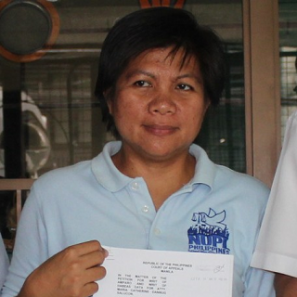
“This is a major statement of the international community that the Aquino government cannot just disregard as it expresses the sentiments of a huge number of lawyers groups around the world and at the same time issued by a prestigious and respected UN-ECOSOC accredited organization” said Atty. Edre Olalia, Secretary General of the National Union of People’s Lawyers (NUPL) which represented the Philippines in the IADL Assembly.

Olalia and NUPL President and Bayan Muna Representative Neri Colmenares were also elected by the IADL Congress to its governing Bureau to serve a 5-year term.

“The Aquino government ‘s refusal to heed the people’s call for a just and lasting peace while it pursues a war mongering policy by allowing the open entry of US military bases is getting the increasing attention of the international community, and rightfully so, Colmenares concluded. (nc)

REFERENCES:
Neri Javier Colmenares
NUPL President
+639178350459

Edre U. Olalia
NUPL Secretary General
+639175113373


Over Easter weekend, rights lawyers help resurrect hopes for just and lasting peace

Lawyers from various countries call for resumption of peace talks, release of peace consultants

The resumption of the peace talks and the release of National Democratic Front of the Philippines (NDFP) consultants Benito Tiamzon and Wilma Austria and other political prisoners was among the significant consensus highlighted at the 18th Congress of the International Association of Democratic Lawyers (IADL) closing yesterday in Brussels, Belgium.

Earlier, the separate IADL Commissions on the Right to Peace and on the Right to Resist in their respective action points as well as the plenary IADL Resolution “urging accountability and action against human rights violations in the Philippines” also made similar calls.

Furthermore, the 12-member NUPL delegation painstakingly gathered signatures from more than two hundred lawyers, judges and other legal luminaries from fifty six (56) countries who individually signed a strongly-worded petition expressing concern over the “intensifying political repression” and human rights violations committed by the Aquino government including its “increasing intolerance” of dissent and protest by the people.

The lawyers who came from Asia and Europe as well as North and South America, Africa and Oceania called for a stop to political repression and persecution in the Philippines, and the release of all political prisoners, including all the consultants of peace negotiations, “in pursuit of a just and lasting peace” in the Philippines.

The petition demanded that the Aquino government “respect democratic rights” and “end political killings, harassment and attacks” against the people.

“With these IADL resolutions, reports and petition by hundreds of lawyers, judges, law professors and law students from a huge number of countries, the lack of respect for basic democratic right in the Philippines has further been brought within the radar of the international community,” said Bayan Muna Representative and NUPL President Neri Javier Colmenares, who was unanimously elected to the highest governing Bureau of the IADL. “Where the persecution of political prisoners heighten the pain of our Lenten suffering, international solidarity is a fitting cap for a time of hope for just and lasting peace,” he said.

NUPL Secretary General Edre U. Olalia, also unanimously re-elected to the IADL Bureau, said “Peace activists everywhere are registering their indignation over the arrest and persecution of Benito Tiamzon and Wilma Austria and other peace consultants, which have seriously imperiled peace talks of the Philippine government with the NDFP. The international community finds the filing of dubious and legally untenable charges as violative of basic criminal law principles against the Tiamson couple not only a threat to the peace process but also to due process rights recognized by all civilized nations.”

IADL counts among its members international lawyers associations such as the Japanese Lawyers International Solidarity Organisation, All India Democratic Lawyers Association, Arab Lawyers Union, Progress Lawyers Network of Belgium, Droit Solidarite of France, Giuristi Democratici of Italy, the Haldane Society of Socialist Lawyers of the United Kingdom, American Association of Jurists, Lawyers Rights Watch of Canada, and the National Lawyers Guild of the United States.

IADL, which paid tribute during the Congress to its President Emeritus Nelson Mandela, and to NUPL founding Chairperson Atty. Romy Capulong, is an association of progressive lawyers who use and change the legal landscape to promote peoples’ struggles all over the world. It has a consultative status with the United Nations through the Economic and Social Council (ECOSOC). (kc)

Human rights defenders = Everyday heroes

http://www.frontlinedefenders.org/multipleexposure/spotlight-hrd-edreolalia

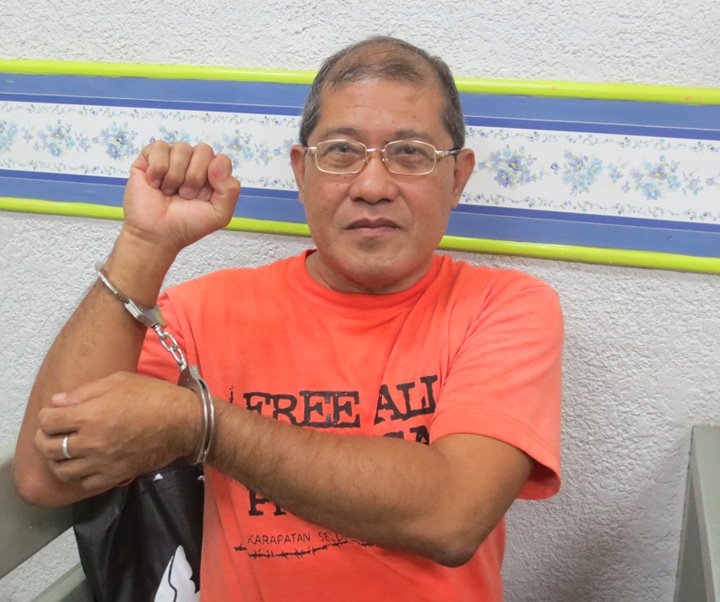
Edre Olalia is a human rights lawyer and campaigner from the Philippines, a country where lawyers are subject to threats, intimidation, surveillance, smear campaigns and ultimately fear of being silenced by fabricated charges.


Al Jazeera interviews AHRC on Hacienda Luisita massacre

(Hong Kong, 14 April 2014) On 12 April, Al Jazeera broadcasted a report, titled: “Philippine farmers fight for land rights” indicating that none of those involved in the massacre of farmers in Hacienda Luisita, owned by the family of current President Benigno Aquino III, have been punished for the massacre ten years on.

Below is the transcript of Al Jazeera‘s questions in a live interview and the AHRC’s comments on why and how there is lack of accountability:

Al Jazeera: Now, joining me from Hong Kong on Skype is Danilo Reyes, deputy director of the Asian Human Rights Commission (AHRC). Good to have you.

I guess the question here, looking at that report is: why has there been no accountability for these deaths?

Danilo: Because impunity or the lack of investigation, prosecution and punishment of any the security forces in the Philippines is deeply rooted. None of those involved in the killing of these seven protestors (in Hacienda Luisita in November 2004) has been prosecuted.

In fact, after the 2004 incident, six or seven more activists—human rights and political activists—have been killed. Even witnesses to the massacre were also killed. When it comes to investigation, it is impossible that any form of investigation, prosecution involving these killings which would result in punishment within the existing system.

Al Jazeera: The next question then is: how much official involvement is there, and the State, if none of this can be investigated properly?

Danilo: The problem in the Philippines is that those who make the laws could not be subjected to the same law. So that applies to the killing of protestors, and the struggle of the farmers who are demanding for distribution of their lands for many decades.

Despite the Supreme Court’s ruling that these lands should be distributed in full, but the implementation of that again involves a lot of exemption (of which land would be distributed to the farmers or not). This makes it impossible for farmers to reclaim their land despite the court order.

There are around 4,000 legitimate farmers who are beneficiaries to this land distribution. The Supreme Court has already ordered that it should be distributed to them.

The problem also here is that: the security forces and the Philippines government link these legitimate demands for a livelihood by the farmers—which is supported by the human rights activists and political activists—to an issue of security.

So, when a person’s demands for food as part of reclaiming their land, the security forces say “it is becoming a security threat”. That is why in Hacienda Luisita, there is a heavy presence of security forces. They are from the paramilitary forces—forces under the control of the military and the police.

Not only in Hacienda Luisita, but in many lands or plantations owned by the politicians and those who have positions in the government. (Their lands) have a heavy presence of armed forces because they connect (the farmer’s demands) to an issue of security.

Once it becomes an issue of security, then they can justify any of their actions. This involves justifications to the killings, targeted attacks of human rights activists, as subversives.

Al Jazeera: Alright. Thank you so much Danilo Reyes, there.

————————

For more details, please read reports and appeals by the AHRC:

PHILIPPINES: A peasant leader who was defending his land was hurt in a confrontation with thugs
http://www.humanrights.asia/news/urgent-appeals/AHRC-UAU-011-2014

Vol. 11 – No. 02-03 June-September 2012 — Special Report: The Philippines’ hollow human rights system (p. 19-24; Stories Nos. 35 and 62)
http://www.article2.org/pdf/v11n0203.pdf

Vol. 06 – No. 01 February 2007 – Special Report: The Criminal Justice System of the Philippines is Rotten (Stories No. 22, 55, 74, 76, 85 and 90)
http://www.article2.org/pdf/v06n01.pdf

———————————————

About AHRC: The Asian Human Rights Commission is a regional non-governmental organisation that monitors human rights in Asia, documents violations and advocates for justice and institutional reform to ensure the protection and promotion of these rights. The Hong Kong-based group was founded in 1984.

Fact-finding mission confirms military, police attacks against Luisita farmers

Farmers groups seek international support

TARLAC CITY, APRIL 5 — Agrarian reform advocates led by the Luisita Watch network launched a national fact-finding mission (FFM) in Barangay Cutcut, Hacienda Luisita today to document growing rights violations against land reform beneficiaries.

The fact finding mission led by Rep. Fernando Hicap of Anakpawis party list, and leaders of various peasant and human rights organizations and alternative media groups, will seek international support against escalating terror and impunity in Hacienda Luisita. The mission also brought relief aid, courtesy of Caritas Manila, to families and individual victims of rights abuses and displacement.

The organized ranks of Luisita farmers led by the AMBALA alliance and its land cultivation initiative called “bungkalan” have been targets of relentless attacks by the Cojuangco-Aquino family since the Department of Agrarian Reform (DAR) commenced land distribution activities in Hacienda Luisita.

Most recent rights violations include “Martilyo Gang-”type attacks, arbitrary arrests, and ‘legal’ harassment. Eviction of farmers, bulldozing of crops and dismantling of homes and farmhuts started by Cojuangco firm TADECO late last year became more aggressive as vast farmlands are fenced with barbed wires and concrete. Other Cojuangco-Aquino entities such as the Central Azucarera de Tarlac (CAT)  sugar mill and the Luisita Realty Corp. (LRC) are also involved in the violent eviction of farmers.

Peasant and human rights organizations such as the Kilusang Magbubukid ng Pilipinas (KMP), Unyon ng mga Manggagawa sa Agrikultura (UMA), Sentro para sa Tunay na Repormang Agraryo (SENTRA), and KARAPATAN observed that reported violations against Luisita farmers are practically state-sponsored.

Government institutions such as the Department of Agrarian Reform (DAR) and local courts are involved in violations. State forces like the Tarlac Philippine National Police force, SWAT teams, and regular and paramilitary personnel of the Armed Forces of the Philippines (AFP) are utilized as “private armies” to impose landlord authority in Hacienda Luisita. The Department of Justice (DOJ), meanwhile, has been dragging its feet on farmers’ urgent pleas. President BS Aquino, a fifth-generation scion of the Cojuangco clan, has been mum on Luisita.

The mission focused on recent incidents in Barangay (village) Cutcut where terror was instituted by thugs and security guards hired by TADECO, with the support of local police and army personnel. The attack, according to the farmers, involved not only mauling but planned murder attempts of particular AMBALA leaders allegedly ordered by the Cojuangco family.

Three peasants were illegally arrested by the police on March 28 namely Marcelino Lugay, Ofelia “Pia” Hernandez, and Romeo “Fernan” Corpuz. All three were injured by hammer blows along with other farmers, while Corpuz was rushed to the Tarlac Provincial Hospital due to heart problems. Corpuz also suffered fractures on his left hand and was placed under hospital arrest. The three were released on 31 March. Charges of physical injury were lodged against them by their very attackers.

TADECO thugs with the help of police and military forces also dismantled and ransacked AMBALA’s Barangay Cutcut headquarters, and set up a checkpoint near the area to prevent tillers from entering the farmlands.

The fact-finding mission also interviewed AMBALA members George Gatus, Alvin Gratil, and Leoncio Suarez, who with two other farmers Gerry Catalan and Jaime Quiambao were illegally arrested on 3 April in Barangay Mapalacsiao by Tarlac police led by Acting Tarlac Chief of Police PSI Felix Bervo. To justify the arrest, an employee of the DAR-hired survey firm FF Cruz Co. lodged a complaint of coercion and violation of the implementation of the Republic Act 6657 or Comprehensive Agrarian Reform Law. The farmers were released the following day.

Human rights violations in Hacienda Luisita are monitored by the International Coalition for Human Rights in the Philippines (ICHRP) and recently documented by international artist and activist Monique Wilson’s New Voice Company. The Asian Human Rights Commission (AHRC) also issued an appeal letter circulated globally regarding a Luisita peasant leader, Rudy Corpuz of AMBALA, who was hurt defending farmlands in a confrontation with thugs employed by TADECO.

Luisita Watch will release a full-report on this fact-finding mission and the status of implementation of land reform in Hacienda Luisita before 24 April — or two years after the historic Supreme Court decision to implement land distribution in this dispute-ridden sugar estate.

REFERENCE:
Gi Estrada
CONTACT NO.: +63 916 6114181